Plus, receive recommendations and exclusive offers on all of your favorite books and authors from Simon & Schuster.
0:00 /
LIST PRICE $28.99
PRICE MAY VARY BY RETAILER
Free shipping when you spend $40. Terms apply.
Buy from Other Retailers
Table of Contents
About the Book
FINALIST FOR THE PULITZER PRIZE
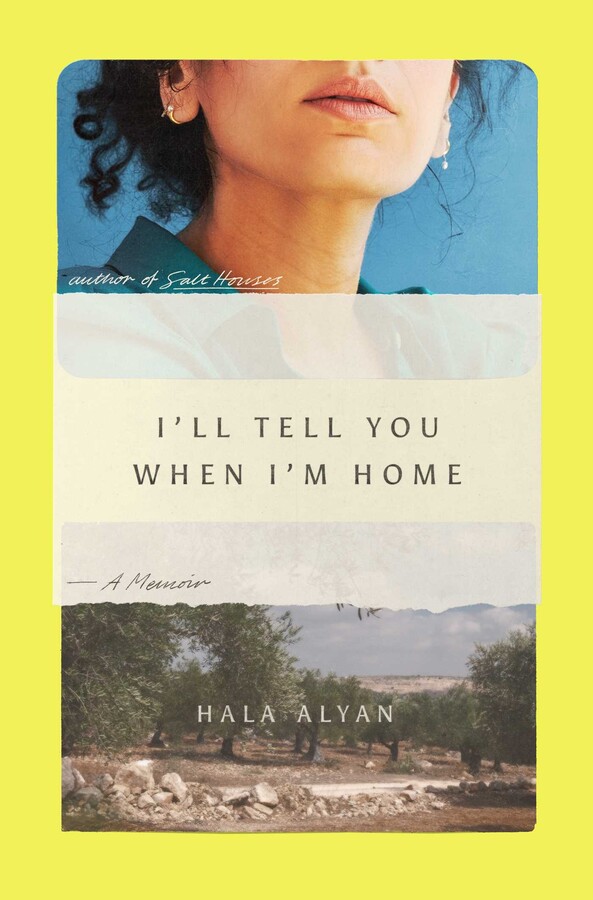
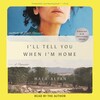
LONGLISTED FOR THE NATIONAL BOOK CRITICS CIRCLE AWARD • AN NPR BOOK OF THE YEAR • ONE OF TIME’S 100 MUST-READ BOOKS OF THE YEAR • AN ELECTRIC LITERATURE BEST NONFICTION BOOK OF THE YEAR • WINNER OF THE ARAB AMERICAN BOOK AWARD • The rich and deeply personal debut memoir by award-winning Palestinian American poet and novelist Hala Alyan, whose experience of motherhood via surrogacy forces her to reckon with her own past, and the legacy of her family’s exile and displacement, all in the name of a new future.
After a decade of yearning for parenthood, years marked by miscarriage after miscarriage, Hala Alyan makes the decision to use a surrogate. In this charged time, she turns to the archetype of the waiting woman—the Scheherazade who tells stories to ensure another dawn—to confront her own narratives of motherhood, love, and inheritance.
As her baby grows in the body of another woman, in another country, Hala finds her own life unraveling—a husband who wants to leave; the cost of past traumas and addictions threatening to resurface; the city of her youth, Beirut, on the brink of crisis. She turns to family stories and communal myths: of grandmothers mapping their lives through Palestine, Kuwait, Syria, Lebanon; of eradicated villages and invading armies; of places of refuge that proved only temporary; of men that left and women that stayed; of the contradictions of her own Midwestern childhood, and adolescence in various Arab cities.
Meanwhile, as the baby grows from the size of a poppyseed to a grain of rice, then a lime, and beyond, Hala gathers the stories that are her legacy, setting down the ones that confine, holding close those that liberate. It is emotionally charged, painstaking work, but now the stakes are higher: how to honor ancestors and future generations alike in the midst of displacement? How to impart love for those who are no longer here, for places one can no longer touch?
A stunningly lyrical and brutally honest quest for motherhood, selfhood, and peoplehood, I’ll Tell You When I’m Home is a powerful story of unraveling and becoming, of destruction and redemption, and of homelands lost and recreated.
LONGLISTED FOR THE NATIONAL BOOK CRITICS CIRCLE AWARD • AN NPR BOOK OF THE YEAR • ONE OF TIME’S 100 MUST-READ BOOKS OF THE YEAR • AN ELECTRIC LITERATURE BEST NONFICTION BOOK OF THE YEAR • WINNER OF THE ARAB AMERICAN BOOK AWARD • The rich and deeply personal debut memoir by award-winning Palestinian American poet and novelist Hala Alyan, whose experience of motherhood via surrogacy forces her to reckon with her own past, and the legacy of her family’s exile and displacement, all in the name of a new future.
After a decade of yearning for parenthood, years marked by miscarriage after miscarriage, Hala Alyan makes the decision to use a surrogate. In this charged time, she turns to the archetype of the waiting woman—the Scheherazade who tells stories to ensure another dawn—to confront her own narratives of motherhood, love, and inheritance.
As her baby grows in the body of another woman, in another country, Hala finds her own life unraveling—a husband who wants to leave; the cost of past traumas and addictions threatening to resurface; the city of her youth, Beirut, on the brink of crisis. She turns to family stories and communal myths: of grandmothers mapping their lives through Palestine, Kuwait, Syria, Lebanon; of eradicated villages and invading armies; of places of refuge that proved only temporary; of men that left and women that stayed; of the contradictions of her own Midwestern childhood, and adolescence in various Arab cities.
Meanwhile, as the baby grows from the size of a poppyseed to a grain of rice, then a lime, and beyond, Hala gathers the stories that are her legacy, setting down the ones that confine, holding close those that liberate. It is emotionally charged, painstaking work, but now the stakes are higher: how to honor ancestors and future generations alike in the midst of displacement? How to impart love for those who are no longer here, for places one can no longer touch?
A stunningly lyrical and brutally honest quest for motherhood, selfhood, and peoplehood, I’ll Tell You When I’m Home is a powerful story of unraveling and becoming, of destruction and redemption, and of homelands lost and recreated.
Excerpt
Month One Month One
Your baby is the size of a grain of rice! Blood cells are taking shape and circulation will begin. The embryo is only two layers of cells, making it microscopic. But by the end of the month, a little poppy seed will already have grown.
I dreamt of a lyrebird once, before I knew it existed. I was walking through an empty grocery store—that fluorescent lights find me even in dreams is the truest symptom of late-stage capitalism I can think of—and there was a strange shape at the end of the aisle. It looked like a shadow eating itself, some frenzy of smoke. As I got closer I saw it was a bird, a tail fanned out and trembling. The bird opened its beak and the sound of a siren emerged.
I don’t tell Johnny about the pink lines right away. I wait until the first blood test. Then the second. The beta numbers, as they’re called, doubling. Then the third, one week later. Johnny travels early in the month and I hold those pink lines to myself. For two weeks, it’s my secret. It feels like an affair almost, something thrilling and a little sickening all at once.
Perhaps I’d seen it before, some clip clinging to my memory like lint. But to my memory, it was years after the dream, watching a nature documentary with Johnny. On the screen, a dark bird hops and shakes, its feathers quivering. The voiceover tells us to listen. The bird can mimic the call of other birds, a perfect replication of sound.
Later, I watch David Attenborough’s The Life of Birds. We are shown a lyrebird imitating the motor of the camera. An alarm. A chainsaw. Lyrebirds in captivity can mimic hammers, chains, even—in one famous instance—the human voice.
There is a D. W. Winnicott quote: “It is a joy to be hidden, but a disaster not to be found.” This is the true devastation of exile. One hides, but is never found. The new country doesn’t care to find you. Often, it would rather not.
For years, I’d learned a mimicry. The mimicry of the pivotal scene in movies, the turning point in sitcoms, the punchline, the second act, those two words: I’m pregnant. For years, I’d rehearse them. I’d turn the words in my mind like twin stones. Then I spoke them. I’d see the words glide across his face. I’d see his breathing change with them. I’d see him look stunned, then smile, then slowly nod. Then—like an actor being asked to run the scene one more time, I’d speak them again. The second time it was clunkier, a question mark at the end. Then again. I’m pregnant. The words became rushed, embarrassed—how many times does a person need to get pregnant to get pregnant—an afterthought. Don’t bother reacting. Let’s wait. Don’t believe this to be true yet.
I don’t remember the final time before the surrogate, only that it must’ve been in January. I might have waited until the first blood draw, my doctor’s voice excited. These numbers look so good, Hala, and I could feel my overachiever’s heart rise like bread. I’d gone to a pastry store in the Village, bought an éclair, eaten it so quickly I’d ripped a bit of the paper with my teeth. Then I told him. I must’ve. I just can’t remember.
The month of July is hot and sticky, marked by little returnings to myself. I go to a concert alone, screaming at the top of my lungs in the first row. I wear my hair up, old dangly earrings I thought I’d lost. They are yellow, worthless beads of plastic, but I love them. I feel beautiful and embarrassed: a woman in her mid-thirties dancing alone. I am free to dance. I am free to smoke cigarettes and stay up until dawn. I have been replaced. What would the overachiever say now? I feel like a girl who failed her math exam, an actor tapped out for the understudy. I turn to my usual machinations: stoic quotes, poetry, metaphors. Surrogacy as that which carries another. Surrogacy as code for relief. Surrogacy as code for ministration. I dance, the secret of Dee’s positive test in my throat.
In Aboriginal culture, the word “Dreaming” also signifies origin tales of creation; how the world came to be. In one account of the lyrebird, it is said to be the only creature able to communicate with all others. In another, its singing moves a spirit so deeply, the lyrebird brings it into animal form—frog—and then teaches it how to sing.
In 1798, Napoleon launched a campaign in Ottoman-run Egypt and Syria. His much-hyped Armée d’Orient—thousands of men on foot and horseback—were eventually defeated, and the French left the region. They would be back briefly in the 1860s. Then again after World War I, after the Ottomans had fallen, the French would be given mandates over some of the land.
While Johnny’s away I throw a Fourth of July party and when the sun begins to set, we all walk to the pier, watching the fireworks worm their way across the sky. The booms scare me at first, the way they always do, but eventually I am enthralled by the light and color, how the sky seems to sizzle in the aftermath. I remember something almost violently: A decade earlier, a Fourth of July I spent walking the darkening streets of Eighth Avenue alone, hearing but not seeing the fireworks, dazed. I’d woken that morning to a stranger in my bed. I was still a ways away from sobriety; I still had worse and worse to tunnel through. I’d finally found my friends and their picnic blanket. The show was almost over. My stomach roiled the whole time, and the only thing that kept me from crying was the thought: Next July won’t be like this. It wasn’t. It was worse. But the next July I spent in France, cheering at soccer matches, my cheeks painted with a foreign flag. And now, so many Julys later, I sipped my sparkling water and joked with friends. Remembering that girl steadied me. It was bad, but it wasn’t that bad. This is how it always is to remember my drinking days: at least I’m not also doing that, I’d think, and something in my spirit would lift. Next July won’t be like this, I think to myself watching the bright lights. I can’t yet conjure a child.
For the first year of our life together, I told Johnny I didn’t want a baby and this is perhaps the worst lie I’d ever told.
When I was almost thirteen, my sister, Miriam, was born. For years, I’d hold pillows and dolls to my chest, murmur soothing words against fabric. Then there was a baby: Miriam, actual, mewling, reddish hair, impossibly small fingers and toes. I was practically a teenager. Her hands curled into themselves. Her lips pursed while she slept. I picked her middle name. I made up stories about a mermaid named Jewel. I changed her diapers, rocked her for hours, walking the length of our family room, singing an Arabic song about her hair, about doves, about who loved her best.
When Johnny returns, I finally tell him. “She’s pregnant,” I say, and there it is: the anticlimactic reveal. There is none of that same gravitas to the moment. A woman hundreds of miles away from here, a woman right now tucking her children into bed, a woman neither of us really knows: that woman is pregnant. It is not my body. It is not my hand on my abdomen. I tell something about someone else’s body and he says, “Okay.” Just okay, almost a question, like he is waiting for me to tell him what to do with that information. There is nothing to do. He has to finish coding something. I take a shower, then stare at my phone for an hour. We watch a dumb movie that night and barely speak of Dee again for weeks.
It is like learning a word, then hearing it everywhere. After Dee, I see ads for surrogacy, a billboard for egg donation, a TV sitcom plot about infertility, a podcaster talking about her surrogate. The metaphor concretizes. Surrogacy as metaphor for rescue. Surrogacy as metaphor for exile.
The first thing to go are the fruit-colored dresses from the spring. The ones I’d thrifted, imagining their former lives, unable to imagine my future one and so pouring myself into their lacy or velvet or tight contours. They would tell me who I was, as I ran errands and attended birthday dinners. But now their beaded waistlines feel gaudy. I look like a melted cupcake in the pink tulle. I’d never wear the silvery bodysuit, which looks like it’s been tipped over my limbs. I may not know my self, but I know she isn’t this. And so into an enormous K-Mart bag they all go, trudged down Driggs Avenue to another thrift store, on their way to their new, actual lives, not the pit stop of this one.
In twelve-step programs, the fourth step involves taking inventory. There can be a grimness to this, a necessary kind of excavation. “You get home, that’s when you notice the mold,” so goes the Louise Glück poem. “Too late, in other words.” Too late. My inventory is bleak. Who has been living like this? I think, looking around our apartment. I’d blinked three years away. I frittered away entire weeks on one obsession or another, trying to avoid the core fear. Sometimes people have to repeat themselves, once, twice, before I hear them. My husband and I barely speak. When had this happened? How could these things sneak up on you like this?
Napoleon’s doomed campaign shook the Ottoman Empire and its Arab constituents. Western inventions and ideas started to spider through the region, from liberalism to modernization to nationalism. Meanwhile, there was the Tanzimat—a period of Ottoman reform—and the Young Turk Revolution. Suddenly, there was a press, and a true one at that, literary salons, reforms at community and economic levels. Figures like Ahmad Faris al-Shidyaq resisted “Turkization” and promoted writing in Arabic, having salons in Arabic. Intellectuals argued for women’s rights. Religious figures like Jamal al-Din al-Afghani advocated for Pan-Islamic solidarity against colonial forces. Arabic poetry and literature proliferated, led by writers like the dubbed “Poet of the Nile,” Hafez Ibrahim, and Kahlil Gibran. Egypt fought and won independence. Arab armies studied Western tactics and implemented military reforms.
This became known as the Nahda. The Arab Renaissance. They were invaded, and then they learned.
Nahda. A word that means waking up. Eyes blinking open.
Dee’s pregnancy wakes me up.
I start making lists. I’ve long thought my mental health can be assessed by two things: am I making lists and have I baked a boxed cake in the last month? If the answer to both is yes, then things are great. A list is a magnificent thing, all that future in one place. It is the concretization of hope, not only that something will get done, but that you will be the one to do it. Sometimes, if I realize I’ve completed a task without having put it on the list, I’ll go back and write it, just to cross it off. The pathos in this seems sweet, childlike, a delight in both archiving and putting to rest.
Here are the things I need to complete. Here is what I’ll do with my waiting. Afterward, I admire my handiwork: the neat blue and green letters, the geometric circles and arrows across the page, my way of connecting one goal to the other. Here it is, my map.
Albert Hourani said of being Levantine, “It is no longer to have a standard of one’s own, not to be able to create but only able to imitate.”
The lyrebird is considered a symbol of poetry. Of songs. Of the stories we tell. Of what we mimic back.
In 1986, my mother arrives in an airport in Illinois from Kuwait. She is eight months pregnant, tells the security officer she is visiting her brother. This is technically true. He lives in Carbondale, and my mother is in Carbondale. But so is the Memorial Hospital of Carbondale, where I will be born. So is the U.S. Consulate office, the clerk who will fill out the citizenship papers, the doctor who will write down my birth time, the nurse that will check me for jaundice. My mother has a vision when she lands in America and it has nothing to do with America. She doesn’t want to stay here; we will be back in Kuwait within two weeks of my birth. But she knows I will inherit more than my father’s eyebrows and temper and curls; if I am born in Kuwait, I will also receive the passport he has, which is no passport at all, just the laissez-passer papers for Palestinian refugees, the no-man’s-land of citizenship: you belong nowhere, you are allowed somewhere, always as a guest. My mother is uninterested in America as a place; what she wants for me is to have its cloak, the protection of its name. What is an American daughter, she thinks, if not safe?
It turns out, I tell anyone who will listen, everything is a surrogate. I ask Siri if she loves me, when the next full moon is, which herbs cure insomnia. Are you a kind of mother, I ask. I’m not sure how to answer that, she says, not unkindly. I watch dozens of videos online, then interrupt Johnny’s workday. Has he heard of brood care? Has he heard of allomothering? Does he know that when the mother emperor penguin hunts for food, the father incubates the egg? Does he know that worker bees are usually infertile? That they feed and take care of the larvae? So that the queen bee can reproduce? So that the colony can survive?
The lesson of performing Arabness comes young. I am seven or eight. It is summer and I am at the YMCA pool. I am my mother’s American daughter, only we’re in America now. There is a woman, white, American, probably in her twenties. Maybe she is a swim teacher or lifeguard. She is asking me about my parents.
“And when did you come here?”
I remember saying, “A long time ago.” Not because anyone had instructed me to, but because somewhere, somehow, I knew that was the correct response. I remember the wet swimsuit wedging in my butt; I didn’t want to fix it. I hated how it made you look like a waddling duck. Children understand dignity, too.
She asks what language we speak. She has pretty hair, blonde and in a ponytail. I tell her.
Her eyes light up. “Is Arabic the one with the stars and moons? In the alphabet?”
I understand her question to be ridiculous. It awakens something angry in me, but also a little mean, like I want to punish her. “Yes,” I say. She asks me to wait here. She comes bouncing back with a notebook, drying her hands against her bare thighs before holding it out with a pen.
“Can you write my name for me?”
Her name. It could’ve been anything. Emily. Jessica. Amy. She tells me and I take the pen and glide it across the page into nonsensical curlicues. I draw two five-pointed stars above the scrawl, then a shaky crescent moon in the middle. Do any alphabets have moons in them? I wonder. She beams at what I’ve done.
The French campaign failed, but the imperialism inherent in it stuck. What they took back west with them was a story. The story of civilizing—a mission narrative that would trail European colonial forces in the coming century.
What did she do with it? That nonsense scrawl of a child. Did she show it to her boyfriend? Doodle it on the corner of a college notebook? Did she get it tattooed on her forearm? And what is the name for the glee I felt watching her, as she beamed at the notebook? A revenge I didn’t even understand I was taking, but took nonetheless.
Many immigrants come to America already well versed in their erasure. They bring what they’ve learned, and what they’ve learned is to hunger for the West. For Europe’s Messianic complex, America’s exceptionalism. In the Levant, the fingerprints of colonizers are everywhere: French street names, European architecture. It’s like this around the world: Vietnam, Colombia, Morocco. Albert Hourani said, “[T]o be a Levantine is to live in two worlds or more at once without belonging to either.” This is well-trodden territory. I’m tired of it. I’m tired of talking about my own in-betweenness, living in an empire that has called itself by another name, and behaved like the old one. That empire has launched “forever wars,” has eroded countries and people of their borders, their dignity, their children, has created the conditions under which people seek shelter within her. What a trick, this empire. Like a drug dealer: creating the fix by creating the problem. There’s no mystery to it. Forget the why. Ask then what. What is landlessness that takes root, turns inward, what is it to carry that lack, that undoing.
I have never not been Palestinian. That has never not been written upon my body. In Lebanon, in Kuwait, in Oklahoma—I am what my father is and my father is a man who was once a boy who was born to a woman in Gaza. Who speaks with the accent of that place.
The lyrebirds don’t choose what sound they hear, which is to say they don’t choose what sound they carry.
And me? Now absent a poppy seed or almond, what do I carry? Klonopin. Night terrors. A note app on my phone filled with half-finished letters to women that are dead, and men that aren’t. Beirut in every dream. The vocal fry of a white girl. There is a video of my brother and me in Maine, where we are talking a mile a minute, our drawls impeccable. We sound Oklahoman. When we moved to Beirut, I was fourteen. I had to sand my Arabic down, get rid of its rough Palestinian edges. My green eyes granted me a certain leeway; my father’s G rang out in public places. I learned the soft vowels of the Lebanese accent, how to bleat out curses. I learned to carry the country in my mouth, my hand gestures. The Lebanese hairdresser beneath my grandmother’s apartment would always say Na’eeman after washing my hair, a blessing, and I’d rehearse for hours in advance to reply Merci, instead of the more Palestinian response. I’d always forget.
I love the bard symbolism of the lyrebird, of course. I love dreams and fortunes and conjecture. I decide the lyrebird is the perfect archetype. I write lyrebird as symbol for the Levantine on an index card and tape it on the wall of my new studio. Then: lyrebird as metaphor for surrogate. Because isn’t it? It carries what it hears. It returns it to the world. Days later, I find another article, this one about a male lyrebird trick. A study found that when female lyrebirds try to escape males trying to mate with them, the male bird will mimic the sound of a “mobbing flock,” a signal that a predator is nearby. Not the sound of a single bird. A flock. A whole damn flock. I know it’s ridiculous, but I am angry at these rapey, dishonest birds. I am angry at what they’ve done with their gift.
I tear the notecards up. I misspoke earlier. Landless is a misnomer. It is the adjective of the unlucky, the passively determined. But a border isn’t passive. Nor is its erasure. There’s a way history teaches rearranged maps that can sound inert. Polite, even. A housekeeper who moves the knickknacks while you sleep.
In Arabic, we say: Do you have no mother, no father? The implication being that to have no mother or father is to have no name, and to have no name is to have no anchor, nothing to claim you. This was how I’d come to feel, unclaimed, dislocated from the places that made me, the places I’d sworn I’d return to but hadn’t. I made home with the scraps, with the almosts. I’d forgotten what I belonged to. It was like the first few weeks after Meimei’s death. I kept thinking of things to ask her, things that only she could’ve answered. The questions were like fishbones scraping my throat. They had nowhere to go. And now: there were pink lines. A doubling beta number. The Canadian nurse’s chipper voice on my cell: “We’ll have the gender for you in a few weeks!”
There is an evolutionary reason for vocal mimicry—a skill driven by sexual selection or self-preservation. It can be used to attract a mate, to call the attention of others in case of a threat, to alert one another about food or other resources. I feel my anger wilt. It’s an old story: survival.
In Arabic, the Levant is blad el-sham. The Greater Syria. I prefer the simple blad. Countries. When an Arab says it to me, I know what they mean. I know which ones.
Dee tells her daughters about me, about the baby. I’m like an oven, she tells them. I’m like a little house. I think of a land mass dismantled by white hands, borders drawn and redrawn. I think of the airport in south Beirut, how during the civil war in Lebanon, tens of thousands of Lebanese sought shelter in Syria. I think of the Palestinian camps dotting southern Lebanon. How each place became a surrogate for the other. One carries when the other can’t.
Is it tiresome to say I lie at night and feel exiled from her body? Her body inside another? I imagine it bopping around like a little red dot on a map. And mine? Hundreds of miles away.
“Every day we are engaged in a miracle which we don’t even recognize,” Thich Nhat Hanh wrote. The recognition comes from presence, the state that cures what meditation practitioners call being “unconscious” or “unawake.” We do terrible things in non-awake states. We hurt. We get hurt. We see the other as an obstacle, a checkpoint between ourselves and what we want. We skirt the truth, mostly to ourselves. “Being entirely honest with oneself is a good exercise,” Sigmund Freud said. This from a man who recanted a wide swath of research on female trauma because of societal backlash. Still, he was right about that. Waking means honesty. It means finding the right voice and the right song.
I tape a notecard back up. I scrawl in the margins: scarcity. I scrawl: persisting. Another notecard next to it: Forgive the birds. In smaller words below: They were surviving. Next to they, an even smaller word in parentheses:
(we)
Your baby is the size of a grain of rice! Blood cells are taking shape and circulation will begin. The embryo is only two layers of cells, making it microscopic. But by the end of the month, a little poppy seed will already have grown.
I dreamt of a lyrebird once, before I knew it existed. I was walking through an empty grocery store—that fluorescent lights find me even in dreams is the truest symptom of late-stage capitalism I can think of—and there was a strange shape at the end of the aisle. It looked like a shadow eating itself, some frenzy of smoke. As I got closer I saw it was a bird, a tail fanned out and trembling. The bird opened its beak and the sound of a siren emerged.
I don’t tell Johnny about the pink lines right away. I wait until the first blood test. Then the second. The beta numbers, as they’re called, doubling. Then the third, one week later. Johnny travels early in the month and I hold those pink lines to myself. For two weeks, it’s my secret. It feels like an affair almost, something thrilling and a little sickening all at once.
Perhaps I’d seen it before, some clip clinging to my memory like lint. But to my memory, it was years after the dream, watching a nature documentary with Johnny. On the screen, a dark bird hops and shakes, its feathers quivering. The voiceover tells us to listen. The bird can mimic the call of other birds, a perfect replication of sound.
Later, I watch David Attenborough’s The Life of Birds. We are shown a lyrebird imitating the motor of the camera. An alarm. A chainsaw. Lyrebirds in captivity can mimic hammers, chains, even—in one famous instance—the human voice.
There is a D. W. Winnicott quote: “It is a joy to be hidden, but a disaster not to be found.” This is the true devastation of exile. One hides, but is never found. The new country doesn’t care to find you. Often, it would rather not.
For years, I’d learned a mimicry. The mimicry of the pivotal scene in movies, the turning point in sitcoms, the punchline, the second act, those two words: I’m pregnant. For years, I’d rehearse them. I’d turn the words in my mind like twin stones. Then I spoke them. I’d see the words glide across his face. I’d see his breathing change with them. I’d see him look stunned, then smile, then slowly nod. Then—like an actor being asked to run the scene one more time, I’d speak them again. The second time it was clunkier, a question mark at the end. Then again. I’m pregnant. The words became rushed, embarrassed—how many times does a person need to get pregnant to get pregnant—an afterthought. Don’t bother reacting. Let’s wait. Don’t believe this to be true yet.
I don’t remember the final time before the surrogate, only that it must’ve been in January. I might have waited until the first blood draw, my doctor’s voice excited. These numbers look so good, Hala, and I could feel my overachiever’s heart rise like bread. I’d gone to a pastry store in the Village, bought an éclair, eaten it so quickly I’d ripped a bit of the paper with my teeth. Then I told him. I must’ve. I just can’t remember.
The month of July is hot and sticky, marked by little returnings to myself. I go to a concert alone, screaming at the top of my lungs in the first row. I wear my hair up, old dangly earrings I thought I’d lost. They are yellow, worthless beads of plastic, but I love them. I feel beautiful and embarrassed: a woman in her mid-thirties dancing alone. I am free to dance. I am free to smoke cigarettes and stay up until dawn. I have been replaced. What would the overachiever say now? I feel like a girl who failed her math exam, an actor tapped out for the understudy. I turn to my usual machinations: stoic quotes, poetry, metaphors. Surrogacy as that which carries another. Surrogacy as code for relief. Surrogacy as code for ministration. I dance, the secret of Dee’s positive test in my throat.
In Aboriginal culture, the word “Dreaming” also signifies origin tales of creation; how the world came to be. In one account of the lyrebird, it is said to be the only creature able to communicate with all others. In another, its singing moves a spirit so deeply, the lyrebird brings it into animal form—frog—and then teaches it how to sing.
In 1798, Napoleon launched a campaign in Ottoman-run Egypt and Syria. His much-hyped Armée d’Orient—thousands of men on foot and horseback—were eventually defeated, and the French left the region. They would be back briefly in the 1860s. Then again after World War I, after the Ottomans had fallen, the French would be given mandates over some of the land.
While Johnny’s away I throw a Fourth of July party and when the sun begins to set, we all walk to the pier, watching the fireworks worm their way across the sky. The booms scare me at first, the way they always do, but eventually I am enthralled by the light and color, how the sky seems to sizzle in the aftermath. I remember something almost violently: A decade earlier, a Fourth of July I spent walking the darkening streets of Eighth Avenue alone, hearing but not seeing the fireworks, dazed. I’d woken that morning to a stranger in my bed. I was still a ways away from sobriety; I still had worse and worse to tunnel through. I’d finally found my friends and their picnic blanket. The show was almost over. My stomach roiled the whole time, and the only thing that kept me from crying was the thought: Next July won’t be like this. It wasn’t. It was worse. But the next July I spent in France, cheering at soccer matches, my cheeks painted with a foreign flag. And now, so many Julys later, I sipped my sparkling water and joked with friends. Remembering that girl steadied me. It was bad, but it wasn’t that bad. This is how it always is to remember my drinking days: at least I’m not also doing that, I’d think, and something in my spirit would lift. Next July won’t be like this, I think to myself watching the bright lights. I can’t yet conjure a child.
For the first year of our life together, I told Johnny I didn’t want a baby and this is perhaps the worst lie I’d ever told.
When I was almost thirteen, my sister, Miriam, was born. For years, I’d hold pillows and dolls to my chest, murmur soothing words against fabric. Then there was a baby: Miriam, actual, mewling, reddish hair, impossibly small fingers and toes. I was practically a teenager. Her hands curled into themselves. Her lips pursed while she slept. I picked her middle name. I made up stories about a mermaid named Jewel. I changed her diapers, rocked her for hours, walking the length of our family room, singing an Arabic song about her hair, about doves, about who loved her best.
When Johnny returns, I finally tell him. “She’s pregnant,” I say, and there it is: the anticlimactic reveal. There is none of that same gravitas to the moment. A woman hundreds of miles away from here, a woman right now tucking her children into bed, a woman neither of us really knows: that woman is pregnant. It is not my body. It is not my hand on my abdomen. I tell something about someone else’s body and he says, “Okay.” Just okay, almost a question, like he is waiting for me to tell him what to do with that information. There is nothing to do. He has to finish coding something. I take a shower, then stare at my phone for an hour. We watch a dumb movie that night and barely speak of Dee again for weeks.
It is like learning a word, then hearing it everywhere. After Dee, I see ads for surrogacy, a billboard for egg donation, a TV sitcom plot about infertility, a podcaster talking about her surrogate. The metaphor concretizes. Surrogacy as metaphor for rescue. Surrogacy as metaphor for exile.
The first thing to go are the fruit-colored dresses from the spring. The ones I’d thrifted, imagining their former lives, unable to imagine my future one and so pouring myself into their lacy or velvet or tight contours. They would tell me who I was, as I ran errands and attended birthday dinners. But now their beaded waistlines feel gaudy. I look like a melted cupcake in the pink tulle. I’d never wear the silvery bodysuit, which looks like it’s been tipped over my limbs. I may not know my self, but I know she isn’t this. And so into an enormous K-Mart bag they all go, trudged down Driggs Avenue to another thrift store, on their way to their new, actual lives, not the pit stop of this one.
In twelve-step programs, the fourth step involves taking inventory. There can be a grimness to this, a necessary kind of excavation. “You get home, that’s when you notice the mold,” so goes the Louise Glück poem. “Too late, in other words.” Too late. My inventory is bleak. Who has been living like this? I think, looking around our apartment. I’d blinked three years away. I frittered away entire weeks on one obsession or another, trying to avoid the core fear. Sometimes people have to repeat themselves, once, twice, before I hear them. My husband and I barely speak. When had this happened? How could these things sneak up on you like this?
Napoleon’s doomed campaign shook the Ottoman Empire and its Arab constituents. Western inventions and ideas started to spider through the region, from liberalism to modernization to nationalism. Meanwhile, there was the Tanzimat—a period of Ottoman reform—and the Young Turk Revolution. Suddenly, there was a press, and a true one at that, literary salons, reforms at community and economic levels. Figures like Ahmad Faris al-Shidyaq resisted “Turkization” and promoted writing in Arabic, having salons in Arabic. Intellectuals argued for women’s rights. Religious figures like Jamal al-Din al-Afghani advocated for Pan-Islamic solidarity against colonial forces. Arabic poetry and literature proliferated, led by writers like the dubbed “Poet of the Nile,” Hafez Ibrahim, and Kahlil Gibran. Egypt fought and won independence. Arab armies studied Western tactics and implemented military reforms.
This became known as the Nahda. The Arab Renaissance. They were invaded, and then they learned.
Nahda. A word that means waking up. Eyes blinking open.
Dee’s pregnancy wakes me up.
I start making lists. I’ve long thought my mental health can be assessed by two things: am I making lists and have I baked a boxed cake in the last month? If the answer to both is yes, then things are great. A list is a magnificent thing, all that future in one place. It is the concretization of hope, not only that something will get done, but that you will be the one to do it. Sometimes, if I realize I’ve completed a task without having put it on the list, I’ll go back and write it, just to cross it off. The pathos in this seems sweet, childlike, a delight in both archiving and putting to rest.
Here are the things I need to complete. Here is what I’ll do with my waiting. Afterward, I admire my handiwork: the neat blue and green letters, the geometric circles and arrows across the page, my way of connecting one goal to the other. Here it is, my map.
Albert Hourani said of being Levantine, “It is no longer to have a standard of one’s own, not to be able to create but only able to imitate.”
The lyrebird is considered a symbol of poetry. Of songs. Of the stories we tell. Of what we mimic back.
In 1986, my mother arrives in an airport in Illinois from Kuwait. She is eight months pregnant, tells the security officer she is visiting her brother. This is technically true. He lives in Carbondale, and my mother is in Carbondale. But so is the Memorial Hospital of Carbondale, where I will be born. So is the U.S. Consulate office, the clerk who will fill out the citizenship papers, the doctor who will write down my birth time, the nurse that will check me for jaundice. My mother has a vision when she lands in America and it has nothing to do with America. She doesn’t want to stay here; we will be back in Kuwait within two weeks of my birth. But she knows I will inherit more than my father’s eyebrows and temper and curls; if I am born in Kuwait, I will also receive the passport he has, which is no passport at all, just the laissez-passer papers for Palestinian refugees, the no-man’s-land of citizenship: you belong nowhere, you are allowed somewhere, always as a guest. My mother is uninterested in America as a place; what she wants for me is to have its cloak, the protection of its name. What is an American daughter, she thinks, if not safe?
It turns out, I tell anyone who will listen, everything is a surrogate. I ask Siri if she loves me, when the next full moon is, which herbs cure insomnia. Are you a kind of mother, I ask. I’m not sure how to answer that, she says, not unkindly. I watch dozens of videos online, then interrupt Johnny’s workday. Has he heard of brood care? Has he heard of allomothering? Does he know that when the mother emperor penguin hunts for food, the father incubates the egg? Does he know that worker bees are usually infertile? That they feed and take care of the larvae? So that the queen bee can reproduce? So that the colony can survive?
The lesson of performing Arabness comes young. I am seven or eight. It is summer and I am at the YMCA pool. I am my mother’s American daughter, only we’re in America now. There is a woman, white, American, probably in her twenties. Maybe she is a swim teacher or lifeguard. She is asking me about my parents.
“And when did you come here?”
I remember saying, “A long time ago.” Not because anyone had instructed me to, but because somewhere, somehow, I knew that was the correct response. I remember the wet swimsuit wedging in my butt; I didn’t want to fix it. I hated how it made you look like a waddling duck. Children understand dignity, too.
She asks what language we speak. She has pretty hair, blonde and in a ponytail. I tell her.
Her eyes light up. “Is Arabic the one with the stars and moons? In the alphabet?”
I understand her question to be ridiculous. It awakens something angry in me, but also a little mean, like I want to punish her. “Yes,” I say. She asks me to wait here. She comes bouncing back with a notebook, drying her hands against her bare thighs before holding it out with a pen.
“Can you write my name for me?”
Her name. It could’ve been anything. Emily. Jessica. Amy. She tells me and I take the pen and glide it across the page into nonsensical curlicues. I draw two five-pointed stars above the scrawl, then a shaky crescent moon in the middle. Do any alphabets have moons in them? I wonder. She beams at what I’ve done.
The French campaign failed, but the imperialism inherent in it stuck. What they took back west with them was a story. The story of civilizing—a mission narrative that would trail European colonial forces in the coming century.
What did she do with it? That nonsense scrawl of a child. Did she show it to her boyfriend? Doodle it on the corner of a college notebook? Did she get it tattooed on her forearm? And what is the name for the glee I felt watching her, as she beamed at the notebook? A revenge I didn’t even understand I was taking, but took nonetheless.
Many immigrants come to America already well versed in their erasure. They bring what they’ve learned, and what they’ve learned is to hunger for the West. For Europe’s Messianic complex, America’s exceptionalism. In the Levant, the fingerprints of colonizers are everywhere: French street names, European architecture. It’s like this around the world: Vietnam, Colombia, Morocco. Albert Hourani said, “[T]o be a Levantine is to live in two worlds or more at once without belonging to either.” This is well-trodden territory. I’m tired of it. I’m tired of talking about my own in-betweenness, living in an empire that has called itself by another name, and behaved like the old one. That empire has launched “forever wars,” has eroded countries and people of their borders, their dignity, their children, has created the conditions under which people seek shelter within her. What a trick, this empire. Like a drug dealer: creating the fix by creating the problem. There’s no mystery to it. Forget the why. Ask then what. What is landlessness that takes root, turns inward, what is it to carry that lack, that undoing.
I have never not been Palestinian. That has never not been written upon my body. In Lebanon, in Kuwait, in Oklahoma—I am what my father is and my father is a man who was once a boy who was born to a woman in Gaza. Who speaks with the accent of that place.
The lyrebirds don’t choose what sound they hear, which is to say they don’t choose what sound they carry.
And me? Now absent a poppy seed or almond, what do I carry? Klonopin. Night terrors. A note app on my phone filled with half-finished letters to women that are dead, and men that aren’t. Beirut in every dream. The vocal fry of a white girl. There is a video of my brother and me in Maine, where we are talking a mile a minute, our drawls impeccable. We sound Oklahoman. When we moved to Beirut, I was fourteen. I had to sand my Arabic down, get rid of its rough Palestinian edges. My green eyes granted me a certain leeway; my father’s G rang out in public places. I learned the soft vowels of the Lebanese accent, how to bleat out curses. I learned to carry the country in my mouth, my hand gestures. The Lebanese hairdresser beneath my grandmother’s apartment would always say Na’eeman after washing my hair, a blessing, and I’d rehearse for hours in advance to reply Merci, instead of the more Palestinian response. I’d always forget.
I love the bard symbolism of the lyrebird, of course. I love dreams and fortunes and conjecture. I decide the lyrebird is the perfect archetype. I write lyrebird as symbol for the Levantine on an index card and tape it on the wall of my new studio. Then: lyrebird as metaphor for surrogate. Because isn’t it? It carries what it hears. It returns it to the world. Days later, I find another article, this one about a male lyrebird trick. A study found that when female lyrebirds try to escape males trying to mate with them, the male bird will mimic the sound of a “mobbing flock,” a signal that a predator is nearby. Not the sound of a single bird. A flock. A whole damn flock. I know it’s ridiculous, but I am angry at these rapey, dishonest birds. I am angry at what they’ve done with their gift.
I tear the notecards up. I misspoke earlier. Landless is a misnomer. It is the adjective of the unlucky, the passively determined. But a border isn’t passive. Nor is its erasure. There’s a way history teaches rearranged maps that can sound inert. Polite, even. A housekeeper who moves the knickknacks while you sleep.
In Arabic, we say: Do you have no mother, no father? The implication being that to have no mother or father is to have no name, and to have no name is to have no anchor, nothing to claim you. This was how I’d come to feel, unclaimed, dislocated from the places that made me, the places I’d sworn I’d return to but hadn’t. I made home with the scraps, with the almosts. I’d forgotten what I belonged to. It was like the first few weeks after Meimei’s death. I kept thinking of things to ask her, things that only she could’ve answered. The questions were like fishbones scraping my throat. They had nowhere to go. And now: there were pink lines. A doubling beta number. The Canadian nurse’s chipper voice on my cell: “We’ll have the gender for you in a few weeks!”
There is an evolutionary reason for vocal mimicry—a skill driven by sexual selection or self-preservation. It can be used to attract a mate, to call the attention of others in case of a threat, to alert one another about food or other resources. I feel my anger wilt. It’s an old story: survival.
In Arabic, the Levant is blad el-sham. The Greater Syria. I prefer the simple blad. Countries. When an Arab says it to me, I know what they mean. I know which ones.
Dee tells her daughters about me, about the baby. I’m like an oven, she tells them. I’m like a little house. I think of a land mass dismantled by white hands, borders drawn and redrawn. I think of the airport in south Beirut, how during the civil war in Lebanon, tens of thousands of Lebanese sought shelter in Syria. I think of the Palestinian camps dotting southern Lebanon. How each place became a surrogate for the other. One carries when the other can’t.
Is it tiresome to say I lie at night and feel exiled from her body? Her body inside another? I imagine it bopping around like a little red dot on a map. And mine? Hundreds of miles away.
“Every day we are engaged in a miracle which we don’t even recognize,” Thich Nhat Hanh wrote. The recognition comes from presence, the state that cures what meditation practitioners call being “unconscious” or “unawake.” We do terrible things in non-awake states. We hurt. We get hurt. We see the other as an obstacle, a checkpoint between ourselves and what we want. We skirt the truth, mostly to ourselves. “Being entirely honest with oneself is a good exercise,” Sigmund Freud said. This from a man who recanted a wide swath of research on female trauma because of societal backlash. Still, he was right about that. Waking means honesty. It means finding the right voice and the right song.
I tape a notecard back up. I scrawl in the margins: scarcity. I scrawl: persisting. Another notecard next to it: Forgive the birds. In smaller words below: They were surviving. Next to they, an even smaller word in parentheses:
(we)
Reading Group Guide
Get a FREE ebook by joining our mailing list today! Plus, receive recommendations for your next Book Club read.
By clicking 'Sign me up' I agree to the Terms of Use and acknowledge the Privacy Policy and Notice of Financial Incentive. Free ebook offer available to NEW US subscribers only. Offer redeemable at Simon & Schuster's ebook fulfillment partner. Must redeem within 90 days. See full terms and conditions and this month's choices.
I’ll Tell You When I’m Home
Hala Alyan
This reading group guide for I’ll Tell You When I’m Home includes an introduction, discussion questions, ideas for enhancing your book club, and a Q&A with author Hala Alyan. The suggested questions are intended to help your reading group find new and interesting angles and topics for your discussion. We hope that these ideas will enrich your conversation and increase your enjoyment of the book.
Introduction
After a decade of yearning for parenthood, years marked by miscarriage after miscarriage, Hala Alyan makes the decision to use a surrogate. In this charged time, she turns to the archetype of the waiting woman—the Scheherazade who tells stories to ensure another dawn—to confront her own narratives of motherhood, love, and inheritance.
As her baby grows in the body of another woman, in another country, Hala finds her own life unraveling—a husband who wants to leave; the cost of past traumas and addictions threatening to resurface; the city of her youth, Beirut, on the brink of crisis. She turns to family stories and communal myths: of grandmothers mapping their lives through Palestine, Kuwait, Syria, and Lebanon; of eradicated villages and invading armies; of places of refuge that proved only temporary; of men who left and women who stayed; of the contradictions of her own Midwestern childhood followed by her adolescence in various Arab cities. It is emotionally charged, painstaking work, but now the stakes are higher. How should ancestors and future generations alike be honored in the midst of displacement? How can one impart love for those who are no longer here, for places one can no longer touch?
Topics & Questions for Discussion
1. Readers typically assume that the author of a memoir knows themself well. Alyan, however, argues that self-knowledge is not so easily attained. “Who we are” is not something that is given to us; it is something we inherit and create. What are some of the experiences and people who have shaped Alyan? Which ones did she have a say in, and which ones were imposed upon her?
2. Are there parts of herself that Alyan chooses not to share? Why might this be?
3. Why do you think that Alyan invokes the legend of Scheherazade? Does she face any threats as a storyteller herself? If so, how do they change the way she tells her story? Consider this line on page 128: “I’ve been forbidden to tell this story.”
4. After reading Alyan’s memoir, how well do you feel that you know her?
5. Who do you think Alyan is writing to?
6. How are the sections within each chapter organized? How was your reading experience affected by Alyan’s fragmentary style?
7. As a child, Alyan developed a habit of telling lies, and on page 144, she recalls asking her mother about it: “You didn’t lie before. Before what, I ask. But I know what she’s going to say. Before the invasion. Before those weeks leaving my father behind. Before America.” What about Alyan’s life in America might allow her to lie, or even make it necessary for her to do so?
8. After a long bender, Alyan calls her mom and tells her, “I think I need to stop drinking” (page 119). Then she reflects: “Speaking the words aloud invoked them, like naming a jinn.” Discuss the significance of this scene. Why does verbalization have this effect?
9. On page 247 Alyan writes, “The women in my family are beasts when it comes to love.” Which characters in this memoir love each other? How do they show it? Where is love absent?
10. Each experience gives rise to a corresponding type of language. On page 185, Alyan mentions that addiction recovery circles use language ridden with metaphors. Elsewhere, she references the New York Times’ language of war reportage (page 159), which differs from a poet’s descriptive language or the shocked silence of someone who experiences it on the ground. How would you describe Alyan’s language? What does it reveal about her point of view?
11. How do you think a poet’s version of history differs from a historian’s version?
12. Alyan argues that the act of storytelling is an act of self creation. How does she create herself along the course of her memoir? How do you think the process of storytelling changes her?
13. Alyan brings up some experiences that are pretty specific to her own background. Were these relatable to you in any way?
14. Consider the title, I’ll Tell You When I’m Home. How does it frame the stories contained within the book?
Enhance Your Book Club
1. Imagine you are Leila, Alyan’s daughter. Write a letter to your mother after having read her memoir. What thoughts come to mind?
2. Find a few of Alyan’s poems, read them out loud, and discuss them as a group.
3. Go on Google Maps and take a virtual “walking” tour of the places that Alyan brings up.
4. At one point Alyan writes, “I once tried to write a story about a woman who could only say one word: a single name” (page 181). Try your hand at writing the beginning of this story. Why might this character have been reduced to silence?
A Conversation with Hala Alyan
You write on page 61 that “to know an ending is to curse the telling.” And yet you cannot help but know how your own story ends and how your family ultimately fares (that is, up to the present moment). How did you contend with this paradox?
I’m still contending with it. I love a good secret, but I recognize its cost, both in life and in literary making. The writer knows so many things the reader doesn’t and that responsibility is enormous; at the same time, I like to think of it as bidirectional. The reader knows things the writer doesn’t, too. I’ve had my stories told back to me before, my poems, my themes. I’ve had questions in audiences that have completely stunned me into deep gratitude, at what I was being shown about my own self and work.
How did you go about researching your family history? Did you have to interview family members? If so, what was it like to talk to them in a professional capacity, as an author? Were any of them resistant to having their stories published?
It was very disorienting at times! Some family members were happy to disclose stories; others were extremely resistant. Others were no longer around. My father in particular ended up being the holder of most of the stories on his family’s side—I didn’t really have access to anyone else. I would just record the conversations and eventually both of us would forget about the recorder and just fall deep into conversation. It was actually unspeakably lovely to spend time together in that way.
Your memoir is filled with quotes from other books. Were you reading these while you were writing?
Yes! I read and listened to a ton of memoirs while I was working on this book. I was fascinated by how people took the clay of their life and shaped it into something coherent.
Besides the stories you heard from your family about Palestine, what other stories did you have access to when you were trying to understand your past? Are there any you wished you had? Are there any that you will be passing on to your daughter?
I did a lot of research, looking into primary and secondary sources. I’ve written a fair amount about Palestine in different genres, but the stakes felt different to be telling the story through the framework of my own family. I wish so deeply I had more access to archives in general: so many libraries and universities and so much research has been destroyed. I wish I had thought to ask my grandparents and elders for more stories. As for my daughter, she can have any story I have.
For a long time, you describe how your baby was just an idea. Then, once you heard her heartbeat and saw her spine, she became a real person to you. I was curious, given the way you compare surrogacy to the experience of living in exile, if you believe that there is a similar way of making revolution and invasion feel real—more real, that is, than an abstract headline or a dissociative fact taking place a world away. How so?
I believe so. Just as an idea can become a body through intimacy, so too does war or revolution become real through proximity. With surrogacy, I lived the paradox of feeling deeply connected to someone I could not physically carry or touch. That’s not so different from exile: being tethered to places or people that your body can’t be near. Revolution, like mothering, becomes real through the details, through the disruptions.
On page 205, you ask: “What is a story that is constantly being erased? How can you pass along what you know only in fragments?” Are there any memories—yours or your family’s—that are at risk of being permanently forgotten? How do you go about preserving them?
Much of that is an issue of systemic change: entities shouldn’t be destroying archives, libraries, universities; shouldn’t be targeting poets and journalists; and so forth. Under those conditions, the marginalized will always be grasping what they can. I’m more interested in what we could write and make if we had the abundance and expansion not to have to worry about our survival and that of our stories. Until then, I write and I read and I listen and I rage and I dream.
As a memoirist, what does it mean for you to tell the truth? How about as a parent? As a daughter?
I think I’m still figuring out what that means as a person, much less a memoirist. I think it means to be willing to sit with discomfort, to consistently recommit to meeting reality on its terms, to listen, to be humble. As a parent, I think it will have to include some degree of discretion, of not burdening. As a daughter, it has meant respecting that some stories aren’t mine to share (and perhaps even hear).
You are both a poet and a writer of prose. How do these two mediums differ for you? Why did you choose to write your memoir in prose?
I think I’d already written parts of the memoir in fiction and poetry (certainly in my last collection, The Moon That Turns You Back). But there was something about this particular story that kept asking to be told plainly, directly, without ornament, with a simple I. It was intimidating and overwhelming to do it, but once I started, I knew I’d found the form. It was easier for me to structure the story, to tell the truth of it, when I was more confessional, when I thought of it like catching a loved one up on my life.
What authors or artists are you inspired by? How have your literary influences changed throughout your life?
I think we seek what we need in terms of literary mentors or ancestors, so to speak, and that absolutely changes depending on the season or era we’re in. Lately, I’ve spent a lot of time reading and taking in work by Ingrid Rojas Contreras, Omar El Akkad, Sloane Crosley, Kali Fajardo-Anstine, Lisa Ko, Diana Khoi Nguyen, Ghassan Kanafani, Leslie Jamison, Fady Joudah, Melissa Febos, and Cathy Park Hong.
Is there a section or scene or sentence of this book of which you are especially proud?
I don’t know if pride is the emotion per se, but I definitely felt a sense of catharsis by the end of the “Month Five” chapter (pages 121 through 145), which has the “Bad Boyfriend” story. It was a story that had been quite censored and gatekept and obscured for so many years, and the stakes of telling it had always felt so high. Finally telling it as directly and truthfully as I could felt both transgressive and freeing. I’d hesitated about including that story but, in the end, it was connected to so many others, so I tried to infuse the telling with as much grace as possible.
Hala Alyan
This reading group guide for I’ll Tell You When I’m Home includes an introduction, discussion questions, ideas for enhancing your book club, and a Q&A with author Hala Alyan. The suggested questions are intended to help your reading group find new and interesting angles and topics for your discussion. We hope that these ideas will enrich your conversation and increase your enjoyment of the book.
Introduction
After a decade of yearning for parenthood, years marked by miscarriage after miscarriage, Hala Alyan makes the decision to use a surrogate. In this charged time, she turns to the archetype of the waiting woman—the Scheherazade who tells stories to ensure another dawn—to confront her own narratives of motherhood, love, and inheritance.
As her baby grows in the body of another woman, in another country, Hala finds her own life unraveling—a husband who wants to leave; the cost of past traumas and addictions threatening to resurface; the city of her youth, Beirut, on the brink of crisis. She turns to family stories and communal myths: of grandmothers mapping their lives through Palestine, Kuwait, Syria, and Lebanon; of eradicated villages and invading armies; of places of refuge that proved only temporary; of men who left and women who stayed; of the contradictions of her own Midwestern childhood followed by her adolescence in various Arab cities. It is emotionally charged, painstaking work, but now the stakes are higher. How should ancestors and future generations alike be honored in the midst of displacement? How can one impart love for those who are no longer here, for places one can no longer touch?
Topics & Questions for Discussion
1. Readers typically assume that the author of a memoir knows themself well. Alyan, however, argues that self-knowledge is not so easily attained. “Who we are” is not something that is given to us; it is something we inherit and create. What are some of the experiences and people who have shaped Alyan? Which ones did she have a say in, and which ones were imposed upon her?
2. Are there parts of herself that Alyan chooses not to share? Why might this be?
3. Why do you think that Alyan invokes the legend of Scheherazade? Does she face any threats as a storyteller herself? If so, how do they change the way she tells her story? Consider this line on page 128: “I’ve been forbidden to tell this story.”
4. After reading Alyan’s memoir, how well do you feel that you know her?
5. Who do you think Alyan is writing to?
6. How are the sections within each chapter organized? How was your reading experience affected by Alyan’s fragmentary style?
7. As a child, Alyan developed a habit of telling lies, and on page 144, she recalls asking her mother about it: “You didn’t lie before. Before what, I ask. But I know what she’s going to say. Before the invasion. Before those weeks leaving my father behind. Before America.” What about Alyan’s life in America might allow her to lie, or even make it necessary for her to do so?
8. After a long bender, Alyan calls her mom and tells her, “I think I need to stop drinking” (page 119). Then she reflects: “Speaking the words aloud invoked them, like naming a jinn.” Discuss the significance of this scene. Why does verbalization have this effect?
9. On page 247 Alyan writes, “The women in my family are beasts when it comes to love.” Which characters in this memoir love each other? How do they show it? Where is love absent?
10. Each experience gives rise to a corresponding type of language. On page 185, Alyan mentions that addiction recovery circles use language ridden with metaphors. Elsewhere, she references the New York Times’ language of war reportage (page 159), which differs from a poet’s descriptive language or the shocked silence of someone who experiences it on the ground. How would you describe Alyan’s language? What does it reveal about her point of view?
11. How do you think a poet’s version of history differs from a historian’s version?
12. Alyan argues that the act of storytelling is an act of self creation. How does she create herself along the course of her memoir? How do you think the process of storytelling changes her?
13. Alyan brings up some experiences that are pretty specific to her own background. Were these relatable to you in any way?
14. Consider the title, I’ll Tell You When I’m Home. How does it frame the stories contained within the book?
Enhance Your Book Club
1. Imagine you are Leila, Alyan’s daughter. Write a letter to your mother after having read her memoir. What thoughts come to mind?
2. Find a few of Alyan’s poems, read them out loud, and discuss them as a group.
3. Go on Google Maps and take a virtual “walking” tour of the places that Alyan brings up.
4. At one point Alyan writes, “I once tried to write a story about a woman who could only say one word: a single name” (page 181). Try your hand at writing the beginning of this story. Why might this character have been reduced to silence?
A Conversation with Hala Alyan
You write on page 61 that “to know an ending is to curse the telling.” And yet you cannot help but know how your own story ends and how your family ultimately fares (that is, up to the present moment). How did you contend with this paradox?
I’m still contending with it. I love a good secret, but I recognize its cost, both in life and in literary making. The writer knows so many things the reader doesn’t and that responsibility is enormous; at the same time, I like to think of it as bidirectional. The reader knows things the writer doesn’t, too. I’ve had my stories told back to me before, my poems, my themes. I’ve had questions in audiences that have completely stunned me into deep gratitude, at what I was being shown about my own self and work.
How did you go about researching your family history? Did you have to interview family members? If so, what was it like to talk to them in a professional capacity, as an author? Were any of them resistant to having their stories published?
It was very disorienting at times! Some family members were happy to disclose stories; others were extremely resistant. Others were no longer around. My father in particular ended up being the holder of most of the stories on his family’s side—I didn’t really have access to anyone else. I would just record the conversations and eventually both of us would forget about the recorder and just fall deep into conversation. It was actually unspeakably lovely to spend time together in that way.
Your memoir is filled with quotes from other books. Were you reading these while you were writing?
Yes! I read and listened to a ton of memoirs while I was working on this book. I was fascinated by how people took the clay of their life and shaped it into something coherent.
Besides the stories you heard from your family about Palestine, what other stories did you have access to when you were trying to understand your past? Are there any you wished you had? Are there any that you will be passing on to your daughter?
I did a lot of research, looking into primary and secondary sources. I’ve written a fair amount about Palestine in different genres, but the stakes felt different to be telling the story through the framework of my own family. I wish so deeply I had more access to archives in general: so many libraries and universities and so much research has been destroyed. I wish I had thought to ask my grandparents and elders for more stories. As for my daughter, she can have any story I have.
For a long time, you describe how your baby was just an idea. Then, once you heard her heartbeat and saw her spine, she became a real person to you. I was curious, given the way you compare surrogacy to the experience of living in exile, if you believe that there is a similar way of making revolution and invasion feel real—more real, that is, than an abstract headline or a dissociative fact taking place a world away. How so?
I believe so. Just as an idea can become a body through intimacy, so too does war or revolution become real through proximity. With surrogacy, I lived the paradox of feeling deeply connected to someone I could not physically carry or touch. That’s not so different from exile: being tethered to places or people that your body can’t be near. Revolution, like mothering, becomes real through the details, through the disruptions.
On page 205, you ask: “What is a story that is constantly being erased? How can you pass along what you know only in fragments?” Are there any memories—yours or your family’s—that are at risk of being permanently forgotten? How do you go about preserving them?
Much of that is an issue of systemic change: entities shouldn’t be destroying archives, libraries, universities; shouldn’t be targeting poets and journalists; and so forth. Under those conditions, the marginalized will always be grasping what they can. I’m more interested in what we could write and make if we had the abundance and expansion not to have to worry about our survival and that of our stories. Until then, I write and I read and I listen and I rage and I dream.
As a memoirist, what does it mean for you to tell the truth? How about as a parent? As a daughter?
I think I’m still figuring out what that means as a person, much less a memoirist. I think it means to be willing to sit with discomfort, to consistently recommit to meeting reality on its terms, to listen, to be humble. As a parent, I think it will have to include some degree of discretion, of not burdening. As a daughter, it has meant respecting that some stories aren’t mine to share (and perhaps even hear).
You are both a poet and a writer of prose. How do these two mediums differ for you? Why did you choose to write your memoir in prose?
I think I’d already written parts of the memoir in fiction and poetry (certainly in my last collection, The Moon That Turns You Back). But there was something about this particular story that kept asking to be told plainly, directly, without ornament, with a simple I. It was intimidating and overwhelming to do it, but once I started, I knew I’d found the form. It was easier for me to structure the story, to tell the truth of it, when I was more confessional, when I thought of it like catching a loved one up on my life.
What authors or artists are you inspired by? How have your literary influences changed throughout your life?
I think we seek what we need in terms of literary mentors or ancestors, so to speak, and that absolutely changes depending on the season or era we’re in. Lately, I’ve spent a lot of time reading and taking in work by Ingrid Rojas Contreras, Omar El Akkad, Sloane Crosley, Kali Fajardo-Anstine, Lisa Ko, Diana Khoi Nguyen, Ghassan Kanafani, Leslie Jamison, Fady Joudah, Melissa Febos, and Cathy Park Hong.
Is there a section or scene or sentence of this book of which you are especially proud?
I don’t know if pride is the emotion per se, but I definitely felt a sense of catharsis by the end of the “Month Five” chapter (pages 121 through 145), which has the “Bad Boyfriend” story. It was a story that had been quite censored and gatekept and obscured for so many years, and the stakes of telling it had always felt so high. Finally telling it as directly and truthfully as I could felt both transgressive and freeing. I’d hesitated about including that story but, in the end, it was connected to so many others, so I tried to infuse the telling with as much grace as possible.
About the Author
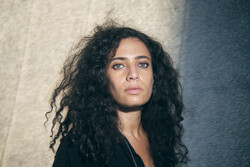
Photograph by Mustafa Mirza
Hala Alyan is the author of the novels Salt Houses—winner of the Dayton Literary Peace Prize and the Arab American Book Award, and a finalist for the Chautauqua Prize—and The Arsonists’ City, a finalist for the Aspen Words Literary Prize. She is also the author of five highly acclaimed collections of poetry, including The Twenty-Ninth Year and The Moon That Turns You Back. Her work has been published by The New Yorker, The Academy of American Poets, The New York Times, The Guardian, and Guernica. She lives in Brooklyn with her family, where she works as a clinical psychologist and professor at New York University.
Product Details
- Publisher: Avid Reader Press/Simon & Schuster (June 3, 2025)
- Length: 272 pages
- ISBN13: 9781982182588
Browse Related Books
Raves and Reviews
"Gorgeous, lyrical . . . . [Alyan's memoir] examines with a poet’s precision the many ways in which storytelling is rooted in matriarchy, carrying messages between mothers and daughters as a means of survival. . . . In such scenes of compelling intimacy, the author’s narrative gifts shine through, the brief fragments making for quick, propulsive reading. . . . I’ll Tell You When I’m Home shows the power of even a single narrative to resist the deliberate erasure of a people and their homeland, the violence of colonization." —Safiya Sinclair, The New York Times Book Review
"A story of the violence of exile over generations, a profound desire for motherhood, as well as surrogacy, addiction and the importance of remembering. . . . A rumination on the nature of memoir and the often impossible attempts to reclaim and understand one’s past. . . . A story of war and loss—of country, but also of friends, lovers and ultimately her marriage. . . . Her memoir is a series of vignettes that go back and forth in time, in a writing style that is frantic, questioning and lyrical, designed to help the reader enter the darkest corners with the writer, almost inside her consciousness." —The Guardian
“A candid, intimate and tenderly written portrait of reckoning and restoration.” —Ms. Magazine
“An affecting memoir . . . [that] bears the emotional weight of the events that preceded it: infertility, miscarriages, a strained marriage, and exile.” —The New Yorker
“[A] lyrical memoir that explores the trauma of fractured identity.” —Los Angeles Times
"Alyan’s poetic prose encapsulates miles in each sentence and paragraph; joyfully, revisiting a passage is another chance at uncovering a new gift. Her nonfiction narrative voice allows the poet in her to shine, especially as each chapter is told in a series of short glimpses weaving together past and present, the old and the new Hala. . . . With I’ll Tell You When I’m Home, Alyan has created a record, a story to communicate with those departed and those new to life. In the process, her work is an antidote for others searching for a home they never asked to lose." —The Chicago Review of Books
“In her new memoir, poet and Dayton Literary Peace Prize–winning novelist Hala Alyan tells a story of telling stories. Moving from interrogations of Scheherazade’s myth to reflections of family lineage and to the frustrations of conceiving with a surrogate, Alyan charts the complications of building a life in the midst of personal transformation. ‘The thing about reinvention is it has, as its precondition, erasure,’ Alyan writes. ‘Something needs to be erased to be replaced with a shinier, reinvented version.’ Though a deeply personal act, reinvention is not entirely dictated by personal choice. It emerges through questioning the past, through the effort to hold on to fading relationships, through the construction of a family, through political impositions. Alyan confronts the countless ways we hide and expose ourselves, both as writers and people, in an effort to make sense of our lives. —Isle McElroy, Vulture ("Best Books of 2025 so far")
“A beautiful, soul-bearing book.” —Elle
“An exquisite book about many things. . . . At its heart, I’ll Tell You When I’m Home is an exploration of the art and act of storytelling itself: to bear witness, to locate that which has been lost, to heal and to wound. . . . Alyan also brings her considerable literary strengths as an award-winning poet and novelist to the memoir, imbuing the language with such ravishing beauty that the reader will resist moving too quickly through the book.” —Pittsburgh Post-Gazette
"What the book lacks in linear structure, it makes up for in poetry, raw memories and visceral notes from a mother to her daughter. " —NPR
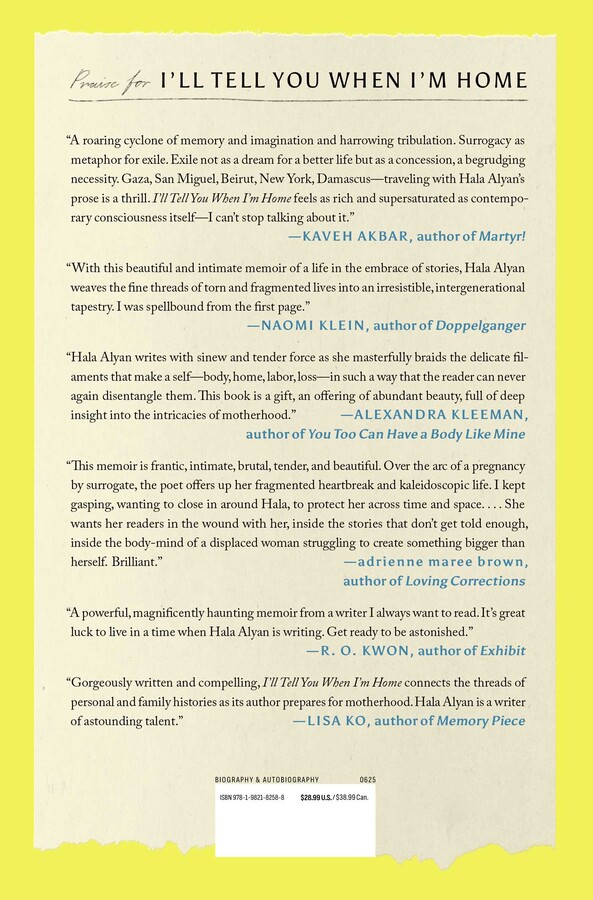
"A beautiful and intimate memoir of a life in the embrace of stories, Alyan weaves the fine threads of torn and fragmented lives into an irresistible, intergenerational tapestry. I was spellbound from the first page." —Naomi Klein, author of Doppelganger
"A roaring cyclone of memory and imagination and harrowing tribulation. Surrogacy as metaphor for exile. Exile not as a dream for a better life, but as concession, a begrudging necessity. Gaza, San Miguel, Beirut, New York, Damascus—traveling with Alyan’s prose is a thrill. I'll Tell You When I'm Home feels as rich and supersaturated as contemporary consciousness itself—I can’t stop talking about it." —Kaveh Akbar, author of Martyr!
“In this vibrant, poetic memoir, Alyan unpacks her difficult journey to motherhood and many facets of her past. . . . The in-betweenness of Alyan's existence and the particular challenges and legacies of her diaspora identity combine with a writer's continual remaking of herself. A poignant exploration of suffering and wonder and a portrait of a woman on the cusp of bringing a new life to her world.” —Booklist
"A powerful, magnificently haunting memoir from a writer I always want to read. It’s great luck to live in a time when Hala Alyan is writing. Get ready to be astonished." —R. O. Kwon, author of Exhibit
"Gorgeously written and compelling, I’ll Tell You When I’m Home connects the threads of personal and family histories as its author prepares for motherhood. Hala Alyan is a writer of astounding talent." —Lisa Ko, author of Memory Piece
"This memoir of pregnancy loss and surrogacy is frantic, intimate, brutal, tender and beautiful. Over the arc of a pregnancy by surrogate, the poet offers up her fragmented heartbreak and kaleidoscopic life. I kept gasping, wanting to close in around Hala, to protect her across time and space from the sharp edges of mother-need inside a body that cannot birth a living baby. She wants her readers in the wound with her, inside the stories that don’t get told enough, inside the body-mind of a displaced woman struggling to create something bigger than herself. Brilliant." —adrienne maree brown, author of Loving Corrections
"Hala Alyan writes with sinew and tender force as she masterfully braids the delicate filaments that make a self—body, home, labor, loss—in such a way that the reader can never again disentangle them. This book is a gift, an offering of abundant beauty, full of deep insight into the intricacies of motherhood." —Alexandra Kleeman, author of You Too Can Have a Body Like Mine
"An exquisitely written and unforgettable memoir about what it means to live with the violence and theft of exile and one woman’s devotion to restoring her daughter’s inheritance through the power of narrative." —Nadia Owusu, author of Aftershocks
“The memory of past wars, their imprint on the personalities of the people swept up in them, and the slow festering of unhealed wounds help shape the psychological landscape of Palestinian American author Hala Alyan’s moving, kaleidoscopic memoir, I’ll Tell You When I’m Home. . . . What fascinates in this memoir is Alyan’s own story. . . Her hard-won sobriety, her professional accomplishments, and the life she has built in the US still leave her wondering: What of all this will her child inherit? In lieu of an answer, she offers up this book, a record of loss and hope.” —Leslie Camhi, 4Columns
“A smart, immersive, and life-affirming memoir set in the space between generations: those who have passed and those who aren’t yet.” —Eliana Ramage, Lit Hub
“In her lyrical and deeply personal memoir, Hala Alyan explores loss—both ancestral and immediate with tenderness and clarity. The book reflects on storytelling through mothers and daughters as a means of survival. The book’s most poignant reckoning: how does one hold on to a Palestinian identity while living far from the land? The book addresses longing for motherhood, for a return to the Levantine homeland that shaped her family history. Alyan’s writing doesn’t offer easy answers; it gives voice to the ache and beauty of diasporic existence.” —Vogue Arabia
Resources and Downloads
High Resolution Images
-
Book Cover Image (jpg): I'll Tell You When I'm Home
Hardcover 9781982182588
-
Author Photo (jpg): Hala Alyan Photograph by Mustafa Mirza(0.1 MB)
Any use of an author photo must include its respective photo credit