

Plus, receive recommendations and exclusive offers on all of your favorite books and authors from Simon & Schuster.
Table of Contents
Reading Group Guide
About the Book
“A magic spell of a book.” —Julie Buntin
“Heavy Cream is funny, deeply felt, and positively effervescent, brimming with life and color and texture—I was repeatedly struck by its humor, its compassion, and its candor.” —Claire Lombardo, New York Times bestselling author of The Most Fun We Ever Had
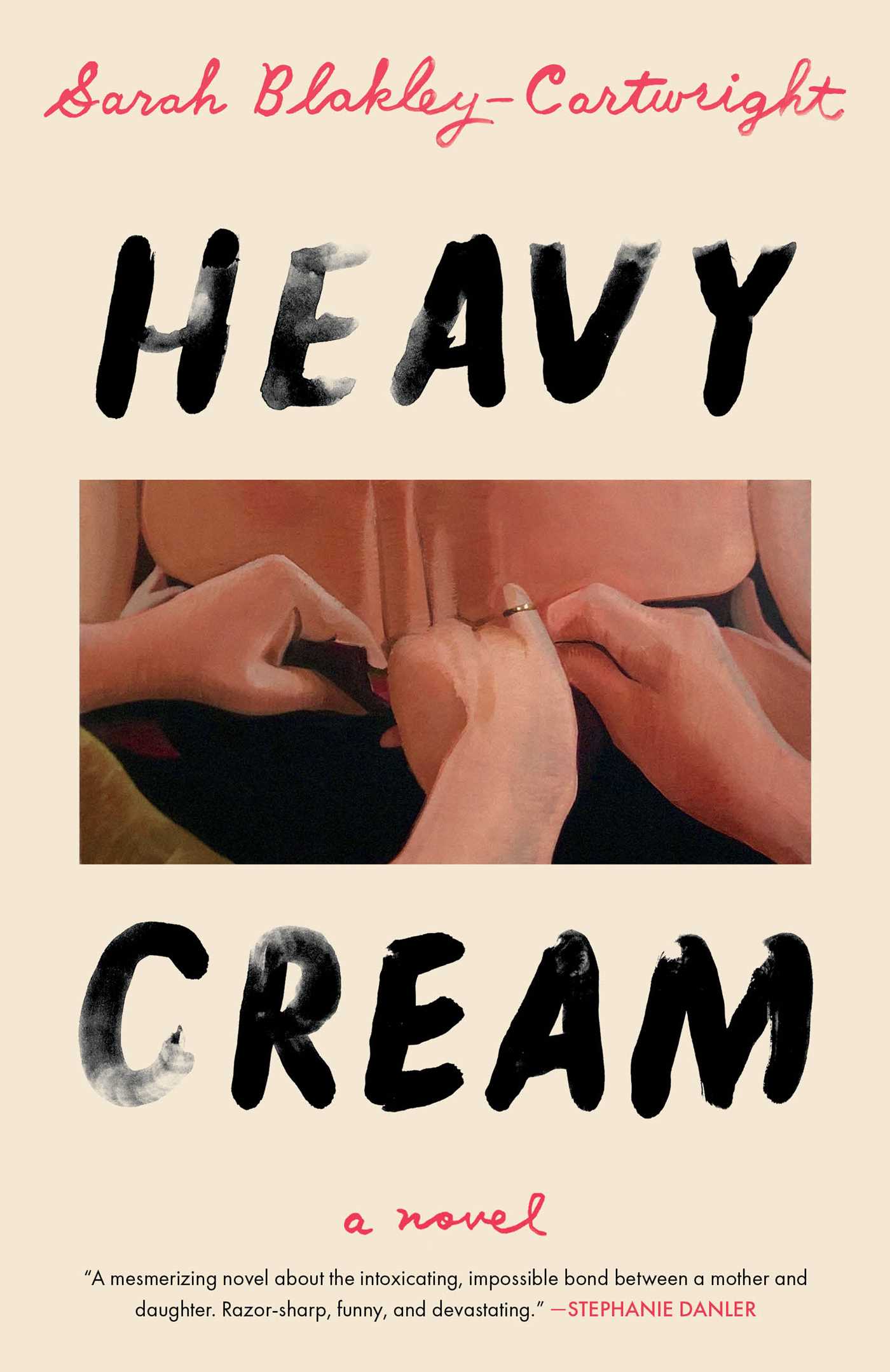
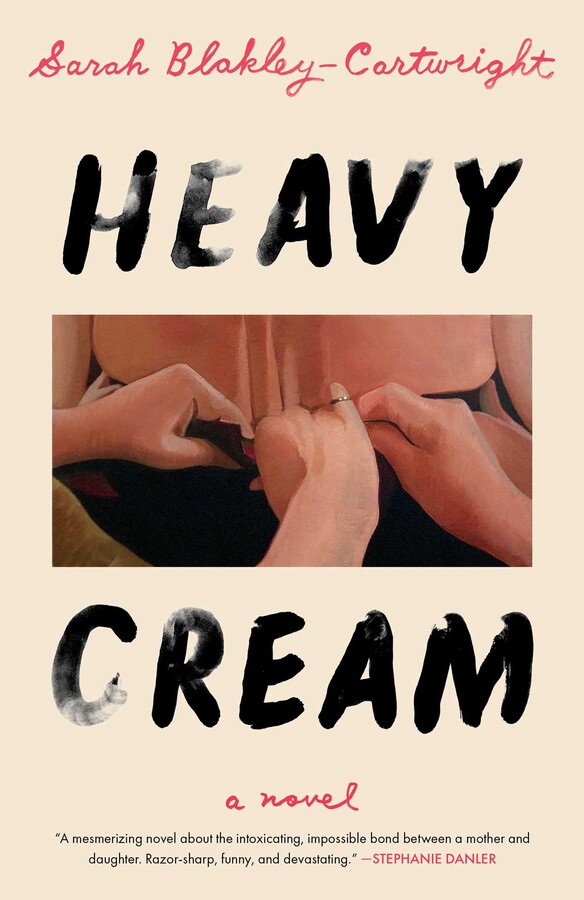
Abandoned by her mother in New York, sixteen-year-old Geraldine falls under the influence of three women, each seeking to form her in their image, in this “wildly perceptive” (Stefan Merrill Block, New York Times bestselling author of Homeschooled) coming-of-age story from the bestselling author of Alice Sadie Celine.
For Gerry, growing up on the road has always been her mother and her, locked in dysfunction. Homeschooled, she hasn’t learned much math. Instead, her mother has taught her how to spend the day at a motel’s swimming pool without being a guest and how to dodge paying extra for the chicken on a Caesar salad.
Gerry learns how to pass and adapt, but when she is abandoned in the city, she finds herself in the care of three very different women, each intent on shaping her into competing and incompatible selves. First, there is her mother’s old college friend Bonnie, who lives in a world of country clubs and chintzy domesticity. Then there is Nell, her mother’s estranged sister and a successful artist, who insists on ambition and self-invention. And finally Finley, an old-money socialite, who ushers Gerry into a rarefied world of Manhattan privilege.
A coming-of-age story that explores unconventional forms of motherhood and caretaking, Heavy Cream is both a charming comedy of manners and a deeply probing look at the complexities of love, mental illness, and inheritance, and one young woman’s eccentric path to selfhood.
“Heavy Cream is funny, deeply felt, and positively effervescent, brimming with life and color and texture—I was repeatedly struck by its humor, its compassion, and its candor.” —Claire Lombardo, New York Times bestselling author of The Most Fun We Ever Had
Abandoned by her mother in New York, sixteen-year-old Geraldine falls under the influence of three women, each seeking to form her in their image, in this “wildly perceptive” (Stefan Merrill Block, New York Times bestselling author of Homeschooled) coming-of-age story from the bestselling author of Alice Sadie Celine.
For Gerry, growing up on the road has always been her mother and her, locked in dysfunction. Homeschooled, she hasn’t learned much math. Instead, her mother has taught her how to spend the day at a motel’s swimming pool without being a guest and how to dodge paying extra for the chicken on a Caesar salad.
Gerry learns how to pass and adapt, but when she is abandoned in the city, she finds herself in the care of three very different women, each intent on shaping her into competing and incompatible selves. First, there is her mother’s old college friend Bonnie, who lives in a world of country clubs and chintzy domesticity. Then there is Nell, her mother’s estranged sister and a successful artist, who insists on ambition and self-invention. And finally Finley, an old-money socialite, who ushers Gerry into a rarefied world of Manhattan privilege.
A coming-of-age story that explores unconventional forms of motherhood and caretaking, Heavy Cream is both a charming comedy of manners and a deeply probing look at the complexities of love, mental illness, and inheritance, and one young woman’s eccentric path to selfhood.
Appearances
SEP 27
12:00AM
In Person
Brooklyn Book Festival
209 Joralemon Street
Brooklyn, NY 11231
SEP 29
12:00AM
In Person
The Strand
828 Broadway
New York, NY 10003
OCT 1
12:00AM
In Person
Book Soup
8818 Sunset Blvd
West Hollywood, CA 90069
Excerpt
Chapter One ONE
MY MOTHER TOLD ME I looked like Veronica Lake. My dream girl, she called me. I took this to mean that she had wanted a child, had dreamt of one and then been granted that wish, though it could equally have meant that she still did not accept me as truly real, that I was as good as something imagined.
It was hard for my mother to love me, a miracle that she did. I understood! I grated on her nerves. My presence needled. I could be a bad kid. A nightmare for any parent. I mouthed off. I knew how to manipulate, and I didn’t always resist the urge. Sometimes I was unpleasant, even unkind, what she called acting nasty. Worst of all, sometimes I put on airs. These moments, I understood her long periods of desertion. My mother stuck it out. She granted absolution. She fed me, clothed me. Forgave my trespasses. Was this what she deserved in return?
When my grandmother died, I was happy. My grandfather had preceded her six years prior, which meant that, now, we would get some stuff. My mother filled up her Mitsubishi Diamante with everything they had intended her to have and then some. Mostly, we had to overcorrect, to ensure her grabby sister didn’t wind up with more than her share. My mother sensed gaps in the allotment, sure my aunt Nell had already taken things she hadn’t disclosed. The sole unclaimed item from my grandmother’s estate was Evelyn, my grandmother’s slow-blinking poodle, so inbred that she looked like a goat.
We loaded up the Diamante. Our car, what my mother called our diamond in the rough, was both ratty and natty, with its pearlescent paint job, its ivory plastic interior with prestige trim, 180,000 miles on the odometer. We shoved aside the Gatorade bottles, my mother’s heeled sandals. To make room for our haul, we dumped our spare yellow jugs of gasoline out either window and tossed the receptacles. We dropped Evelyn at the gloomy home of a retired veterinarian we’d connected with on Facebook Marketplace.
I was almost ten years old. My dolls, which just that winter had seemed so alive, so full of some furtive, sequestered worlds of their own, seemed suddenly still and mute, reduced to plastic and vinyl. I’d begun to understand certain things.
In Redding, we popped my grandparents’ old VHS tapes into the inherited VCR, let them run one after the other, paying some attention now and then. They’d bought a three-tape Charlie Chaplin boxed set at Target for $1.75. We saw Fedora and Avanti! Patty Duke’s portrayals of Helen Keller and Neely O’Hara. It was a revelation to me, how there could be different ways of being the same woman.
My grandparents had meant nothing to me, less than that, given what I’d been told of them. They lived far away. Their home, in northern Washington state near Mount Baker, a tall, silhouetted volcano, was a site in my mind of explosive eruption.
And now we had some great new goods. But, to my surprise, despite musing that now she was free, the death seemed to have unlocked some new and unexpected form of tenderness in my mother. I saw that sadness made a person soft. And that the softness made her happy, brought her comfort, simply to know she could feel it.
My mother’s happiness was a firefly I’d tasked myself with taking into custody. In those days, my mother was not my best friend in the world, she was the world. She was what made anything make sense. Any opinion I had was hers. We were each other; I’d never have known how to separate us.
Today, in Redding, my mother was crumpled.
She had never needed the fluff of entertainment, the security blanket of a book or a show. She liked to sit outside and use her senses, unmitigated. But I liked TV, the miscellany of it, low-power stations like KRCR and KCVU, and she had nothing against watching it with me. We tuned in to Jerry Springer. I found him a wholesome antidote to his unsavory guests. I bet he was a wonderful father. We watched Married… with Children, the story of a family so unlike ours as to be science fiction. But today, the shows, even the consolation of the VHS tapes, the clunky old tech from another lifetime, wasn’t enough. Her mother was never coming back. “It’s so final, Jellybean,” my mother gasped. “There’s no undoing it.”
She had not spoken with her mother for years. Could you miss someone you had excised, mourn someone you had deliberately shut the door on? It felt like theater, another of my mother’s tricks. Still, despite not exactly grasping her grief, I felt it was my duty to pull her out of it. I had an idea. I ran into the other room and stepped into my mother’s pants, loose and baggy on me. I used a shoelace for a belt. I snatched up my grandmother’s cane and my grandfather’s gray felt hat.
Reentering the room, I hitched up my hip, screwed up my face, and adopted my best approximation of the clumsy Chaplin walk. It was all in the hips.
My mother loved it. She was small and bright, like a lemon tree. Watching me strut with bent legs, her face changed, like my grandmother’s cane was a magic wand I had passed over her. It was me, ushering in exuberance. I was that magic.
So I hammed it up, escalating. I scrunched my face like wrapping paper, I puckered and crimped. Like a penguin, I shuffled as fast as I could, then collapsed onto the floor, twitching like a cartoon. I knew this was not in character, but I couldn’t stop. The ball was rolling, and I seemed to be along for the ride. I munched an invisible carrot, ch-ch-ch-ch. “What’s up, Doc?”
Now it was the full wallop of us. I was clomping, creeping, and skidding. I was laughing, then crying. Pantomiming, pinching my cheeks, then hers. “Ow!” she shrieked, and I had hurt her. Known I would. I was making merry at any cost. I was a maestro, the Tramp.
We whipped ourselves into a frenzied enthusiasm, thickening like cream under a whisk, dense and heavy, stirring in both our minds memories of my grandmother’s Chantilly, beaten plush and solid.
The current was running through us now. “A vagrant, a gentleman, a poet, a dreamer!”
It was a fantastic flight into festivity. We were frothing. I knew my purpose in life. It was to make my mother laugh.
“Anyone eat my boots?” I said out the side of my mouth, an impeccable Charlie Chaplin. But even I could see, already, that we’d gone too far. My mother was slipping out of herself, like a VHS tape gone off the reel. Her mood was turning. Where she had been aflame with intensity, something in her was extinguishing. Suddenly, to her, my routine, my boisterous mugging, was a bore.
I lived in fear of this. It was like a sheet pulled over a magnificent view. I retired the Chaplin garb, faintly humiliating now, folding it neatly for next time. Maybe we would pick it up again later. I suggested we go for Chinese, and my mother agreed.
It was the puffy prawn crackers that melted in our mouths, dissolving the instant they hit our tongues, and in such striking shades of Easter pink and peach, that kept us coming back for more. One small bag was free with every order. We were not known here, the way we were known at Bamboo China Bistro, a regular spot of ours, conveniently near the Regal Cineplex where we liked to sneak into three films a day, me scouting first and then both of us darting across the carpeted aisle, sticky with spilled soda, from Theater 6 to Theater 7. These days, I was free to choose any flick I wanted. My mother liked everything. I loved the total transportation movies offered, the darkened theater a direct passage to another world. Settling into the plush seats felt like being dropped into another dimension, a clean break from our disheveled daily existence.
There was only one restriction: any movie helmed by my mother’s old college friend, Harlan. I hunted these out. Subtly, at the very bottom of the poster, beneath the star-touting, in small type, it would say A HUNGRY BEAR PRODUCTION. There was no explanation offered. My mother’s only comment? The less said about him the better.
We had placed our order ahead of time, in the dead-zone late-afternoon interval between the end of the after-school animated feature and the start of the blockbusters, and the restaurant had our food ready for pickup. Today, my mother sent me in. She waited outside to study the shellfish in the live seafood tank.
While she watched a black eel looping through the cloudy water, I seized upon an idea. My mother and I always felt we were owed things by the world, restitution for what I didn’t yet know, only that we’d not been provided all we were due and that taking without paying would be a recompense for our failed allotment. It may have been that there were only two of us, when families were so often some multiple of that. We were short. We didn’t add up.
So, despite not being equipped with my grandmother’s cane, which would have enhanced the routine’s plausibility, when the door opened into the restaurant with a whoosh and a tinkle of bells, I fell onto one side of my body.
“I appreciate it,” I said, when the proprietor stepped out from behind the counter to assist. “I left my cane at home.”
He looked sorry for my difficulty. I wished he was a little younger, not so gray-haired himself, a little less stiff and unsteady. But I adopted my limp anyway, hoping my mother could see through the window. Every time I looked up, walking haltingly, she wasn’t. She was lost to the crustaceans in private reverie. She had forfeited her mother, squandered her. I tried to imagine it, my mother being dead forever, never coming back. It made me feel regret for all our squabbling and dirty scraps. I focused on making my limp very realistic this time, convincing, no more funny stuff. I felt this was important. I walked unevenly, the way I did when one foot was asleep.
The aged owner handed me the brown paper bag waiting on the counter. I took a long time picking it up. At the last moment, he caught my eye. “Extra,” he said, adding not just a second but a third bag of the complimentary prawn chips.
I hobbled out of the restaurant for good measure, even though my jig was up. When I came out, she was standing with her back to me. Just out of sight of the window, having cleared his sight line, I jumped in front of the tank and wagged the bag for my mother to see. “Look what I got! He thought I was crippled!”
Something in my mother’s face changed. Her eyes crinkled. I went further, starting up my charade again. “I went like this.” I hooked my thumb into my belt loop and tilted exaggeratedly to one side, more bent and shambling than in the restaurant.
“You think that’s funny?” Suddenly, there were tears in my mother’s sad eyes. “Go in there and apologize. Tell that nice man that you lied.”
I stood up. I saw a few dry, dead shrimp littered outside the water tank.
“I can’t.” Of course I couldn’t. “We’ll never be able to come back.” I was thinking of her, I swear, of how she liked the pastel prawn chips and the pork rinds.
“Aren’t you ashamed of yourself?” She banged her head with the palm of her hand.
I hated her. She was absolutely right.
“Of course, I’ll be the villain in their mind, I’ll be the one who never taught you.”
A magma of rage—lava so glassy white-hot it was almost ice—rose inside me, pooling then hardening into cement. It sat like a stone.
The older man was at the till, counting cash. I had hoped he would look up and see me walk in, register the reveal so I wouldn’t have to say it out loud. He knew I was there, but I had to wait while he focused, finished thumbing through the stack in his hand, whispering numbers to himself. Finally, he went silent and folded the bills. “Something wrong?”
Yes, something wrong. I confessed. He said I could keep the prawn chips. I said I couldn’t. We both felt sad, and then I left.
In the car, my mother stared ahead. I’d disappeared.
“What’s wrong, Mommy?”
It was the first step. We were tumbling into our hole. I’d goad her into it, playing dumb, playing the baby. We were two bats, winging in darkness. We could see what no one else could.
“Mommy, talk to me.”
She drove with her eyes red-rimmed but unerringly straight ahead on the road.
“I love you so much. Please talk to me, Mommy.”
This would set her teeth on edge. She hated a goody-goody. She was always on the lookout for affect, ready to beat it out of me. “You’re giving me the creeps.”
“I’m sorry, Mommy.”
Mealymouthed, I would prostrate myself. This would be both what she wanted—what gave her license to set loose the worst of her—and what gave her the heebie-jeebies. Actually, it was fun for both of us, for a few moments at least.
“You sure were nasty back there.” My mother’s red eyes glittered. “What a nasty trick.”
Nasty was a favorite word of hers, suggesting not only that I’d been immoral but that I’d been disgustingly so, my soul itself moldering, maggoty and worm-eaten. I could have pointed out any number of her own tricks, long running, more deliberate than mine.
“You’re my mommy.” She was driving the car, but I was driving the performance. “You’re supposed to teach me.” I could keep up. I’d learned from the best.
There was a pause. We each took a breath. And then I began to sob, to give way to the panic I was manufacturing. My dread and restlessness becoming real as I expressed it.
“You’re becoming hysterical,” she said, not taking her red eyes off the road.
How it would go: At home, she would plunge into a funk, retreating to her room. What was black, embedded inside her, would overcome the rest; she’d go dark like the Regal theater, lights out on all trespass. Wherever it was she had gone, she couldn’t hear me from there.
Soon, she’d be asleep, lit by the muted television, the peach-fuzzy outline of her naked body glowing like a fetus in a chamber. The heavy dose of feuding would have taken us both out. I’d retreat to the bath like an infant Marat, made languid by my pointless revolution. I was sullen. I had no power. And I missed her. The one outcome I always failed to account for.
When she emerged, she’d be blurry-eyed but awake. Often, these were the best times between us. She would be starving and require a dose of candy and juice to get her blood sugar up. I’d bring her a bag of Skittles and we’d watch cartoons, whichever I wanted.
“Jellybean,” she’d say, turning to me at a commercial break. “How to make you into an honest and loving child?”
I’d shrug; she’d pat my knee. Halloween was next week, and we were behind. It was past time to begin planning our costumes, our spine-tingling door swag, our ghostly giveaways, our cute, sinister ’n’ spooky crafts.
MY MOTHER TOLD ME I looked like Veronica Lake. My dream girl, she called me. I took this to mean that she had wanted a child, had dreamt of one and then been granted that wish, though it could equally have meant that she still did not accept me as truly real, that I was as good as something imagined.
It was hard for my mother to love me, a miracle that she did. I understood! I grated on her nerves. My presence needled. I could be a bad kid. A nightmare for any parent. I mouthed off. I knew how to manipulate, and I didn’t always resist the urge. Sometimes I was unpleasant, even unkind, what she called acting nasty. Worst of all, sometimes I put on airs. These moments, I understood her long periods of desertion. My mother stuck it out. She granted absolution. She fed me, clothed me. Forgave my trespasses. Was this what she deserved in return?
When my grandmother died, I was happy. My grandfather had preceded her six years prior, which meant that, now, we would get some stuff. My mother filled up her Mitsubishi Diamante with everything they had intended her to have and then some. Mostly, we had to overcorrect, to ensure her grabby sister didn’t wind up with more than her share. My mother sensed gaps in the allotment, sure my aunt Nell had already taken things she hadn’t disclosed. The sole unclaimed item from my grandmother’s estate was Evelyn, my grandmother’s slow-blinking poodle, so inbred that she looked like a goat.
We loaded up the Diamante. Our car, what my mother called our diamond in the rough, was both ratty and natty, with its pearlescent paint job, its ivory plastic interior with prestige trim, 180,000 miles on the odometer. We shoved aside the Gatorade bottles, my mother’s heeled sandals. To make room for our haul, we dumped our spare yellow jugs of gasoline out either window and tossed the receptacles. We dropped Evelyn at the gloomy home of a retired veterinarian we’d connected with on Facebook Marketplace.
I was almost ten years old. My dolls, which just that winter had seemed so alive, so full of some furtive, sequestered worlds of their own, seemed suddenly still and mute, reduced to plastic and vinyl. I’d begun to understand certain things.
In Redding, we popped my grandparents’ old VHS tapes into the inherited VCR, let them run one after the other, paying some attention now and then. They’d bought a three-tape Charlie Chaplin boxed set at Target for $1.75. We saw Fedora and Avanti! Patty Duke’s portrayals of Helen Keller and Neely O’Hara. It was a revelation to me, how there could be different ways of being the same woman.
My grandparents had meant nothing to me, less than that, given what I’d been told of them. They lived far away. Their home, in northern Washington state near Mount Baker, a tall, silhouetted volcano, was a site in my mind of explosive eruption.
And now we had some great new goods. But, to my surprise, despite musing that now she was free, the death seemed to have unlocked some new and unexpected form of tenderness in my mother. I saw that sadness made a person soft. And that the softness made her happy, brought her comfort, simply to know she could feel it.
My mother’s happiness was a firefly I’d tasked myself with taking into custody. In those days, my mother was not my best friend in the world, she was the world. She was what made anything make sense. Any opinion I had was hers. We were each other; I’d never have known how to separate us.
Today, in Redding, my mother was crumpled.
She had never needed the fluff of entertainment, the security blanket of a book or a show. She liked to sit outside and use her senses, unmitigated. But I liked TV, the miscellany of it, low-power stations like KRCR and KCVU, and she had nothing against watching it with me. We tuned in to Jerry Springer. I found him a wholesome antidote to his unsavory guests. I bet he was a wonderful father. We watched Married… with Children, the story of a family so unlike ours as to be science fiction. But today, the shows, even the consolation of the VHS tapes, the clunky old tech from another lifetime, wasn’t enough. Her mother was never coming back. “It’s so final, Jellybean,” my mother gasped. “There’s no undoing it.”
She had not spoken with her mother for years. Could you miss someone you had excised, mourn someone you had deliberately shut the door on? It felt like theater, another of my mother’s tricks. Still, despite not exactly grasping her grief, I felt it was my duty to pull her out of it. I had an idea. I ran into the other room and stepped into my mother’s pants, loose and baggy on me. I used a shoelace for a belt. I snatched up my grandmother’s cane and my grandfather’s gray felt hat.
Reentering the room, I hitched up my hip, screwed up my face, and adopted my best approximation of the clumsy Chaplin walk. It was all in the hips.
My mother loved it. She was small and bright, like a lemon tree. Watching me strut with bent legs, her face changed, like my grandmother’s cane was a magic wand I had passed over her. It was me, ushering in exuberance. I was that magic.
So I hammed it up, escalating. I scrunched my face like wrapping paper, I puckered and crimped. Like a penguin, I shuffled as fast as I could, then collapsed onto the floor, twitching like a cartoon. I knew this was not in character, but I couldn’t stop. The ball was rolling, and I seemed to be along for the ride. I munched an invisible carrot, ch-ch-ch-ch. “What’s up, Doc?”
Now it was the full wallop of us. I was clomping, creeping, and skidding. I was laughing, then crying. Pantomiming, pinching my cheeks, then hers. “Ow!” she shrieked, and I had hurt her. Known I would. I was making merry at any cost. I was a maestro, the Tramp.
We whipped ourselves into a frenzied enthusiasm, thickening like cream under a whisk, dense and heavy, stirring in both our minds memories of my grandmother’s Chantilly, beaten plush and solid.
The current was running through us now. “A vagrant, a gentleman, a poet, a dreamer!”
It was a fantastic flight into festivity. We were frothing. I knew my purpose in life. It was to make my mother laugh.
“Anyone eat my boots?” I said out the side of my mouth, an impeccable Charlie Chaplin. But even I could see, already, that we’d gone too far. My mother was slipping out of herself, like a VHS tape gone off the reel. Her mood was turning. Where she had been aflame with intensity, something in her was extinguishing. Suddenly, to her, my routine, my boisterous mugging, was a bore.
I lived in fear of this. It was like a sheet pulled over a magnificent view. I retired the Chaplin garb, faintly humiliating now, folding it neatly for next time. Maybe we would pick it up again later. I suggested we go for Chinese, and my mother agreed.
It was the puffy prawn crackers that melted in our mouths, dissolving the instant they hit our tongues, and in such striking shades of Easter pink and peach, that kept us coming back for more. One small bag was free with every order. We were not known here, the way we were known at Bamboo China Bistro, a regular spot of ours, conveniently near the Regal Cineplex where we liked to sneak into three films a day, me scouting first and then both of us darting across the carpeted aisle, sticky with spilled soda, from Theater 6 to Theater 7. These days, I was free to choose any flick I wanted. My mother liked everything. I loved the total transportation movies offered, the darkened theater a direct passage to another world. Settling into the plush seats felt like being dropped into another dimension, a clean break from our disheveled daily existence.
There was only one restriction: any movie helmed by my mother’s old college friend, Harlan. I hunted these out. Subtly, at the very bottom of the poster, beneath the star-touting, in small type, it would say A HUNGRY BEAR PRODUCTION. There was no explanation offered. My mother’s only comment? The less said about him the better.
We had placed our order ahead of time, in the dead-zone late-afternoon interval between the end of the after-school animated feature and the start of the blockbusters, and the restaurant had our food ready for pickup. Today, my mother sent me in. She waited outside to study the shellfish in the live seafood tank.
While she watched a black eel looping through the cloudy water, I seized upon an idea. My mother and I always felt we were owed things by the world, restitution for what I didn’t yet know, only that we’d not been provided all we were due and that taking without paying would be a recompense for our failed allotment. It may have been that there were only two of us, when families were so often some multiple of that. We were short. We didn’t add up.
So, despite not being equipped with my grandmother’s cane, which would have enhanced the routine’s plausibility, when the door opened into the restaurant with a whoosh and a tinkle of bells, I fell onto one side of my body.
“I appreciate it,” I said, when the proprietor stepped out from behind the counter to assist. “I left my cane at home.”
He looked sorry for my difficulty. I wished he was a little younger, not so gray-haired himself, a little less stiff and unsteady. But I adopted my limp anyway, hoping my mother could see through the window. Every time I looked up, walking haltingly, she wasn’t. She was lost to the crustaceans in private reverie. She had forfeited her mother, squandered her. I tried to imagine it, my mother being dead forever, never coming back. It made me feel regret for all our squabbling and dirty scraps. I focused on making my limp very realistic this time, convincing, no more funny stuff. I felt this was important. I walked unevenly, the way I did when one foot was asleep.
The aged owner handed me the brown paper bag waiting on the counter. I took a long time picking it up. At the last moment, he caught my eye. “Extra,” he said, adding not just a second but a third bag of the complimentary prawn chips.
I hobbled out of the restaurant for good measure, even though my jig was up. When I came out, she was standing with her back to me. Just out of sight of the window, having cleared his sight line, I jumped in front of the tank and wagged the bag for my mother to see. “Look what I got! He thought I was crippled!”
Something in my mother’s face changed. Her eyes crinkled. I went further, starting up my charade again. “I went like this.” I hooked my thumb into my belt loop and tilted exaggeratedly to one side, more bent and shambling than in the restaurant.
“You think that’s funny?” Suddenly, there were tears in my mother’s sad eyes. “Go in there and apologize. Tell that nice man that you lied.”
I stood up. I saw a few dry, dead shrimp littered outside the water tank.
“I can’t.” Of course I couldn’t. “We’ll never be able to come back.” I was thinking of her, I swear, of how she liked the pastel prawn chips and the pork rinds.
“Aren’t you ashamed of yourself?” She banged her head with the palm of her hand.
I hated her. She was absolutely right.
“Of course, I’ll be the villain in their mind, I’ll be the one who never taught you.”
A magma of rage—lava so glassy white-hot it was almost ice—rose inside me, pooling then hardening into cement. It sat like a stone.
The older man was at the till, counting cash. I had hoped he would look up and see me walk in, register the reveal so I wouldn’t have to say it out loud. He knew I was there, but I had to wait while he focused, finished thumbing through the stack in his hand, whispering numbers to himself. Finally, he went silent and folded the bills. “Something wrong?”
Yes, something wrong. I confessed. He said I could keep the prawn chips. I said I couldn’t. We both felt sad, and then I left.
In the car, my mother stared ahead. I’d disappeared.
“What’s wrong, Mommy?”
It was the first step. We were tumbling into our hole. I’d goad her into it, playing dumb, playing the baby. We were two bats, winging in darkness. We could see what no one else could.
“Mommy, talk to me.”
She drove with her eyes red-rimmed but unerringly straight ahead on the road.
“I love you so much. Please talk to me, Mommy.”
This would set her teeth on edge. She hated a goody-goody. She was always on the lookout for affect, ready to beat it out of me. “You’re giving me the creeps.”
“I’m sorry, Mommy.”
Mealymouthed, I would prostrate myself. This would be both what she wanted—what gave her license to set loose the worst of her—and what gave her the heebie-jeebies. Actually, it was fun for both of us, for a few moments at least.
“You sure were nasty back there.” My mother’s red eyes glittered. “What a nasty trick.”
Nasty was a favorite word of hers, suggesting not only that I’d been immoral but that I’d been disgustingly so, my soul itself moldering, maggoty and worm-eaten. I could have pointed out any number of her own tricks, long running, more deliberate than mine.
“You’re my mommy.” She was driving the car, but I was driving the performance. “You’re supposed to teach me.” I could keep up. I’d learned from the best.
There was a pause. We each took a breath. And then I began to sob, to give way to the panic I was manufacturing. My dread and restlessness becoming real as I expressed it.
“You’re becoming hysterical,” she said, not taking her red eyes off the road.
How it would go: At home, she would plunge into a funk, retreating to her room. What was black, embedded inside her, would overcome the rest; she’d go dark like the Regal theater, lights out on all trespass. Wherever it was she had gone, she couldn’t hear me from there.
Soon, she’d be asleep, lit by the muted television, the peach-fuzzy outline of her naked body glowing like a fetus in a chamber. The heavy dose of feuding would have taken us both out. I’d retreat to the bath like an infant Marat, made languid by my pointless revolution. I was sullen. I had no power. And I missed her. The one outcome I always failed to account for.
When she emerged, she’d be blurry-eyed but awake. Often, these were the best times between us. She would be starving and require a dose of candy and juice to get her blood sugar up. I’d bring her a bag of Skittles and we’d watch cartoons, whichever I wanted.
“Jellybean,” she’d say, turning to me at a commercial break. “How to make you into an honest and loving child?”
I’d shrug; she’d pat my knee. Halloween was next week, and we were behind. It was past time to begin planning our costumes, our spine-tingling door swag, our ghostly giveaways, our cute, sinister ’n’ spooky crafts.
About the Author
Sylvie Rosokoff
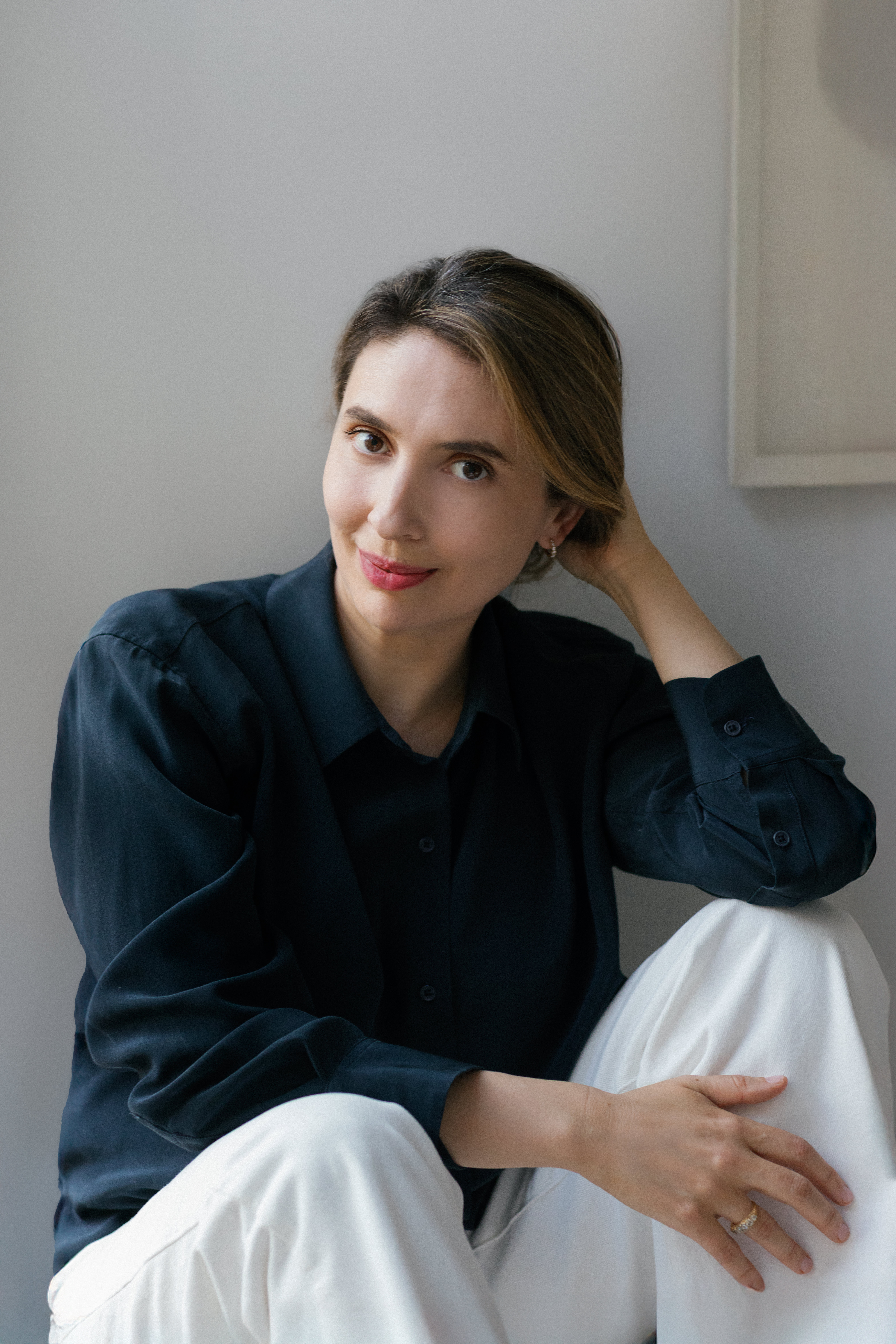
Sarah Blakley-Cartwright is the author of Alice Sadie Celine and Red Riding Hood, a #1 New York Times bestseller published worldwide in thirty-eight editions and fifteen languages. She is the editor of Hauser & Wirth’s The Artist’s Library for Ursula magazine and an associate editor at A Public Space.
Product Details
- Publisher: Simon & Schuster (September 29, 2026)
- Length: 304 pages
- ISBN13: 9781668217740
Browse Related Books
Raves and Reviews
"A memorable novel that deserves to be read more than once... for readers who enjoy coming-of-age stories with independent but flawed women."
—LIBRARY JOURNAL, Starred Review
"When a scrappy teenage narrator is cruelly cut loose by her Velcro-tight mom, she finds mentors in three very different women in and around New York. Funny and sharp."
—PEOPLE
"In this arresting and offbeat coming-of-age novel from Blakley-Cartwright, a 16-year-old girl leaves her vagabond life in California for the East Coast... it’s a fresh story of female resilience."
—PUBLISHERS WEEKLY
"Smart, edgy, and emotionally astute."
—OPRAH DAILY'S Best Books of Fall
"A tale of teenage resilience that shows how choices made by adults determine what younger generations have to endure."
—BOOKLIST
"Heavy Cream is a mesmerizing novel about the intoxicating, impossible bond between a mother and daughter, told in prose that is at once razor-sharp, funny, and devastating. Sarah Blakley-Cartwright captures the way love and manipulation become indistinguishable, refusing easy villains or simple redemption. It's a tender and complicated portrait of inheritance, identity, and the impossible work of becoming yourself."
—Stephanie Danler, author of Sweetbitter
"Gerry's voice is addictive, a keen observer of everyone and everything, except, in the way of all great first-person narrators, herself, particularly how her love and longing for her mother shapes her choices. This story of mothers and daughters and the lengths we will go to find—or make—a home, is one of the most effervescent, complex coming-of-age stories I've read in years. A magic spell of a book."
—Julie Buntin, author of Marlena and Famous Men
"Heavy Cream is a lively, knotted, fun and funny, and also deeply felt, exploration of loving and being loved as one thrilling, complicated young woman attempts to make sense of who she is. How does a daughter form in the shadow of an absent mother; when given a klatch of other not quite mothers to choose from, all with their own draws and flaws and motives, how and why and who does she choose to become?"
—Lynn Steger Strong, author of Flight, Want, and Hold Still
"Unequivocally the best book I've read this year. Sarah Blakley-Cartwright's writing is elegant, painful, and funny. A mother-daughter story with all the wit and feeling of Susie Boyt's Loved and Missed. Heavy Cream nails the profound, often horrifying, experience of figuring out who you are in relation to the people who raised you."
—Erin Somers, author of The Ten Year Affair
"Heavy Cream is a moving and brilliantly written novel that explores the imperfect connection between a mother and daughter and questions the role of caretaking—or lack thereof—in the formation of identity. I absolutely loved this smart, spiky story."
—Camille Perri, author of Social Animals
“As a former homeschool kid, I’m always looking out for the Great Homeschool Novel, and I suspected after a couple chapters of Heavy Cream that I’d finally found it. But, actually, this novel turned out to be much, much more. In this aching, witty, vibey, wildly perceptive story of a teenage girl whose sense of self is repeatedly upended by the whims of the four women vying for her love, Sarah Blakley-Cartwright has proven that she might just be the greatest literary writer of adolescence at work today.”
—Stefan Merrill Block, New York Times bestselling author of Homeschooled: a Memoir
Praise for Alice Sadie Celine:
“It’s fantastic—fresh, complicated, brisk, and sexy.” —Catherine Newman
"Delicious and subversive, Alice Sadie Celine is a mesmerizing read.” —Yiyun Li
"Wickedly delightful.”
—THE NEW YORK TIMES BOOK REVIEW
“A heartfelt, smart, and keenly observed take on friendship and fulfillment, and what it means to start thinking of parents as actual people.”
—TOWN & COUNTRY MAGAZINE
“This satisfies the head and the heart.”
—PUBLISHERS WEEKLY
"Gerry's voice is addictive, a keen observer of everyone and everything, except, in the way of all great first-person narrators, herself, particularly how her love and longing for her mother shapes her choices. This story of mothers and daughters and the lengths we will go to find—or make—a home, is one of the most effervescent, complex coming-of-age stories I've read in years. A magic spell of a book."
—Julie Buntin, author of Marlena and Famous Men
Resources and Downloads
High Resolution Images
-
Book Cover Image (jpg): Heavy Cream
Hardcover 9781668217740
-
Author Photo (jpg): Sarah Blakley-Cartwright Sylvie Rosokoff(0.1 MB)
Any use of an author photo must include its respective photo credit