

Plus, receive recommendations and exclusive offers on all of your favorite books and authors from Simon & Schuster.
0:00 /
LIST PRICE $28.99
PRICE MAY VARY BY RETAILER
Free shipping when you spend $40. Terms apply.
Buy from Other Retailers
Table of Contents
Featured Content
About the Book
A NEW YORK TIMES BESTSELLER
“The perfect thriller to read with your toes in the sand while looking over your shoulder.” —The View
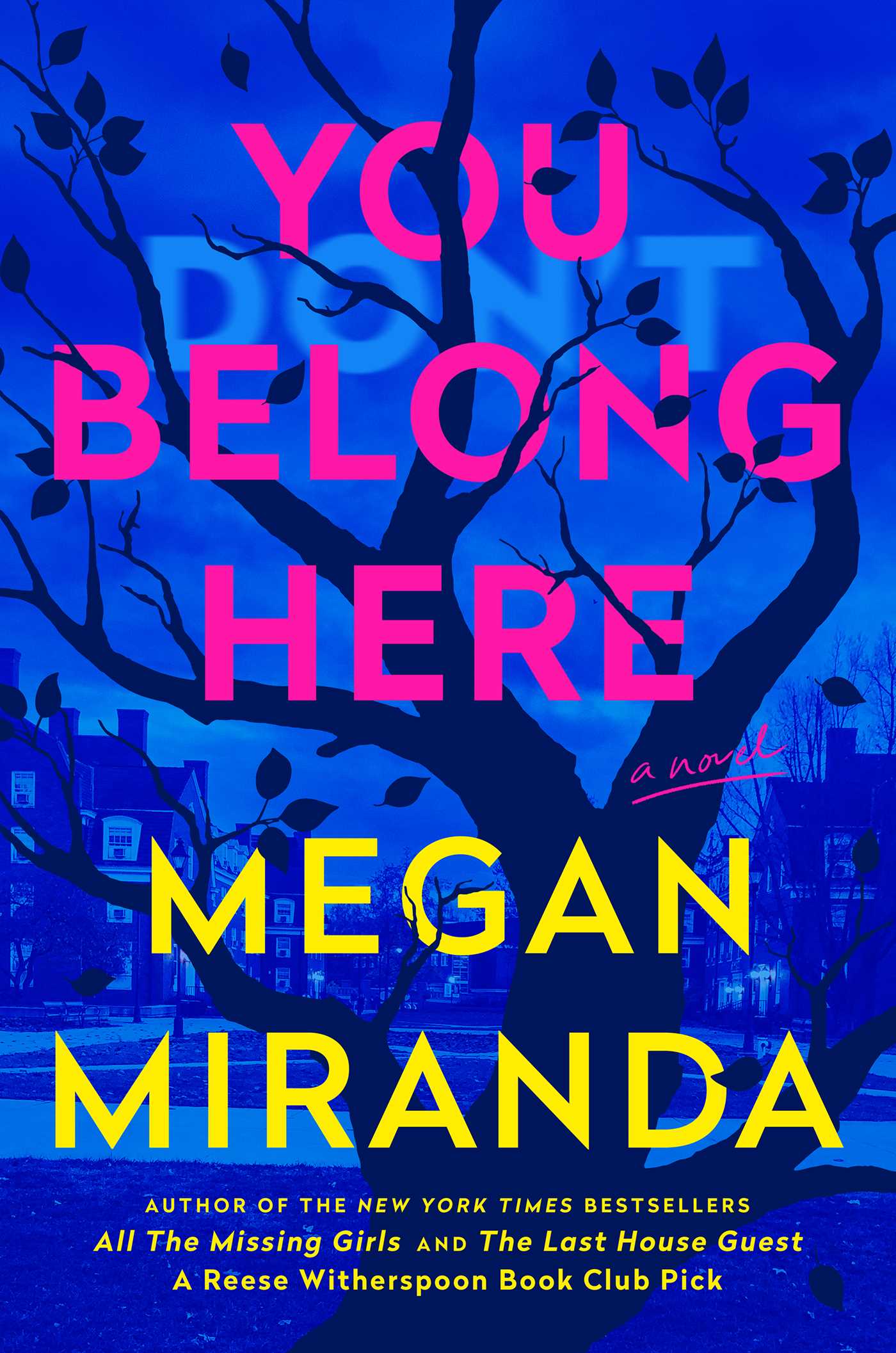
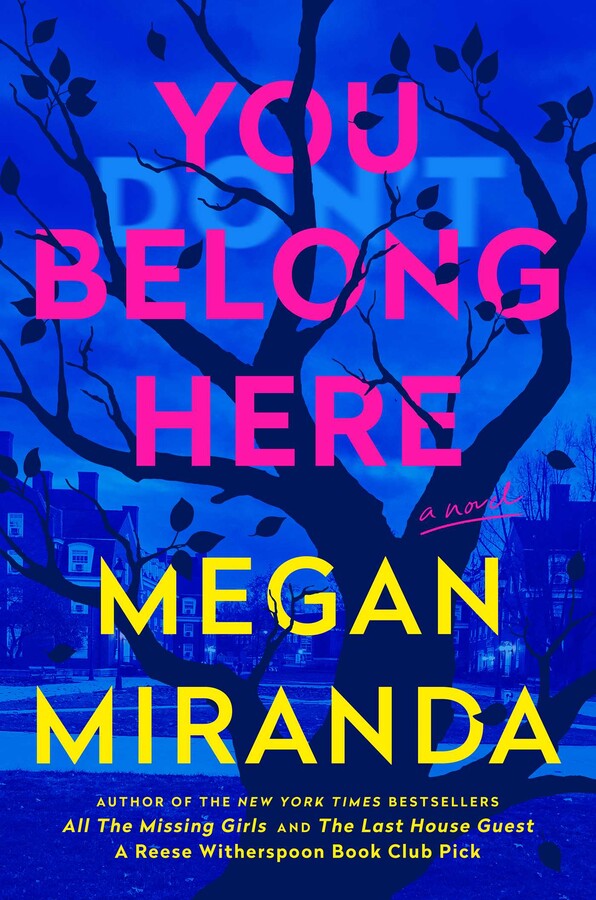
Don’t miss the instant New York Times bestseller from Megan Miranda, where a mother’s secrets, campus mysteries, and long-hidden truths ignite a haunting legacy.
Beckett Bowery never thought she’d return to Wyatt Valley, a picturesque college town in the Virginia mountains steeped in tradition. Her roots there were strong: Beckett’s parents taught at the college, and she never even imagined studying anywhere else—until a tragedy her senior year ended with two local men dead, and her roommate on the run, never to be seen again…
For the last two decades, Beckett has done her best to keep her distance. Then her daughter, Delilah, secretly applies to Wyatt College and earns a full scholarship, and Beckett can only hope that her lingering fears are unfounded. But deep down she knows that Wyatt Valley has a long memory, and that the past isn’t the only dangerous thing in town…
“The perfect thriller to read with your toes in the sand while looking over your shoulder.” —The View
Don’t miss the instant New York Times bestseller from Megan Miranda, where a mother’s secrets, campus mysteries, and long-hidden truths ignite a haunting legacy.
Beckett Bowery never thought she’d return to Wyatt Valley, a picturesque college town in the Virginia mountains steeped in tradition. Her roots there were strong: Beckett’s parents taught at the college, and she never even imagined studying anywhere else—until a tragedy her senior year ended with two local men dead, and her roommate on the run, never to be seen again…
For the last two decades, Beckett has done her best to keep her distance. Then her daughter, Delilah, secretly applies to Wyatt College and earns a full scholarship, and Beckett can only hope that her lingering fears are unfounded. But deep down she knows that Wyatt Valley has a long memory, and that the past isn’t the only dangerous thing in town…
Excerpt
Prologue PROLOGUE
I knew how easily a story could shift. How quickly the public could turn. I’d seen it happen, twenty years earlier. A game sliding into a crime. A tradition twisting into a nightmare.
I watched as an arc slowly emerged from the series of headlines and police bulletins, until the story had a shape, the truth a sharp end point.
Structure Fire at Perimeter of Wyatt College Burns Through Night
Two Local Men Deceased in Steam Tunnels Under Campus
Police Seek Public’s Assistance in Locating Missing Student, Adalyn Vale
Person of Interest Named in Fire Deaths of Two Men
Wanted for questioning: Adalyn Vale
Wanted for murder: Adalyn Vale
In the days that followed, I’d felt a shift happening inside of me, too.
Confusion. She’d been my roommate for nearly four years—had been my closest friend in those earliest years of adulthood.
Denial. Thinking that the witnesses were mistaken. That she hadn’t meant to do it. It must’ve been an accident—flames in the wind, catching and spreading.
Anger. Because she had fled without a word. And in her absence, I was the only one left to answer for her.
And finally: Fear.
Fear that she’d done exactly what they claimed and I hadn’t known her at all.
Fear because the police thought I was protecting her. And now they kept coming back to me.
Chapter 1 CHAPTER 1
Wednesday, August 13
5:00 p.m.
For the moment, nothing outside moved. Not the tall grass lining the highway, encroaching on the edges of the asphalt; not the haze in the sky, hovering over the mountains; and not the sinuous curve of brake lights disappearing into the landscape in front of us.
Only Delilah fidgeting in the seat beside me, checking the time on her phone yet again.
“We’re going to be late,” she said, her leg bouncing from either nerves or excitement. With her, sometimes, it was hard to tell. She was a theater kid, functioning at all extremes, with conviction. But the nuances were harder to discern.
“It’s just dinner,” I said. Which was only partially true. Tonight it was dinner at my parents’ house in town. But tomorrow it was dorm move-in. It was the start of my daughter’s first semester. It was time to say goodbye.
I didn’t understand how we had gotten here so quickly. The previous eighteen years had stretched into a lifetime, and suddenly time was catapulting, leapfrogging.
Over the past year, I’d often been caught off guard by the race of time, missing deadlines, receiving follow-up emails from the high school’s commencement coordinator: Did you order the graduation regalia? Reserve your tickets? It seemed I wasn’t quite ready to face it, so some primitive part of my brain was blocking out key facts.
You’ll be ready when it’s time, my friends who had crossed this milestone before me would say. Trust me, they’d say with a secret look, a knowing grin. Wait until you see what an eighteen-year-old brings into your home.
But she’d turned eighteen in the spring, and I still wasn’t ready.
I was never ready.
Not for the first high fever or the first broken bone—my first failure to keep her safe. I wasn’t ready for the first time I lost her in a store, calling her name frantically down the aisles. The first time she slammed her bedroom door (I’d never felt an echo in my heart like that before). The first secret.
I’d been trying to prepare myself for the feeling of an empty house. A new rhythm, a new routine—but I couldn’t slip it into focus. I felt stranded somewhere in time, with no anchor.
It’s not that Delilah never left. On the contrary, she was fiercely independent—a particular point of pride for both of us. She spent a month with her father each summer. A long weekend here and there with my parents. She went on trips with the school and had sleepovers with friends, got home late (she was always late), made plans and forgot to share them, intentional or not.
But these things were all so temporary, bookended by her presence.
Now she rested her forehead against the window and groaned—as if I could do anything about the standstill traffic on the single route through the Virginia mountains.
I wanted to say: We can turn around. It’s not too late.
I wanted to say: We shouldn’t even be here.
Up until the spring, I’d thought we had a different plan: Two acceptances to in-state schools. A partial scholarship tilting the balance toward one. Easy driving distances.
But somehow we were here instead, on this winding mountain road, driving the four—now six—hours back to the one place I’d tried so hard to leave behind.
I could still feel that jolt of surprise and betrayal when the decision letter arrived—the familiar W of the emblem, sharp as a knife. The realization that she’d applied without telling me.
There were other people I’d tried to blame first: my parents, for still living in Wyatt Valley, just beyond the edge of campus, even after retiring from the faculty. I imagined the stories they must’ve told my daughter, poisoning her with promise. Not to mention the view I knew Delilah had out my old bedroom window on her visits, of the gray stone buildings climbing up the hillside in the distance, like a secret idyll.
The admissions committee, for accepting her in the first place and then making it impossible to say no by offering her a fully covered Presidential Scholarship. If they cared—if they really cared—they would’ve rejected her, in a disguised act of kindness.
I found myself blaming Delilah, even, who had probably marked on the application that she was a legacy, even though that wasn’t technically true. I’d left midway through my senior year, transferred my credits, and finished abroad at a sister school, so my diploma carried the name of a different college.
But I knew the fault was mostly mine. I’d wanted to keep the past from her, pretend it never existed. And in doing so, I had only managed to push her closer, like a magnet. Shouldn’t I have known better by now? It was the singular truth of the teenage years, binding us all across time—a yearning for the forbidden.
Even as she’d sent back her acceptance, I’d imagined all the things I could’ve done to prevent this moment, tracing my missteps all the way back to the start.
I shouldn’t have been so determined to give her my last name instead of her father’s—which would have provided her a layer of removal, making her surname unrecognizable to the town. Delilah Bowery… daughter of Beckett? Granddaughter of the professors Bowery? I should’ve invited my parents to visit us in Charlotte more often so they wouldn’t insist on having Delilah in Wyatt Valley, so close to campus. I should’ve paid more attention during her senior year, asked the obvious question: Are you planning to apply anywhere else? So I could say: Don’t you know what happened there? Don’t you know why I left? Why I had to?
Two men had died. My roommate, the prime suspect, had fled without a trace. And in her absence, I had briefly become a person of interest. Someone the police thought might have more answers than I gave them. Someone the town thought might have been complicit, might have helped the guilty party disappear.
But that was twenty years ago now. Delilah had no fears, and that was purely my fault.
Because I should have told her the truth. Or at least the parts that mattered. The reasons I’d spent so many years avoiding this place.
The town has a long memory.
Not everyone has forgiven.
I should have begged: Please, I can’t go back.
The distance had turned me dangerously complacent. Foolishly confident.
I’d thought I knew my daughter better. I’d thought I knew how best to keep her safe.
But by the time she opened the acceptance letter, it was already too late.
There was no one left to blame but me.
And now here we were, with a trunk full of luggage, backseat piled high with crates and bedding and decor—though I couldn’t imagine it all fitting in her dorm room. My own move-in day: a cinder-block double with narrow beds and a single closet. The memory was crisp and shimmery, even after all these years.
Time had been working like that recently, with moments from the past coming into sharp clarity from nowhere. But the present skewing out of focus, slipping behind me too fast, like the way the fog swept out of the valley with a sharp gust of wind in the fall.
“Mom,” Delilah said, gesturing to the open space of road in front of us, just as the car behind us laid on the horn.
“Finally,” I said, tightening my grip on the wheel.
I knew we were getting closer by the feeling in my chest: that familiar sense of claustrophobia and the way the mountains seemed visible no matter which way we turned—always in the distance, a blue haze hanging in the summer sky.
If I closed my eyes, I could still picture the campus so clearly: The worn gray steps emerging from the hillside, our footsteps racing the hourly chime of the bell. The curved stone walls of the main building and their cool, gritty texture as I dragged my fingertips across them.
In the silence, I could hear the echo of my name in the long hall, laughter in the dark.
On a deep breath in, I could still smell the smoke.
Now Delilah wore a T-shirt with the school’s insignia, a walking advertisement of all I’d hoped to leave in the past. Her dark wavy hair held back with oversize sunglasses, a sparkling phone case in her hand—her name written in loopy cursive with a neon gel pen—and suddenly I was desperate to hold on to it all. Terrified that this place would strip her of the things that made her.
“Doc says the blue is an illusion…” Delilah said, as if she could feel me watching her from the corner of my vision.
“Is that what she says,” I responded, sounding like my mother now, too. My mother, a professor of psychology, never answered questions directly, just led you to the answer she wanted you to find for yourself.
“I’m sure she’s right,” I added. She’d probably read studies about the importance of being honest with children of all ages, as a way to establish trust.
Delilah turned sideways. Her mouth had stretched wide into that beguiling smile that could throw anyone off kilter—even me.
“You know what else Doc told me?” she asked.
“I have no idea.” The motivations of my mother remained one of life’s great mysteries to me. I pressed my lips together.
“She said that you were a total wild child.”
A bark of laughter escaped. My mother was not a fan of idioms, found them lazy or, worse, more revealing of the person who used them than what they were describing. “I just didn’t turn out like she expected, I think.”
“Apparently, by comparison, I’m a breath of fresh air,” she continued, grinning. “I don’t think this is appreciated enough in our household.”
“She did not use that term,” I said, laughing.
“That might’ve been Hal.”
“Somehow I find that equally unlikely.”
Delilah had taken to calling my parents Doc and Hal. I wasn’t sure if it was their idea, but knowing my mother, she would’ve found this charming, delightful. Precocious. A breath of fresh air. Maybe she missed being known as Doc by all her students now that she was retired. When I was growing up, there had been a rotating group of upperclassmen who’d come over for family-style dinners on Friday nights, with a new topic of conversation each week. Even when I was young, I was encouraged to participate. If nothing else, my parents had taught me to develop strong opinions and prepare to defend them. I had learned to hold my own, regardless of my age. I had also honed a stubbornness early; seen conversations as something to win.
“There it is,” Delilah said, just as the sign for Wyatt Valley came into view.
I tried to focus on the things I loved about this place—because once upon a time, I did. I loved this place fiercely. The town was set in the foothills, tucked against the Blue Ridge, where the haze drifted down into the valley and hovered over the trees. It was hard not to appreciate the clarity of the view, the distinct ridgeline in the distance. Something I could trace like my own heartbeat.
I could feel Delilah’s gaze on me instead of the road. I wondered if she had ever clocked the view herself, noticed the way it matched the tattoo on my wrist, hidden under the wide strap of my watch—the number of peaks like a barcode transporting you to this one place, from this one view.
But she was just looking at my grip on the steering wheel, white knuckles and blanched fingertips.
Her fingers drummed against her knee, as if my nerves were transferring to her. As if she could feel it, too—a sense of dread with no apparent cause.
Maybe it was the unnatural stillness of the place. The silence. The way the flags hung down from the front porches and the leaves on the trees seemed eerily static, like you were moving through a movie set.
I lowered the windows, just for a sense of movement, felt the hot rush of humidity pushing in, sensed a wavering of air over the tar-black pavement—an illusion in the stillness.
There are two states of being in Wyatt Valley: the stillness, when the fog settles like a cocoon, and the tree branches hang slack, and nothing stirs; and the howling, when the wind funnels down from the mountain like a cry in the night, first the leaves spiraling, then the snow swirling in eddies up and down the terrain.
In town, we used to await the first howling, welcome it like a ritual. For us, it marked the unofficial turn of the season, ushering in the fall. The stillness always made me antsy, like I was slowly being suffocated. Even the arrival of a new batch of students each year couldn’t shake things up on its own.
There were just over a thousand undergrads on campus, and they stayed largely behind the iron gates up on the hill. When they spilled out, they generally kept to the first perimeter, with the places that had been built and dedicated to them. But the town sprawled downward through the valley.
We drove past the fixtures that hadn’t changed in all the time I’d been gone: the town square, with its maze of streets and restaurants in a grid; and the old sign for Cryer’s Quarry, now with a chain hung across an unpaved access road, though I knew there was a shortcut by foot—a hiking path branching off from the parking lot behind the deli.
Instead of pointing these out to Delilah, I felt the sharpness of twenty years prior.
On the hill in the distance, I saw the campus where I’d spent so much of my youth, and thought: The spot where the smoke rose over the trees, ash falling over fresh snow.
I pulled onto my parents’ street, two blocks from campus, and thought: The corner where Adalyn Vale was last tracked before disappearing, never to be seen again.
I was lost in my own memories, so I hadn’t noticed at first how Delilah had leaned forward until her hands were on the dashboard.
I followed her gaze to the end of the block, where my parents’ street intersected with College Lane—which had once been Fraternity Row, before a series of incidents in the nineties led to their systematic shutdown. The properties had since been annexed back to the town, where they typically housed a rotating assortment of employees and their families.
Now there was a noticeable gap in the row of homes, an empty plot at the T intersection—so that we could see straight through to the edge of campus.
“What happened?” Delilah asked.
“I have no idea,” I said, feeling the unease that came whenever my memory did not line up with reality. “Renovation?” There was always construction happening around campus, and I could see a dumpster beside a heap of wood. But there were people lingering on the other side of the gap, staring.
I pulled up to the curb in front of my parents’ home, half a block from the empty plot. The sun was setting behind the mountains, the sky turning a golden hue, dusk falling.
I heard the distant chime of the bell tower marking the hour, and thought, like I had long ago: Run.
I knew how easily a story could shift. How quickly the public could turn. I’d seen it happen, twenty years earlier. A game sliding into a crime. A tradition twisting into a nightmare.
I watched as an arc slowly emerged from the series of headlines and police bulletins, until the story had a shape, the truth a sharp end point.
Structure Fire at Perimeter of Wyatt College Burns Through Night
Two Local Men Deceased in Steam Tunnels Under Campus
Police Seek Public’s Assistance in Locating Missing Student, Adalyn Vale
Person of Interest Named in Fire Deaths of Two Men
Wanted for questioning: Adalyn Vale
Wanted for murder: Adalyn Vale
In the days that followed, I’d felt a shift happening inside of me, too.
Confusion. She’d been my roommate for nearly four years—had been my closest friend in those earliest years of adulthood.
Denial. Thinking that the witnesses were mistaken. That she hadn’t meant to do it. It must’ve been an accident—flames in the wind, catching and spreading.
Anger. Because she had fled without a word. And in her absence, I was the only one left to answer for her.
And finally: Fear.
Fear that she’d done exactly what they claimed and I hadn’t known her at all.
Fear because the police thought I was protecting her. And now they kept coming back to me.
Chapter 1 CHAPTER 1
Wednesday, August 13
5:00 p.m.
For the moment, nothing outside moved. Not the tall grass lining the highway, encroaching on the edges of the asphalt; not the haze in the sky, hovering over the mountains; and not the sinuous curve of brake lights disappearing into the landscape in front of us.
Only Delilah fidgeting in the seat beside me, checking the time on her phone yet again.
“We’re going to be late,” she said, her leg bouncing from either nerves or excitement. With her, sometimes, it was hard to tell. She was a theater kid, functioning at all extremes, with conviction. But the nuances were harder to discern.
“It’s just dinner,” I said. Which was only partially true. Tonight it was dinner at my parents’ house in town. But tomorrow it was dorm move-in. It was the start of my daughter’s first semester. It was time to say goodbye.
I didn’t understand how we had gotten here so quickly. The previous eighteen years had stretched into a lifetime, and suddenly time was catapulting, leapfrogging.
Over the past year, I’d often been caught off guard by the race of time, missing deadlines, receiving follow-up emails from the high school’s commencement coordinator: Did you order the graduation regalia? Reserve your tickets? It seemed I wasn’t quite ready to face it, so some primitive part of my brain was blocking out key facts.
You’ll be ready when it’s time, my friends who had crossed this milestone before me would say. Trust me, they’d say with a secret look, a knowing grin. Wait until you see what an eighteen-year-old brings into your home.
But she’d turned eighteen in the spring, and I still wasn’t ready.
I was never ready.
Not for the first high fever or the first broken bone—my first failure to keep her safe. I wasn’t ready for the first time I lost her in a store, calling her name frantically down the aisles. The first time she slammed her bedroom door (I’d never felt an echo in my heart like that before). The first secret.
I’d been trying to prepare myself for the feeling of an empty house. A new rhythm, a new routine—but I couldn’t slip it into focus. I felt stranded somewhere in time, with no anchor.
It’s not that Delilah never left. On the contrary, she was fiercely independent—a particular point of pride for both of us. She spent a month with her father each summer. A long weekend here and there with my parents. She went on trips with the school and had sleepovers with friends, got home late (she was always late), made plans and forgot to share them, intentional or not.
But these things were all so temporary, bookended by her presence.
Now she rested her forehead against the window and groaned—as if I could do anything about the standstill traffic on the single route through the Virginia mountains.
I wanted to say: We can turn around. It’s not too late.
I wanted to say: We shouldn’t even be here.
Up until the spring, I’d thought we had a different plan: Two acceptances to in-state schools. A partial scholarship tilting the balance toward one. Easy driving distances.
But somehow we were here instead, on this winding mountain road, driving the four—now six—hours back to the one place I’d tried so hard to leave behind.
I could still feel that jolt of surprise and betrayal when the decision letter arrived—the familiar W of the emblem, sharp as a knife. The realization that she’d applied without telling me.
There were other people I’d tried to blame first: my parents, for still living in Wyatt Valley, just beyond the edge of campus, even after retiring from the faculty. I imagined the stories they must’ve told my daughter, poisoning her with promise. Not to mention the view I knew Delilah had out my old bedroom window on her visits, of the gray stone buildings climbing up the hillside in the distance, like a secret idyll.
The admissions committee, for accepting her in the first place and then making it impossible to say no by offering her a fully covered Presidential Scholarship. If they cared—if they really cared—they would’ve rejected her, in a disguised act of kindness.
I found myself blaming Delilah, even, who had probably marked on the application that she was a legacy, even though that wasn’t technically true. I’d left midway through my senior year, transferred my credits, and finished abroad at a sister school, so my diploma carried the name of a different college.
But I knew the fault was mostly mine. I’d wanted to keep the past from her, pretend it never existed. And in doing so, I had only managed to push her closer, like a magnet. Shouldn’t I have known better by now? It was the singular truth of the teenage years, binding us all across time—a yearning for the forbidden.
Even as she’d sent back her acceptance, I’d imagined all the things I could’ve done to prevent this moment, tracing my missteps all the way back to the start.
I shouldn’t have been so determined to give her my last name instead of her father’s—which would have provided her a layer of removal, making her surname unrecognizable to the town. Delilah Bowery… daughter of Beckett? Granddaughter of the professors Bowery? I should’ve invited my parents to visit us in Charlotte more often so they wouldn’t insist on having Delilah in Wyatt Valley, so close to campus. I should’ve paid more attention during her senior year, asked the obvious question: Are you planning to apply anywhere else? So I could say: Don’t you know what happened there? Don’t you know why I left? Why I had to?
Two men had died. My roommate, the prime suspect, had fled without a trace. And in her absence, I had briefly become a person of interest. Someone the police thought might have more answers than I gave them. Someone the town thought might have been complicit, might have helped the guilty party disappear.
But that was twenty years ago now. Delilah had no fears, and that was purely my fault.
Because I should have told her the truth. Or at least the parts that mattered. The reasons I’d spent so many years avoiding this place.
The town has a long memory.
Not everyone has forgiven.
I should have begged: Please, I can’t go back.
The distance had turned me dangerously complacent. Foolishly confident.
I’d thought I knew my daughter better. I’d thought I knew how best to keep her safe.
But by the time she opened the acceptance letter, it was already too late.
There was no one left to blame but me.
And now here we were, with a trunk full of luggage, backseat piled high with crates and bedding and decor—though I couldn’t imagine it all fitting in her dorm room. My own move-in day: a cinder-block double with narrow beds and a single closet. The memory was crisp and shimmery, even after all these years.
Time had been working like that recently, with moments from the past coming into sharp clarity from nowhere. But the present skewing out of focus, slipping behind me too fast, like the way the fog swept out of the valley with a sharp gust of wind in the fall.
“Mom,” Delilah said, gesturing to the open space of road in front of us, just as the car behind us laid on the horn.
“Finally,” I said, tightening my grip on the wheel.
I knew we were getting closer by the feeling in my chest: that familiar sense of claustrophobia and the way the mountains seemed visible no matter which way we turned—always in the distance, a blue haze hanging in the summer sky.
If I closed my eyes, I could still picture the campus so clearly: The worn gray steps emerging from the hillside, our footsteps racing the hourly chime of the bell. The curved stone walls of the main building and their cool, gritty texture as I dragged my fingertips across them.
In the silence, I could hear the echo of my name in the long hall, laughter in the dark.
On a deep breath in, I could still smell the smoke.
Now Delilah wore a T-shirt with the school’s insignia, a walking advertisement of all I’d hoped to leave in the past. Her dark wavy hair held back with oversize sunglasses, a sparkling phone case in her hand—her name written in loopy cursive with a neon gel pen—and suddenly I was desperate to hold on to it all. Terrified that this place would strip her of the things that made her.
“Doc says the blue is an illusion…” Delilah said, as if she could feel me watching her from the corner of my vision.
“Is that what she says,” I responded, sounding like my mother now, too. My mother, a professor of psychology, never answered questions directly, just led you to the answer she wanted you to find for yourself.
“I’m sure she’s right,” I added. She’d probably read studies about the importance of being honest with children of all ages, as a way to establish trust.
Delilah turned sideways. Her mouth had stretched wide into that beguiling smile that could throw anyone off kilter—even me.
“You know what else Doc told me?” she asked.
“I have no idea.” The motivations of my mother remained one of life’s great mysteries to me. I pressed my lips together.
“She said that you were a total wild child.”
A bark of laughter escaped. My mother was not a fan of idioms, found them lazy or, worse, more revealing of the person who used them than what they were describing. “I just didn’t turn out like she expected, I think.”
“Apparently, by comparison, I’m a breath of fresh air,” she continued, grinning. “I don’t think this is appreciated enough in our household.”
“She did not use that term,” I said, laughing.
“That might’ve been Hal.”
“Somehow I find that equally unlikely.”
Delilah had taken to calling my parents Doc and Hal. I wasn’t sure if it was their idea, but knowing my mother, she would’ve found this charming, delightful. Precocious. A breath of fresh air. Maybe she missed being known as Doc by all her students now that she was retired. When I was growing up, there had been a rotating group of upperclassmen who’d come over for family-style dinners on Friday nights, with a new topic of conversation each week. Even when I was young, I was encouraged to participate. If nothing else, my parents had taught me to develop strong opinions and prepare to defend them. I had learned to hold my own, regardless of my age. I had also honed a stubbornness early; seen conversations as something to win.
“There it is,” Delilah said, just as the sign for Wyatt Valley came into view.
I tried to focus on the things I loved about this place—because once upon a time, I did. I loved this place fiercely. The town was set in the foothills, tucked against the Blue Ridge, where the haze drifted down into the valley and hovered over the trees. It was hard not to appreciate the clarity of the view, the distinct ridgeline in the distance. Something I could trace like my own heartbeat.
I could feel Delilah’s gaze on me instead of the road. I wondered if she had ever clocked the view herself, noticed the way it matched the tattoo on my wrist, hidden under the wide strap of my watch—the number of peaks like a barcode transporting you to this one place, from this one view.
But she was just looking at my grip on the steering wheel, white knuckles and blanched fingertips.
Her fingers drummed against her knee, as if my nerves were transferring to her. As if she could feel it, too—a sense of dread with no apparent cause.
Maybe it was the unnatural stillness of the place. The silence. The way the flags hung down from the front porches and the leaves on the trees seemed eerily static, like you were moving through a movie set.
I lowered the windows, just for a sense of movement, felt the hot rush of humidity pushing in, sensed a wavering of air over the tar-black pavement—an illusion in the stillness.
There are two states of being in Wyatt Valley: the stillness, when the fog settles like a cocoon, and the tree branches hang slack, and nothing stirs; and the howling, when the wind funnels down from the mountain like a cry in the night, first the leaves spiraling, then the snow swirling in eddies up and down the terrain.
In town, we used to await the first howling, welcome it like a ritual. For us, it marked the unofficial turn of the season, ushering in the fall. The stillness always made me antsy, like I was slowly being suffocated. Even the arrival of a new batch of students each year couldn’t shake things up on its own.
There were just over a thousand undergrads on campus, and they stayed largely behind the iron gates up on the hill. When they spilled out, they generally kept to the first perimeter, with the places that had been built and dedicated to them. But the town sprawled downward through the valley.
We drove past the fixtures that hadn’t changed in all the time I’d been gone: the town square, with its maze of streets and restaurants in a grid; and the old sign for Cryer’s Quarry, now with a chain hung across an unpaved access road, though I knew there was a shortcut by foot—a hiking path branching off from the parking lot behind the deli.
Instead of pointing these out to Delilah, I felt the sharpness of twenty years prior.
On the hill in the distance, I saw the campus where I’d spent so much of my youth, and thought: The spot where the smoke rose over the trees, ash falling over fresh snow.
I pulled onto my parents’ street, two blocks from campus, and thought: The corner where Adalyn Vale was last tracked before disappearing, never to be seen again.
I was lost in my own memories, so I hadn’t noticed at first how Delilah had leaned forward until her hands were on the dashboard.
I followed her gaze to the end of the block, where my parents’ street intersected with College Lane—which had once been Fraternity Row, before a series of incidents in the nineties led to their systematic shutdown. The properties had since been annexed back to the town, where they typically housed a rotating assortment of employees and their families.
Now there was a noticeable gap in the row of homes, an empty plot at the T intersection—so that we could see straight through to the edge of campus.
“What happened?” Delilah asked.
“I have no idea,” I said, feeling the unease that came whenever my memory did not line up with reality. “Renovation?” There was always construction happening around campus, and I could see a dumpster beside a heap of wood. But there were people lingering on the other side of the gap, staring.
I pulled up to the curb in front of my parents’ home, half a block from the empty plot. The sun was setting behind the mountains, the sky turning a golden hue, dusk falling.
I heard the distant chime of the bell tower marking the hour, and thought, like I had long ago: Run.
Reading Group Guide
Get a FREE ebook by joining our mailing list today! Plus, receive recommendations for your next Book Club read.
By clicking 'Sign me up' I agree to the Terms of Use and acknowledge the Privacy Policy and Notice of Financial Incentive. Free ebook offer available to NEW US subscribers only. Offer redeemable at Simon & Schuster's ebook fulfillment partner. Must redeem within 90 days. See full terms and conditions and this month's choices.
Reader’s Group Guide for You Belong Here by Megan Miranda
Welcome to the reader’s group guide for You Belong Here! This compelling novel explores the shadows of past secrets, the complexity of relationships, and the enduring impacts of history on the present. Use this guide to spark conversations in your book club, connect with the novel’s themes, and enhance your reading experience.
Discussion Questions
How does the setting of Wyatt Valley influence the mood and events of the story? Can you imagine the story taking place in a different setting?
Beckett reflects deeply on her past throughout the novel. How does her history in Wyatt Valley shape her present-day choices and actions?
The “first howling” tradition plays a significant role in the plot. What does this tradition signify, and how does it connect to the unraveling mystery?
Adalyn Vale’s disappearance looms large over the story. How does this unresolved tragedy shape the narrative and affect the characters’ lives?
Social class and privilege are subtle but present factors in the story. How do they influence relationships and decisions within Wyatt Valley?
The fire on College Lane is pivotal to the novel’s mystery. How does it symbolize the themes of decay or renewal in the story?
Beckett’s relationships with Delilah and Trevor evolve throughout the novel. How do these dynamics influence her personal growth and actions?
Discuss the theme of “belonging” explored in the book. What does “belonging” mean for Beckett, Delilah, and other characters? Who appears to “belong,” and who does not?
The novel alternates between the past and present. How does this structure enhance the suspense and deepen your understanding of the characters?
Secrets are central to the storyline. What are the effects of secrecy on relationships and trust in Wyatt Valley?
How do the steam tunnels beneath the college contribute to the overall atmosphere of mystery and danger?
What role does Violet Wharton play in the story, and how does her presence impact Beckett and the unfolding events?
How do guilt and forgiveness drive the characters’ actions? Do you think Beckett finds redemption by the end of the book?
What symbolism can you find in the novel’s title, You Belong Here? Does it hold different meanings for different characters?
What did you think of the novel's ending? Did it offer closure, or do you wish for additional resolution?
Enhance Your Book Club
1. “Who Has A Secret?” Game
Lean into the theme of unreliable narrators and hidden pasts with a fun and low-stress game! Invite everyone in the group to write down a fake secret about themselves on a scrap of paper — something plausible but a little shocking (“I once got lost in the woods overnight,” “I changed my name in college,” “I used to break into abandoned houses with friends”). Put all the secrets into a bowl then take turns pulling them out and guessing who wrote what! If the group wants to take it up a notch, try another round where everyone submits three entries: two truths and one secret lie. Who can guess what’s real or not?
2. Where Do You Belong?
Reflect on a place or a situation where you felt like you truly belonged; what was it about the location, people, or anything else that made you feel welcome? Discuss whether there are any commonalities between everyone’s stories, and the power of finding your place in a community. Then, if you’d like to take it in a lighter or spookier direction, have each person suggest a place or situation they’d never want to find themselves alone. Vote for whoever comes up with the most chilling “alone” scenario!
3. Create a You Belong Here Mood Board
Bring the eerie atmosphere of You Belong Here to life by creating a mood board. Use magazine cutouts, printed images, colors, textures or even suggest song pairings that evoke the novel’s key elements. Share your finished boards with the group and discuss how they capture the mood and themes.
A conversation with Megan Miranda[WL1]
Q: What inspired you to write a mystery centered around a college town with deep historical roots and secrets?
A: This idea first came to me on a long road trip with my daughter the summer before she graduated high school. We mapped out a route up and down the east coast with a plan to stop at a college each day—sometimes two. It was a fun adventure all on its own, but at some point, the stories and traditions mentioned on each of the tours started to blend together, even though each place had such a unique history. At one point I leaned over to my daughter and whispered, “I wonder what they don’t want us to know.” And suddenly, the idea for You Belong Here was born. The idea kept growing throughout the trip, so that by the time we were home, I was ready to start. I asked my daughter whether it was weird to write a story about a mother sending her child off to college just as I was about to do the same. She assured me that it was, in fact, strange—but that I should do it anyway.
Q: How did you go about creating the “first howling” tradition? Was it inspired by anything you’ve experienced?
A: I knew an important tradition was going to play a pivotal role in the story, and I wanted it to feel like something that could only belong to this one specific place. I’m very inspired by setting, and when I’ve stayed in the mountains, I have at times heard that distinct and haunting wind—the kind that sounds like a howl. The first description I wrote about the town of Wyatt Valley had to do with the two states of being: the stillness, and the howling. So when I was imagining a tradition that would endure for generations, I knew this had to be a part of the lore. What I loved about the idea of a tradition centered on the first howling of the year is that you can’t predict it, can’t plan for it too much—and that there aren’t really that many rules. What people choose to do within the confines of that tradition largely depends on the group participating each year. It’s something that feels alive and changing, and no one, really, sees everything going on.
Q: Beckett is a complex and flawed protagonist, but one who loves fiercely. What was your approach to developing her character?
A: In my mind, Beckett became a different person when she left Wyatt Valley. She seized the opportunity to re-create herself, and she rebuilt her life around her daughter, Delilah. But all the facets of her still exist. When I’m getting to know a character, I try to understand what forms the center of their moral code—the thing that most strongly influences every decision they make. And for Beckett, that center is Delilah. So even though she makes choices that others may question, at the heart, she is making them for one reason—and it is grounded in a deep love. In a thriller, you’re unravelling a character by pushing them to extremes, and in doing so, I believe you expose the core of who they are. Not who they pretend to be. Not even who they want to be. But the person that truly exists deep inside.
Q: The past greatly influences the present in You Belong Here. What were your goals in weaving together the dual timelines?
A: When I wrote the first draft of this book, there was only a single timeline. In that version, Beckett was reminiscing about the past, but we didn’t get to experience it firsthand. But by the end of that draft, I realized that the past lives in Wyatt Valley, and it seemed important to bring it directly onto the page. In creating that second timeline, I was able to drop in and see who each character was in the past—not just Beckett. It allowed for me to experience the emotion of what brought her to the person she is in the present. It allowed for us to meet Adalyn the same way Beckett had, and to show how the tradition of the howling changed for Beckett through the years. Most importantly, I think it allowed for Adalyn to become a real haunting presence in the town. My goal with the dual timelines was to be able to experience the escalation of events, and to understand the choices of each character that led them to opposing sides in a tragedy.
Q: How do you balance building suspense in a mystery while also exploring deeper emotional themes like belonging and motherhood?
A: For me, the emotional themes help build the suspense. When I start a draft, I always feel like there’s something I’m exploring under the surface of the plot. That theme often helps connect the different relationships and plot points, and gives deeper meaning to the character’s actions. But it also allows for points of conflict. The theme of belonging created so much tension within this story, and in Beckett herself, as she learned she couldn’t belong to both the town and the college. I kept wondering: What will characters do to belong—to one side or the other? And the question kept evolving as I wrote: Where, and to whom, do each of us truly belong? What do we owe one another, and ultimately ourselves?
Q: What message or themes do you hope readers take away from You Belong Here?
A: I think this is, in many ways, a book about second chances. Whether it’s a chance to make different choices from[WL2] what we had in the past, or to act differently from the generation before us—or maybe just to understand it. To see a place, or a person, through a different lens. I think Beckett would say that the future isn’t finite, and the story of your life can always change.
Q: Can you discuss the process of crafting the characters of Adalyn Vale and Violet Wharton? What importance do they hold in the story?
A: In hindsight, I think Adalyn and Violet represent opposing perspectives in Wyatt Valley. Violet was someone who grew up in the town, but a generation later, she seems to have crossed that divide, with her child now attending Wyatt College. In contrast, Adalyn was someone who solely belonged to the college, but whose actions ultimately cast a long shadow over the entire town. Both characters were larger than life in their own orbits, but they come from very different worlds. Beckett always felt like she straddled the two worlds, but Adalyn and Violet were firmly on opposing sides. That history is deeply ingrained in who each of them they are. But time, of course, can change things. . . .
Q: Were any elements of Wyatt Valley inspired by your own experiences or observations?
A: The town and college are fully fictional, but I think there are likely pieces of inspiration from many of the places we visited. The architecture style of one, the geography of another. A beautiful hillside of buildings in the distance, and a library full of history somewhere else. I think there’s a universality to the existence of many of these elements, but they become uniquely fine-tuned from each place’s own history and setting. Part of the fun of starting a new project is creating that history and seeing a new world come to life.
Q: What drew you to the themes of guilt and personal redemption in this novel?
A: The first thing I usually try to learn about my main character is what they’re afraid of—not just on the surface, but underneath. The things they don’t want others to know. The plot almost forms in opposition to that as I write, so that ultimately, they have to come face to face with themselves. For Beckett, I found myself wondering: What if you couldn’t avoid the past any longer? What if you faced it head-on? So in a way, Beckett’s secrets created that arc of guilt and redemption, and raised the question: What does the other side of that look like? Or, more importantly, how do you get there?
Q: What’s next for you? Can you share anything about upcoming projects?
A: I am hard at work on a new thriller, but I don’t want to say too much about it just yet! It’s set in the mountains of North Carolina and primarily takes place in the aftermath of a jury trial. I’m very excited to see where it takes me!
Welcome to the reader’s group guide for You Belong Here! This compelling novel explores the shadows of past secrets, the complexity of relationships, and the enduring impacts of history on the present. Use this guide to spark conversations in your book club, connect with the novel’s themes, and enhance your reading experience.
Discussion Questions
How does the setting of Wyatt Valley influence the mood and events of the story? Can you imagine the story taking place in a different setting?
Beckett reflects deeply on her past throughout the novel. How does her history in Wyatt Valley shape her present-day choices and actions?
The “first howling” tradition plays a significant role in the plot. What does this tradition signify, and how does it connect to the unraveling mystery?
Adalyn Vale’s disappearance looms large over the story. How does this unresolved tragedy shape the narrative and affect the characters’ lives?
Social class and privilege are subtle but present factors in the story. How do they influence relationships and decisions within Wyatt Valley?
The fire on College Lane is pivotal to the novel’s mystery. How does it symbolize the themes of decay or renewal in the story?
Beckett’s relationships with Delilah and Trevor evolve throughout the novel. How do these dynamics influence her personal growth and actions?
Discuss the theme of “belonging” explored in the book. What does “belonging” mean for Beckett, Delilah, and other characters? Who appears to “belong,” and who does not?
The novel alternates between the past and present. How does this structure enhance the suspense and deepen your understanding of the characters?
Secrets are central to the storyline. What are the effects of secrecy on relationships and trust in Wyatt Valley?
How do the steam tunnels beneath the college contribute to the overall atmosphere of mystery and danger?
What role does Violet Wharton play in the story, and how does her presence impact Beckett and the unfolding events?
How do guilt and forgiveness drive the characters’ actions? Do you think Beckett finds redemption by the end of the book?
What symbolism can you find in the novel’s title, You Belong Here? Does it hold different meanings for different characters?
What did you think of the novel's ending? Did it offer closure, or do you wish for additional resolution?
Enhance Your Book Club
1. “Who Has A Secret?” Game
Lean into the theme of unreliable narrators and hidden pasts with a fun and low-stress game! Invite everyone in the group to write down a fake secret about themselves on a scrap of paper — something plausible but a little shocking (“I once got lost in the woods overnight,” “I changed my name in college,” “I used to break into abandoned houses with friends”). Put all the secrets into a bowl then take turns pulling them out and guessing who wrote what! If the group wants to take it up a notch, try another round where everyone submits three entries: two truths and one secret lie. Who can guess what’s real or not?
2. Where Do You Belong?
Reflect on a place or a situation where you felt like you truly belonged; what was it about the location, people, or anything else that made you feel welcome? Discuss whether there are any commonalities between everyone’s stories, and the power of finding your place in a community. Then, if you’d like to take it in a lighter or spookier direction, have each person suggest a place or situation they’d never want to find themselves alone. Vote for whoever comes up with the most chilling “alone” scenario!
3. Create a You Belong Here Mood Board
Bring the eerie atmosphere of You Belong Here to life by creating a mood board. Use magazine cutouts, printed images, colors, textures or even suggest song pairings that evoke the novel’s key elements. Share your finished boards with the group and discuss how they capture the mood and themes.
A conversation with Megan Miranda[WL1]
Q: What inspired you to write a mystery centered around a college town with deep historical roots and secrets?
A: This idea first came to me on a long road trip with my daughter the summer before she graduated high school. We mapped out a route up and down the east coast with a plan to stop at a college each day—sometimes two. It was a fun adventure all on its own, but at some point, the stories and traditions mentioned on each of the tours started to blend together, even though each place had such a unique history. At one point I leaned over to my daughter and whispered, “I wonder what they don’t want us to know.” And suddenly, the idea for You Belong Here was born. The idea kept growing throughout the trip, so that by the time we were home, I was ready to start. I asked my daughter whether it was weird to write a story about a mother sending her child off to college just as I was about to do the same. She assured me that it was, in fact, strange—but that I should do it anyway.
Q: How did you go about creating the “first howling” tradition? Was it inspired by anything you’ve experienced?
A: I knew an important tradition was going to play a pivotal role in the story, and I wanted it to feel like something that could only belong to this one specific place. I’m very inspired by setting, and when I’ve stayed in the mountains, I have at times heard that distinct and haunting wind—the kind that sounds like a howl. The first description I wrote about the town of Wyatt Valley had to do with the two states of being: the stillness, and the howling. So when I was imagining a tradition that would endure for generations, I knew this had to be a part of the lore. What I loved about the idea of a tradition centered on the first howling of the year is that you can’t predict it, can’t plan for it too much—and that there aren’t really that many rules. What people choose to do within the confines of that tradition largely depends on the group participating each year. It’s something that feels alive and changing, and no one, really, sees everything going on.
Q: Beckett is a complex and flawed protagonist, but one who loves fiercely. What was your approach to developing her character?
A: In my mind, Beckett became a different person when she left Wyatt Valley. She seized the opportunity to re-create herself, and she rebuilt her life around her daughter, Delilah. But all the facets of her still exist. When I’m getting to know a character, I try to understand what forms the center of their moral code—the thing that most strongly influences every decision they make. And for Beckett, that center is Delilah. So even though she makes choices that others may question, at the heart, she is making them for one reason—and it is grounded in a deep love. In a thriller, you’re unravelling a character by pushing them to extremes, and in doing so, I believe you expose the core of who they are. Not who they pretend to be. Not even who they want to be. But the person that truly exists deep inside.
Q: The past greatly influences the present in You Belong Here. What were your goals in weaving together the dual timelines?
A: When I wrote the first draft of this book, there was only a single timeline. In that version, Beckett was reminiscing about the past, but we didn’t get to experience it firsthand. But by the end of that draft, I realized that the past lives in Wyatt Valley, and it seemed important to bring it directly onto the page. In creating that second timeline, I was able to drop in and see who each character was in the past—not just Beckett. It allowed for me to experience the emotion of what brought her to the person she is in the present. It allowed for us to meet Adalyn the same way Beckett had, and to show how the tradition of the howling changed for Beckett through the years. Most importantly, I think it allowed for Adalyn to become a real haunting presence in the town. My goal with the dual timelines was to be able to experience the escalation of events, and to understand the choices of each character that led them to opposing sides in a tragedy.
Q: How do you balance building suspense in a mystery while also exploring deeper emotional themes like belonging and motherhood?
A: For me, the emotional themes help build the suspense. When I start a draft, I always feel like there’s something I’m exploring under the surface of the plot. That theme often helps connect the different relationships and plot points, and gives deeper meaning to the character’s actions. But it also allows for points of conflict. The theme of belonging created so much tension within this story, and in Beckett herself, as she learned she couldn’t belong to both the town and the college. I kept wondering: What will characters do to belong—to one side or the other? And the question kept evolving as I wrote: Where, and to whom, do each of us truly belong? What do we owe one another, and ultimately ourselves?
Q: What message or themes do you hope readers take away from You Belong Here?
A: I think this is, in many ways, a book about second chances. Whether it’s a chance to make different choices from[WL2] what we had in the past, or to act differently from the generation before us—or maybe just to understand it. To see a place, or a person, through a different lens. I think Beckett would say that the future isn’t finite, and the story of your life can always change.
Q: Can you discuss the process of crafting the characters of Adalyn Vale and Violet Wharton? What importance do they hold in the story?
A: In hindsight, I think Adalyn and Violet represent opposing perspectives in Wyatt Valley. Violet was someone who grew up in the town, but a generation later, she seems to have crossed that divide, with her child now attending Wyatt College. In contrast, Adalyn was someone who solely belonged to the college, but whose actions ultimately cast a long shadow over the entire town. Both characters were larger than life in their own orbits, but they come from very different worlds. Beckett always felt like she straddled the two worlds, but Adalyn and Violet were firmly on opposing sides. That history is deeply ingrained in who each of them they are. But time, of course, can change things. . . .
Q: Were any elements of Wyatt Valley inspired by your own experiences or observations?
A: The town and college are fully fictional, but I think there are likely pieces of inspiration from many of the places we visited. The architecture style of one, the geography of another. A beautiful hillside of buildings in the distance, and a library full of history somewhere else. I think there’s a universality to the existence of many of these elements, but they become uniquely fine-tuned from each place’s own history and setting. Part of the fun of starting a new project is creating that history and seeing a new world come to life.
Q: What drew you to the themes of guilt and personal redemption in this novel?
A: The first thing I usually try to learn about my main character is what they’re afraid of—not just on the surface, but underneath. The things they don’t want others to know. The plot almost forms in opposition to that as I write, so that ultimately, they have to come face to face with themselves. For Beckett, I found myself wondering: What if you couldn’t avoid the past any longer? What if you faced it head-on? So in a way, Beckett’s secrets created that arc of guilt and redemption, and raised the question: What does the other side of that look like? Or, more importantly, how do you get there?
Q: What’s next for you? Can you share anything about upcoming projects?
A: I am hard at work on a new thriller, but I don’t want to say too much about it just yet! It’s set in the mountains of North Carolina and primarily takes place in the aftermath of a jury trial. I’m very excited to see where it takes me!
About the Author
Ashley Elston
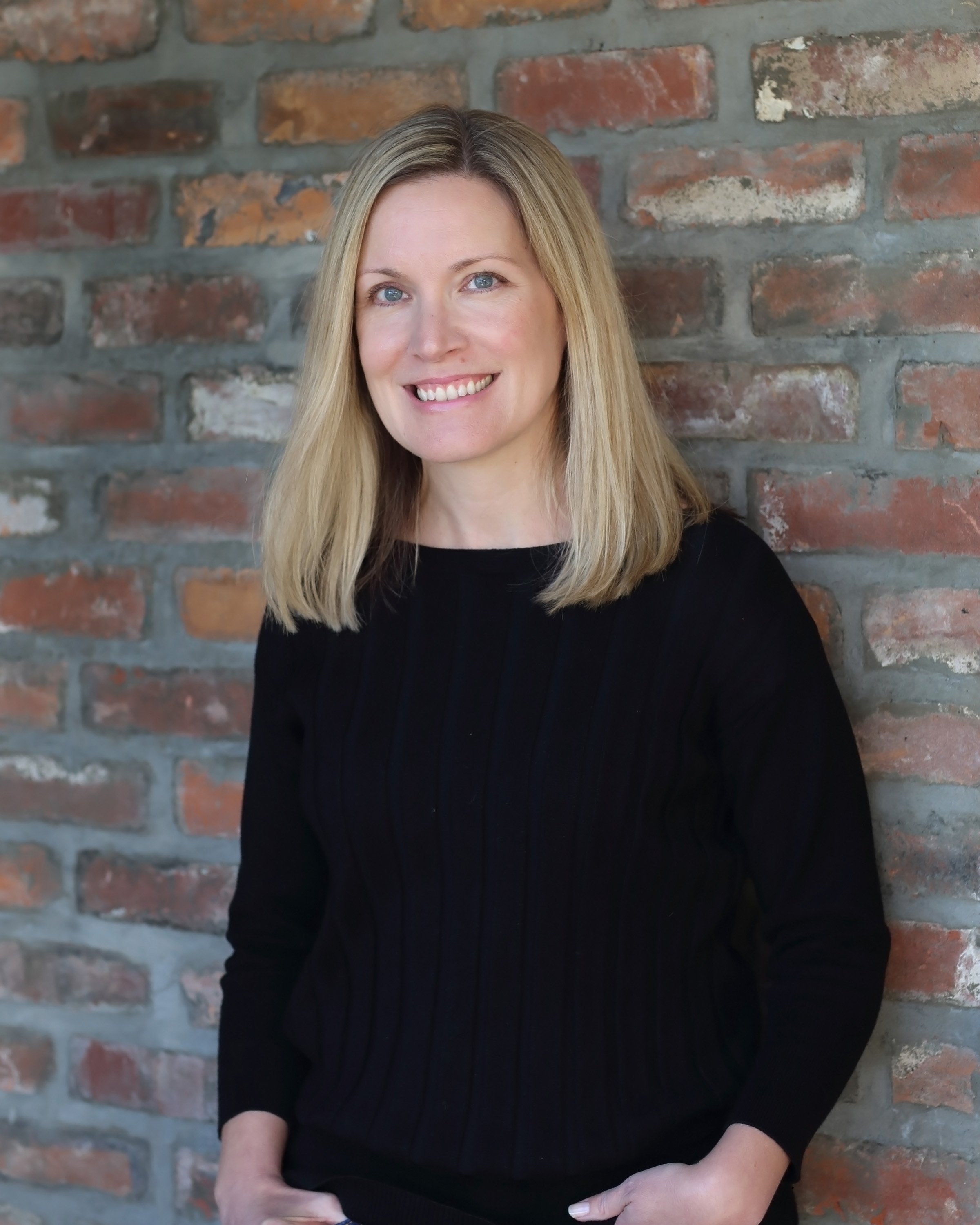
Megan Miranda is the New York Times bestselling author of All the Missing Girls; The Perfect Stranger; The Last House Guest, which was a Reese Witherspoon Book Club pick; The Girl from Widow Hills; Such a Quiet Place; The Last to Vanish; The Only Survivors; and Daughter of Mine. She grew up in New Jersey, graduated from MIT, and lives in North Carolina with her husband and two children. Follow @MeganLMiranda on X and Instagram, @AuthorMeganMiranda on Facebook, or visit MeganMiranda.com.
Product Details
- Publisher: Scribner (July 29, 2025)
- Length: 352 pages
- ISBN13: 9781668080979
Browse Related Books
Raves and Reviews
"No one writes a thriller like [Megan] Miranda." —US WEEKLY
“Absorbing… Miranda skillfully shows how the past has a hold on Beckett [and] family dynamics compellingly stir the plot. You Belong Here delivers elevated suspense.” —Shelf Awareness
“Megan Miranda once again proves her mastery of suspense with You Belong Here. In this atmospheric and emotionally charged novel… Miranda weaves past and present with quiet precision, digging into the murky terrain of memory, guilt and identity. The result is a haunting character study disguised as a mystery, one that lingers long after the final page.” —Seattle Times
“[A] supercharged atmospheric novel… The question of whether Beckett is an unreliable narrator ratchets up the tension considerably. A terrific read.” —Booklist (starred)
"Miranda is a master of atmospheric thrills." —CrimeReads, “Most Anticipated Crime Fiction of Summer 2025”
“Miranda is an expert at using memories and flashbacks to unveil a story [that] feels dramatic and full of unexpected twists. Fans of Ruth Ware and Gillian McAllister will enjoy the building suspense and campus drama.” —Library Journal
“An atmospheric small-town thriller… this story of a mother forced to return home and confront the depths of her own past when her daughter goes missing has serious emotional heft (and more than a few surprises up its sleeve).” —Paste Magazine, "The Most Anticipated Thriller Books of Summer 2025"
"Beckett Bowery returns to her college alma mater when her daughter enrolls. But now that she’s back, secrets from her past are coming back to haunt her—and as this is a Miranda book, it features plenty of twists and turns along the way." —E! News
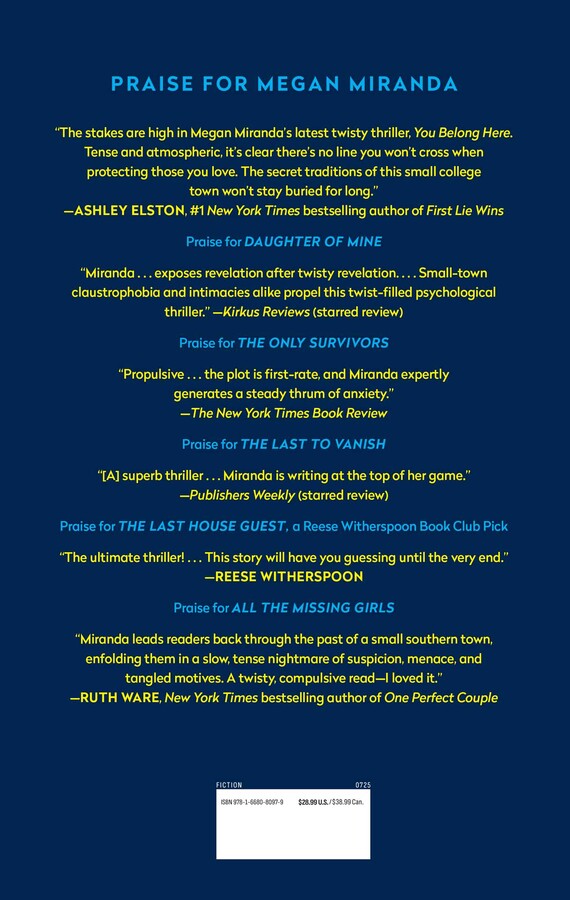
"The stakes are high in Megan Miranda’s latest twisty thriller, You Belong Here. Tense and atmospheric, it’s clear there’s no line you won’t cross when protecting those you love. The secret traditions of this small college town won’t stay buried for long." —Ashley Elston, #1 New York Times bestselling author of First Lie Wins
Praise for Megan Miranda
Praise for DAUGHTER OF MINE
“Miranda…exposes revelation after twisty revelation…Small-town claustrophobia and intimacies alike propel this twist-filled psychological thriller.” —Kirkus Reviews (starred review)
Praise for THE ONLY SURVIVORS
“Propulsive… the plot is first-rate, and Miranda expertly generates a steady thrum of anxiety.” —The New York Times Book Review
Praise for THE LAST TO VANISH
“[A] superb thriller… Miranda is writing at the top of her game.” —Publisher’s Weekly (starred review)
Praise for THE LAST HOUSE GUEST
“The perfect summer thriller… with a pace that made my heart race.” —Riley Sager, New York Times bestselling author of The House Across the Lake
Praise of ALL THE MISSING GIRLS
“Miranda leads readers back through the past of a small southern town, enfolding them in a slow, tense nightmare of suspicion, menace, and tangled motives. A twisty, compulsive read—I loved it.” —Ruth Ware, New York Times bestselling author of The It Girl
Resources and Downloads
High Resolution Images
-
Book Cover Image (jpg): You Belong Here
Hardcover 9781668080979
-
Author Photo (jpg): Megan Miranda Ashley Elston(0.1 MB)
Any use of an author photo must include its respective photo credit