
Plus, receive recommendations and exclusive offers on all of your favorite books and authors from Simon & Schuster.
0:00 /
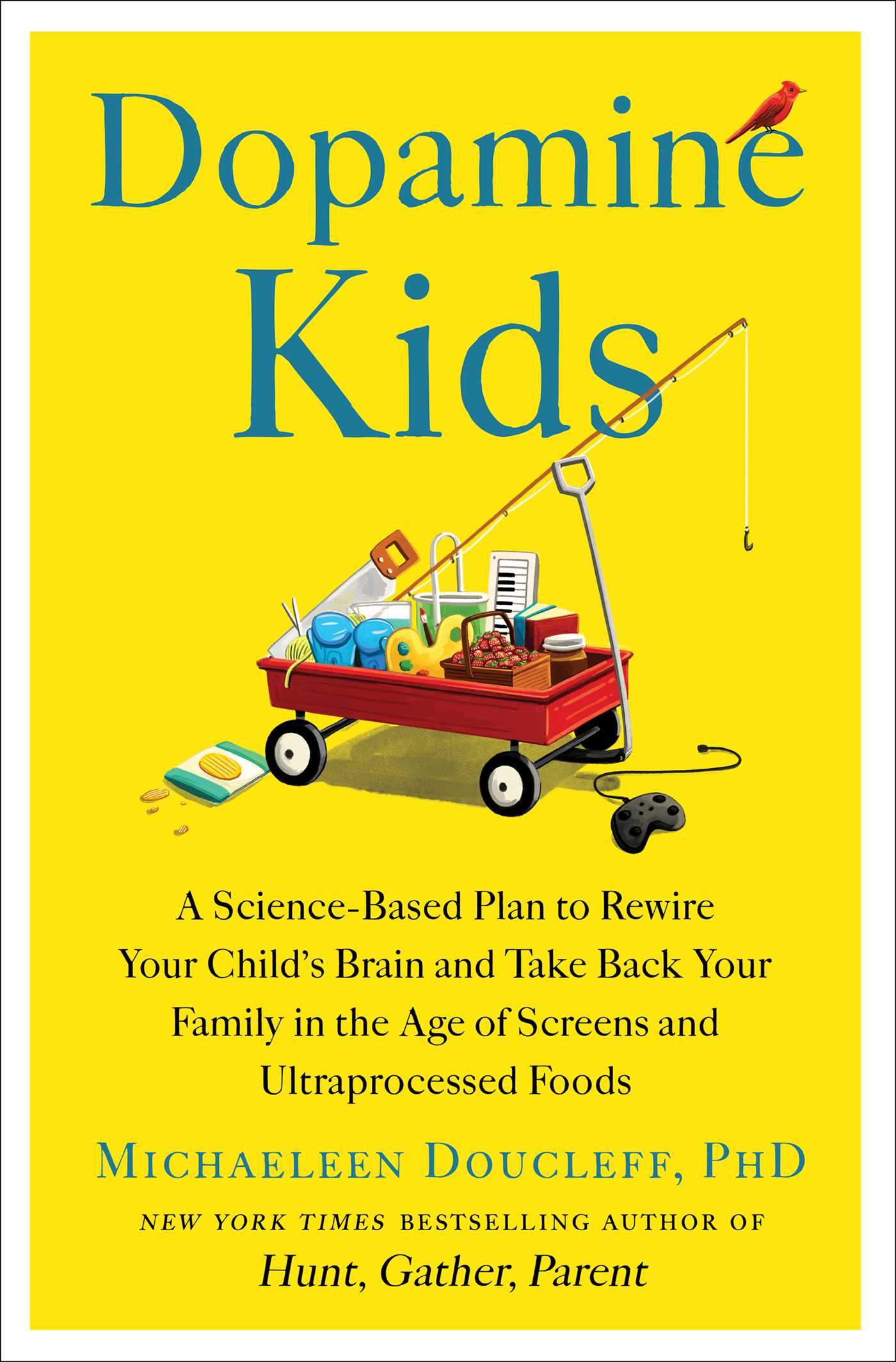
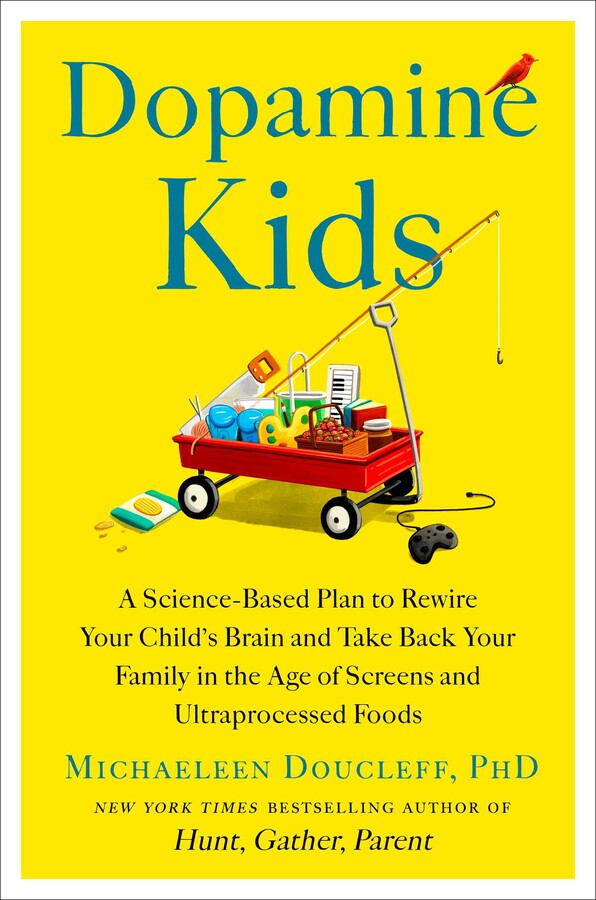
Dopamine Kids
A Science-Based Plan to Rewire Your Child's Brain and Take Back Your Family in the Age of Screens and Ultraprocessed Foods
LIST PRICE $30.00
PRICE MAY VARY BY RETAILER
Free shipping when you spend $40. Terms apply.
Buy from Other Retailers
Table of Contents
Reading Group Guide
About the Book
From the bestselling author of Hunt, Gather, Parent comes a revolutionary five-step guide—packed with practical, science-backed strategies—that shows you how to raise confident, happy kids while breaking the cycle of overdependence on screens and ultraprocessed foods.
“Dopamine Kids promises to wean families from two modern scourges: screens and ultraprocessed foods...in essence, promising a solution to the problems laid out by Jonathan Haidt in The Anxious Generation....On the other side, readers can discover lives full of authentic pleasure.” —The New York Times
When Dr. Michaeleen Doucleff decided to address her family’s screen time and dependence on processed foods, she found that parenting advice around these products is woefully outdated, hinging on studies of dopamine that date back twenty to fifty years. But new research reveals that contrary to what we’ve been told, dopamine isn’t the molecule of happiness and pleasure. Instead, dopamine gives us motivation, and can drive us to engage in activities that we don’t actually enjoy—activities that can make us feel sad, lonely, anxious, and depressed.
What works, Doucleff found, isn’t depriving children of pleasure, but bringing more joy and pleasure back into their lives. Merging modern neuroscience and psychology with practical experience, Dopamine Kids is a five-step operating manual for habit remodeling that is tailored for parents and their children, shifting the power dynamic back to families. Instead of devices and foods controlling us, we can control them, retraining children's brains so they want and reach for activities and foods that leave them feeling good afterward. You’ll learn how to:
- Create boundaries around screens and ultraprocessed foods that not only work but that kids enjoy;
- Replace screen time with equally enticing activities;
- Set up your routine, so that so that the healthy options become the default without negotiation or struggle;
- Celebrate your family’s choices before, during, and after trying new hobbies, and, finally,
- Transform your home into a screen-free sanctuary that protects conversations, focus, sleep, and adventure.
After reading Dopamine Kids, you will be empowered to create habits that genuinely fulfill your family’s biological and emotional needs, to bring true satisfaction and purpose to their lives, and to improve their behavior, happiness, and confidence. The Anxious Generation alerted you to the danger of screens, but the demands of the twenty-first century require that you use them anyway. Dopamine Kids is your handbook for solving that fundamental problem of our times—and for teaching your kids to have a healthy relationship with technology and food.
“Dopamine Kids promises to wean families from two modern scourges: screens and ultraprocessed foods...in essence, promising a solution to the problems laid out by Jonathan Haidt in The Anxious Generation....On the other side, readers can discover lives full of authentic pleasure.” —The New York Times
When Dr. Michaeleen Doucleff decided to address her family’s screen time and dependence on processed foods, she found that parenting advice around these products is woefully outdated, hinging on studies of dopamine that date back twenty to fifty years. But new research reveals that contrary to what we’ve been told, dopamine isn’t the molecule of happiness and pleasure. Instead, dopamine gives us motivation, and can drive us to engage in activities that we don’t actually enjoy—activities that can make us feel sad, lonely, anxious, and depressed.
What works, Doucleff found, isn’t depriving children of pleasure, but bringing more joy and pleasure back into their lives. Merging modern neuroscience and psychology with practical experience, Dopamine Kids is a five-step operating manual for habit remodeling that is tailored for parents and their children, shifting the power dynamic back to families. Instead of devices and foods controlling us, we can control them, retraining children's brains so they want and reach for activities and foods that leave them feeling good afterward. You’ll learn how to:
- Create boundaries around screens and ultraprocessed foods that not only work but that kids enjoy;
- Replace screen time with equally enticing activities;
- Set up your routine, so that so that the healthy options become the default without negotiation or struggle;
- Celebrate your family’s choices before, during, and after trying new hobbies, and, finally,
- Transform your home into a screen-free sanctuary that protects conversations, focus, sleep, and adventure.
After reading Dopamine Kids, you will be empowered to create habits that genuinely fulfill your family’s biological and emotional needs, to bring true satisfaction and purpose to their lives, and to improve their behavior, happiness, and confidence. The Anxious Generation alerted you to the danger of screens, but the demands of the twenty-first century require that you use them anyway. Dopamine Kids is your handbook for solving that fundamental problem of our times—and for teaching your kids to have a healthy relationship with technology and food.
Reading Group Guide
Get a FREE ebook by joining our mailing list today! Plus, receive recommendations for your next Book Club read.
By clicking 'Sign me up' I agree to the Terms of Use and acknowledge the Privacy Policy and Notice of Financial Incentive. Free ebook offer available to NEW US subscribers only. Offer redeemable at Simon & Schuster's ebook fulfillment partner. Must redeem within 90 days. See full terms and conditions and this month's choices.
Introduction
In Michaeleen Doucleff’s Dopamine Kids—the much-anticipated follow-up to the wildly successful Hunt, Gather Parent—Doucleff shares a wealth of knowledge and tools to help parents achieve results where they need them most: in reclaiming the brains of their anxious children from the power of screens and processed foods. In the book, Doucleff learns to improve her own parenting as she writes, sharing what works (and what doesn’t) with her daughter, Rosy, and backing up her findings with cutting-edge research. In an age when parents feel at a loss for how to help their children (and big industries cause more harm than good), Doucleff’s writing is a welcome and remarkably hopeful companion.
Discussion Questions
1. Toward the beginning, Doucleff describes an inability to stay content for more than a few fleeting moments. She describes a “low, constant hum of anxiety” and a need, always, for the next thing (page 2). Does this sound familiar? Did your experience or your kids’ experience with these feelings help motivate you to read Dopamine Kids?
2. Were you at all shocked by the screen time statistics shared on page 4? Has it been easy to forget how sudden and powerful technological changes have been, especially in how our children experience them?
3. How was Kent Berridge able to disprove Jim Olds’s long-held theory about dopamine and pleasure in the brain? What happened when Berridge blocked dopamine in the rats’ brains versus when he dramatically increased their dopamine levels?
4. Doucleff posits that dopamine is more connected to motivation than pleasure. Reflect on how and where you and your kids seek out dopamine—do you feel your behaviors align with Doucleff’s findings?
5. How did you feel after filling in your Family Dream List? Did anything surprise you?
6. Why does Kelly Lambert believe depression has increased in our society? How does this support the case for raising Beaver or Bowerbird children?
7. What is dopamine’s critical role in our brains?
8. What is eudaimonia? How might you help fulfill this need in your children?
9. Was chapter 4 difficult for you to read? In what ways might shining a light on this research actually give you (and your family) hope?
10. How do the 3Ps weaken our desire for shallow activities and increase our desire for high-value activities? What are examples of favorite high-value activities in your family? What about favorite high-value activities when you were a kid that you might share now with your children?
11. How are phone noise and food noise similar? Do you experience one more intensely than the other?
12. Look back at the results of the self-control survey in the “What’s Better than Willpower?” chapter (pages 237–42). Did you expect different results? What did it reveal about willpower?
13. As your kids have become more used to engaging with technology, in what specific ways have their conversational skills and habits changed?
14. Throughout the book, Doucleff presents many studies and tips for changing your parenting. At the end of the book, however, she encourages the reader to “throw out the idea of perfection.” What are some ways you can challenge your perfectionism in parenting?
Activities
1. Get your kids together before or after your book club and plan one beaver and one bowerbird activity for each child to try. Are you surprised by who is more drawn to which activity? Discuss.
2. Try the bean/chia seed experiment on page 54. Keep a daily log and note what changes, or doesn’t change, in your child’s attitude toward food. Discuss and compare your experiences as a group.
3. Start a group recipe collection with your favorite nutritious and child-approved recipes!
In Michaeleen Doucleff’s Dopamine Kids—the much-anticipated follow-up to the wildly successful Hunt, Gather Parent—Doucleff shares a wealth of knowledge and tools to help parents achieve results where they need them most: in reclaiming the brains of their anxious children from the power of screens and processed foods. In the book, Doucleff learns to improve her own parenting as she writes, sharing what works (and what doesn’t) with her daughter, Rosy, and backing up her findings with cutting-edge research. In an age when parents feel at a loss for how to help their children (and big industries cause more harm than good), Doucleff’s writing is a welcome and remarkably hopeful companion.
Discussion Questions
1. Toward the beginning, Doucleff describes an inability to stay content for more than a few fleeting moments. She describes a “low, constant hum of anxiety” and a need, always, for the next thing (page 2). Does this sound familiar? Did your experience or your kids’ experience with these feelings help motivate you to read Dopamine Kids?
2. Were you at all shocked by the screen time statistics shared on page 4? Has it been easy to forget how sudden and powerful technological changes have been, especially in how our children experience them?
3. How was Kent Berridge able to disprove Jim Olds’s long-held theory about dopamine and pleasure in the brain? What happened when Berridge blocked dopamine in the rats’ brains versus when he dramatically increased their dopamine levels?
4. Doucleff posits that dopamine is more connected to motivation than pleasure. Reflect on how and where you and your kids seek out dopamine—do you feel your behaviors align with Doucleff’s findings?
5. How did you feel after filling in your Family Dream List? Did anything surprise you?
6. Why does Kelly Lambert believe depression has increased in our society? How does this support the case for raising Beaver or Bowerbird children?
7. What is dopamine’s critical role in our brains?
8. What is eudaimonia? How might you help fulfill this need in your children?
9. Was chapter 4 difficult for you to read? In what ways might shining a light on this research actually give you (and your family) hope?
10. How do the 3Ps weaken our desire for shallow activities and increase our desire for high-value activities? What are examples of favorite high-value activities in your family? What about favorite high-value activities when you were a kid that you might share now with your children?
11. How are phone noise and food noise similar? Do you experience one more intensely than the other?
12. Look back at the results of the self-control survey in the “What’s Better than Willpower?” chapter (pages 237–42). Did you expect different results? What did it reveal about willpower?
13. As your kids have become more used to engaging with technology, in what specific ways have their conversational skills and habits changed?
14. Throughout the book, Doucleff presents many studies and tips for changing your parenting. At the end of the book, however, she encourages the reader to “throw out the idea of perfection.” What are some ways you can challenge your perfectionism in parenting?
Activities
1. Get your kids together before or after your book club and plan one beaver and one bowerbird activity for each child to try. Are you surprised by who is more drawn to which activity? Discuss.
2. Try the bean/chia seed experiment on page 54. Keep a daily log and note what changes, or doesn’t change, in your child’s attitude toward food. Discuss and compare your experiences as a group.
3. Start a group recipe collection with your favorite nutritious and child-approved recipes!
About the Author
Photograph by Simone Anne
Michaeleen Doucleff, PhD, has reported on children’s health for NPR’s science desk for more than a decade. In 2015, she was part of the team that earned a George Foster Peabody Award for its coverage of the Ebola outbreak in West Africa. She has a doctorate in chemistry from the University of California, Berkeley, and a bachelor of science from the California Institute of Technology. Before joining NPR, Doucleff completed a postdoctoral fellowship at the National Institutes of Health. She lives with her husband and daughter in Alpine, Texas, and is the author of the New York Times bestseller Hunt, Gather, Parent and Dopamine Kids.
Product Details
- Publisher: Avid Reader Press/Simon & Schuster (March 3, 2026)
- Length: 384 pages
- ISBN13: 9781668049839
Browse Related Books
Raves and Reviews
“Ms. Doucleff might be the biggest parenting expert you’ve never heard about. Hunt, Gather, Parent, published in 2021, has been translated into thirty-one languages. It has sold more than one million copies worldwide. . . . Dopamine Kids promises to wean families from two modern scourges: screens and ultraprocessed foods . . . in essence, promising a solution to the problems laid out by Jonathan Haidt in The Anxious Generation. . . . Ms. Doucleff promises that, on the other side, readers can discover lives full of authentic pleasure.”
—Emi Nietfeld, The New York Times
Praise for Hunt, Gather, Parent:
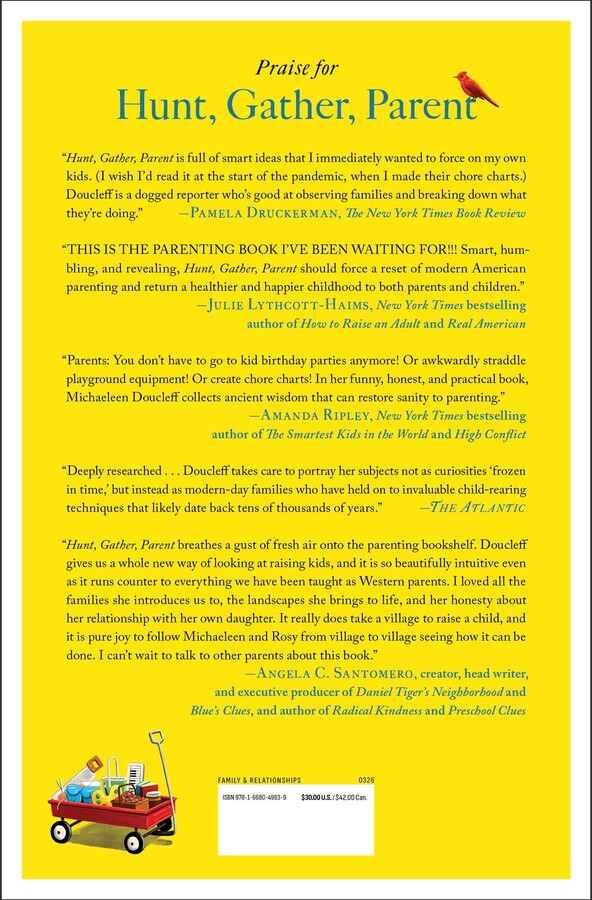
“Hunt, Gather, Parent is full of smart ideas that I immediately wanted to force on my own kids. (I wish I’d read it at the start of the pandemic, when I made their chore charts.) Doucleff is a dogged reporter who’s good at observing families and breaking down what they’re doing.”
—Pamela Druckerman, The New York Times Book Review
“THIS IS THE PARENTING BOOK I’VE BEEN WAITING FOR!!! Smart, humbling, and revealing, Hunt, Gather, Parent should force a re-set of modern American parenting and return a healthier and happier childhood to both parents and children.”
—Julie Lythcott-Haims, New York Times bestselling author of How to Raise an Adult and Real American
“Parents: You don’t have to go to kid birthday parties anymore! Or awkwardly straddle playground equipment! Or create chore charts! In her funny, honest, and practical book, Michaeleen Doucleff collects ancient wisdom that can restore sanity to parenting.”
—Amanda Ripley, New York Times bestselling author of The Smartest Kids in the World and High Conflict
“Deeply researched . . . [Doucleff] takes care to portray her subjects not as curiosities ‘frozen in time,’ but instead as modern-day families who have held on to invaluable child-rearing techniques that likely date back tens of thousands of years.”
—The Atlantic
“Michaeleen Doucleff’s Hunt, Gather, Parent breathes a gust of fresh air onto the parenting bookshelf. She gives us a whole new way of looking at raising kids, and it is so beautifully intuitive even as it runs counter to everything we have been taught as Western parents. I loved all the families she introduces us to, the landscapes she brings to life, and her honesty about her relationships with her own daughter. It really does take a village to raise a child, and it is pure joy to follow Michaeleen and Rosy from village to village seeing how it can be done. I can’t wait to talk to other parents about this book.”
—Angela C. Santomero, creator, head writer, and executive producer of Daniel Tiger’s Neighborhood and Blue’s Clues, and author of Radical Kindness and Preschool Clues
Resources and Downloads
High Resolution Images
-
Book Cover Image (jpg): Dopamine Kids
Hardcover 9781668049839
-
Author Photo (jpg): Michaeleen Doucleff Photograph by Simone Anne(0.1 MB)
Any use of an author photo must include its respective photo credit