

Plus, receive recommendations and exclusive offers on all of your favorite books and authors from Simon & Schuster.
0:00 /
The Lion Women of Tehran
LIST PRICE $18.99
PRICE MAY VARY BY RETAILER
Free shipping when you spend $40. Terms apply.
Buy from Other Retailers
Table of Contents
Reading Group Guide
About the Book
A NEW YORK TIMES BESTSELLER
A NEW YORK TIMES BESTSELLER
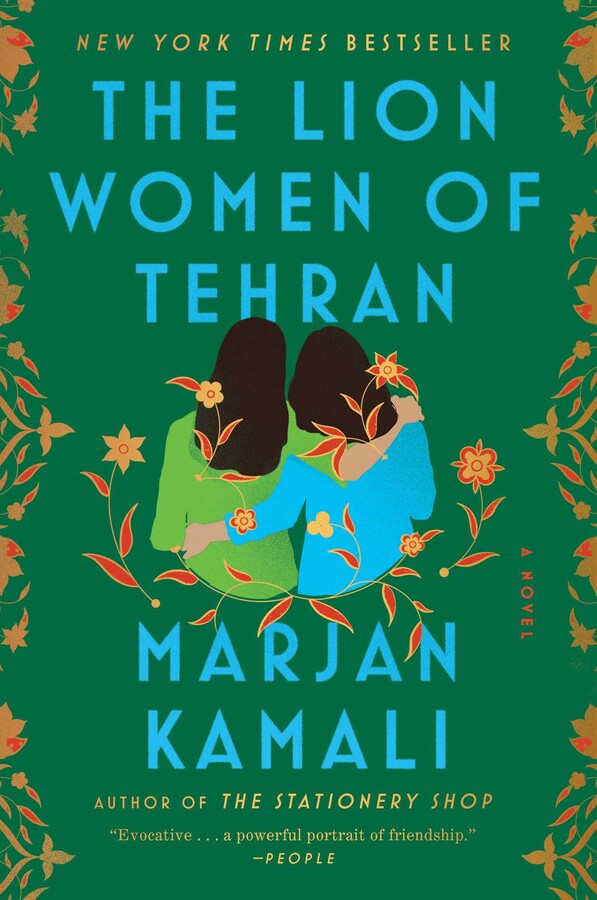
From nationally bestselling author Marjan Kamali, this perfect book club read is “evocative...and a powerful portrait of friendship, feminism, and political activism” (People) set against three transformative decades in Tehran, Iran.
In 1950s Tehran, seven-year-old Ellie lives in grand comfort until the untimely death of her father, forcing Ellie and her mother to move to a tiny home downtown. Lonely and bearing the brunt of her mother’s endless grievances, Ellie dreams for a friend to alleviate her isolation.
Luckily, on the first day of school, she meets Homa, a kind girl with a brave and irrepressible spirit. Together, the two girls play games, learn to cook in the stone kitchen of Homa’s warm home, wander through the colorful stalls of the Grand Bazaar, and share their ambitions of becoming “lion women.”
But their happiness is disrupted when Ellie and her mother are afforded the opportunity to return to their previous bourgeois life. Now a popular student at the best girls’ high school in Iran, Ellie’s memories of Homa begin to fade. Years later, however, her sudden reappearance in Ellie’s privileged world alters the course of both of their lives.
Together, the two young women come of age and pursue their own goals for meaningful futures. But as the political turmoil in Iran builds to a breaking point, one earth-shattering betrayal will have enormous consequences.
“Reminiscent of The Kite Runner and My Brilliant Friend, The Lion Women of Tehran is a mesmerizing tale” (BookPage) of love and courage, and a sweeping exploration of how profoundly we are shaped by those we meet when we are young.
A NEW YORK TIMES BESTSELLER
From nationally bestselling author Marjan Kamali, this perfect book club read is “evocative...and a powerful portrait of friendship, feminism, and political activism” (People) set against three transformative decades in Tehran, Iran.
In 1950s Tehran, seven-year-old Ellie lives in grand comfort until the untimely death of her father, forcing Ellie and her mother to move to a tiny home downtown. Lonely and bearing the brunt of her mother’s endless grievances, Ellie dreams for a friend to alleviate her isolation.
Luckily, on the first day of school, she meets Homa, a kind girl with a brave and irrepressible spirit. Together, the two girls play games, learn to cook in the stone kitchen of Homa’s warm home, wander through the colorful stalls of the Grand Bazaar, and share their ambitions of becoming “lion women.”
But their happiness is disrupted when Ellie and her mother are afforded the opportunity to return to their previous bourgeois life. Now a popular student at the best girls’ high school in Iran, Ellie’s memories of Homa begin to fade. Years later, however, her sudden reappearance in Ellie’s privileged world alters the course of both of their lives.
Together, the two young women come of age and pursue their own goals for meaningful futures. But as the political turmoil in Iran builds to a breaking point, one earth-shattering betrayal will have enormous consequences.
“Reminiscent of The Kite Runner and My Brilliant Friend, The Lion Women of Tehran is a mesmerizing tale” (BookPage) of love and courage, and a sweeping exploration of how profoundly we are shaped by those we meet when we are young.
Excerpt
Chapter One
December 1981
I stood on the lacquered floor—a small woman in black with a rectangular name badge on my chest. My coiffed, contented look was calculated so I’d appear not just satisfied but quietly superior. In America, I’d learned the secret to being a successful salesperson was to act like one of the elite, as if spritzing perfume on customers’ blue-veined wrists were doing them a favor.
A sea of haughty New Yorkers swerved to avoid my spray. Thank God for the more down-to-earth women—the cooks and bakers coming up to the first floor from the basement home goods section—they were too polite to reject the fragrant droplets I offered. Orange, lily, jasmine, and rose notes nestled in the lines of my palms and the fibers of my clothes.
“Look at you, Ellie! Soon you’ll take over this whole brand. I better watch my back!” My friend and coworker Angela, returning from her cigarette break, sidled up and whispered in my ear. The scent of her Hubba Bubba gum couldn’t hide the smoke on her breath.
I shivered at the reek of tobacco. The bitter, sour notes would forever remind me of one long-ago night in Iran. The night when an act of betrayal changed the entire course of my friendship with Homa and both of our lives.
From the moment I’d read Homa’s letter last night, I’d been a wreck.
I batted away Angela’s compliments, said I wasn’t doing all that well, really, and that I had a headache because I hadn’t eaten all day.
“I just might faint,” I added with a touch of melodrama.
It was a relief when Angela was whisked away by a needy customer.
My mother always said the envy of others invites the evil eye to cast doom on us. She’d often told me that being perceived as too competent, happy, or successful could summon misfortune. I knew belief in the powers of other people’s jealousy and the jinxing of an evil eye needed to be cast off. But at the age of thirty-eight, in the middle of that massive Manhattan department store, I was still unwittingly beholden to superstition.
The truth of who I was could not be escaped. Nor could the flaw I had spent years trying to quash and erase.
The guilty one had always been me.
Earlier that morning, in our apartment on the Upper East Side of Manhattan, my husband, Mehrdad, had tried to comfort me with breakfast. He prepared toast with feta cheese and cherry jam. He brewed bergamot tea. But I couldn’t eat or drink. The jam was made from Homa’s recipe. The bergamot tea in the white teapot adorned with two pink roses reminded me of her. With the arrival of her letter, her absence dominated my life all over again.
When I had first seen the red-and-blue-bordered airmail envelope, I’d assumed it was from Mother and would contain the usual mix of laments and updates about the dangerous political situation in Iran. I knew those letters were probably opened and read by regime forces, but my mother often didn’t care and wrote bluntly: Aren’t you lucky, Ellie? You left and escaped the violent demonstrations and deafening riots. You skipped our country’s slide back into medieval times. Women have lost decades, no, centuries, of rights in this country. I’m glad you’re sitting comfortably with your professor husband in America. Thank goodness you got out!
But when I pulled the onionskin paper from the envelope and unfolded it, my heart almost stopped. For there on the page was the unmistakable curlicue handwriting of my old friend, Homa.
As girls, we’d sat on the same elementary school bench in downtown Tehran. Together we scratched out hopscotch grids in our neighborhood alley and raced to school with satchels bouncing against our hips. With Homa, I had zigzagged through the mazes of the Grand Bazaar and shared ice cream sandwiches and dreams for the kind of women we’d become. In her stone kitchen, I learned to cook. With her hand in mine, I jumped over the largest bonfires. When we’d hiked up Alborz Mountain and seen Tehran laid out beneath us, it felt like the world could be entirely ours.
Until one moment of striking carelessness ruined it all.
For the past seventeen years, we had been ghaar—purposefully estranged—with no contact save one unplanned encounter. Now her letter was in my hands. How did she know where to find me? She must have gotten my address from Mother.
One page of Homa’s letter was filled with questions about my life in America. And another was about her situation in Iran. Her health was good (pressure in the sinuses but nothing more), the weather (cold and yet delicious in the mountains—remember the teahouse we went to?) was fitting for the season, her job as a teacher kept her busy. But her mind was not at ease (You wouldn’t recognize this country, Ellie. I don’t know where we went wrong). At the bottom was a sentence about Bahar, her daughter, and how she loved to sing. She closed the letter with Can you call me, Ellie? Please. My number is 272963. I need to speak to you. It’s urgent.
After I told Mehrdad about the letter, he held me close and said gently, “It’s good she’s reached out. You were the best of friends. Time to air it all out, Ellie. Speak to her.”
How I wish it were so simple.
I couldn’t blame Homa for cutting contact. But now she had flown back into my life all innocence and zest, creating a crater of questions with her sign-off. It’s urgent.
At the end of my shift, I removed my name pin, put it in the counter drawer, then pulled on my warm camel coat and striped leg warmers.
As I rushed outside toward the subway station, the cold December air carried the scent of roasted nuts from food carts and diesel fumes from hissing city buses. Large-bellied, tired-looking men dressed as Santa Claus rang bells, pointing to their kettle buckets and shouting, “Merry Christmas!” Gold and silver tinsel framed the insides of shop windows and trees with shiny ornaments winked behind glass displays. There was a chill in the air that made my breath float in visible rings.
The words in Homa’s letter ran through my head. Suddenly a taxi swerved far too close to me and honked loudly. My heart fell as I remembered another time a car had almost hit me. But this time, the only damage done was sludgy puddle water soaking through my leg warmers.
A neon pizza sign flashed red and yellow close to the subway entrance. I got giddy at the thought of a slice.
Since arriving in New York almost four and a half years ago, I’d strolled through Central Park, visited museums filled with global art, and dined in a few fancy restaurants. But no cultural experience topped eating a salty, cheesy, hot slice of New York pizza. Every pizzeria seemed to be in on the secret recipe for tangy tomato sauce and a perfectly foldable crust.
I looked at my wristwatch. No point in getting into the train hungry and drained of energy. I slipped into the pizza place and waited in line to order. After paying my seventy-five cents, I walked out with a cheese slice snug in a triangular cardboard box. I opened the box to take my first bite.
I heard her before I saw her. She moaned rhythmically as though in pain. Under the dim light of the streetlamp near the subway station, I made her out: an old woman huddled against the lamppost, two plastic bags on her feet, a flowered headscarf barely covering her hair. In between moans she asked unresponsive passersby in a weak voice on mechanical repeat: “Madam, can you spare a dime? Mister, can you spare a nickel?”
I wanted to get to my train. Get home. I needed to think, to decide whether I would call my old friend. But how could I ignore this woman? I went to her and stooped down. She smiled, and I was surprised to see straight and perfect teeth. The old woman held my gaze. Her eyes were watery and opaque-looking. She shrugged slightly. In that small movement, I detected a silent acknowledgment of the randomness of the wheel of fortune.
I handed her my triangular cardboard box—the pizza in it still hot and untouched. From my bag, I found the kiss-lock purse Mother had given me as a child in Iran, opened it, and took out all the coins and a few scrunched-up bills. American money still appeared strange to me: so green and thick compared to our bills back home. The lady took the pizza, coins, and bills I offered with a look of bewilderment.
I got up and walked away. As I descended the subway station steps, I turned around only once.
She was eating the pizza quickly—her face an expression of complete relief.
When the train rushed into the tunnel and screeched to a stop, we all jostled and hustled to get inside. The crowded subway car smelled of urine and damp wool. Thankfully, I got a seat. Wedged between strangers, I was grateful for the anonymity. Not one person in that dirty, busy, fascinating, energetic, depressing, alluring city knew about my past or the guilt and regret that swallowed me whole.
The train lurched and blasted forward. Someone by the door sneezed and a gentleman in a baseball cap hummed a tune that was strangely cheerful.
I closed my eyes. I remembered all of it—every single bit. Those days of connection and chaos that had shaped our friendship could never be forgotten.
ONE
December 1981
I stood on the lacquered floor—a small woman in black with a rectangular name badge on my chest. My coiffed, contented look was calculated so I’d appear not just satisfied but quietly superior. In America, I’d learned the secret to being a successful salesperson was to act like one of the elite, as if spritzing perfume on customers’ blue-veined wrists were doing them a favor.
A sea of haughty New Yorkers swerved to avoid my spray. Thank God for the more down-to-earth women—the cooks and bakers coming up to the first floor from the basement home goods section—they were too polite to reject the fragrant droplets I offered. Orange, lily, jasmine, and rose notes nestled in the lines of my palms and the fibers of my clothes.
“Look at you, Ellie! Soon you’ll take over this whole brand. I better watch my back!” My friend and coworker Angela, returning from her cigarette break, sidled up and whispered in my ear. The scent of her Hubba Bubba gum couldn’t hide the smoke on her breath.
I shivered at the reek of tobacco. The bitter, sour notes would forever remind me of one long-ago night in Iran. The night when an act of betrayal changed the entire course of my friendship with Homa and both of our lives.
From the moment I’d read Homa’s letter last night, I’d been a wreck.
I batted away Angela’s compliments, said I wasn’t doing all that well, really, and that I had a headache because I hadn’t eaten all day.
“I just might faint,” I added with a touch of melodrama.
It was a relief when Angela was whisked away by a needy customer.
My mother always said the envy of others invites the evil eye to cast doom on us. She’d often told me that being perceived as too competent, happy, or successful could summon misfortune. I knew belief in the powers of other people’s jealousy and the jinxing of an evil eye needed to be cast off. But at the age of thirty-eight, in the middle of that massive Manhattan department store, I was still unwittingly beholden to superstition.
The truth of who I was could not be escaped. Nor could the flaw I had spent years trying to quash and erase.
The guilty one had always been me.
Earlier that morning, in our apartment on the Upper East Side of Manhattan, my husband, Mehrdad, had tried to comfort me with breakfast. He prepared toast with feta cheese and cherry jam. He brewed bergamot tea. But I couldn’t eat or drink. The jam was made from Homa’s recipe. The bergamot tea in the white teapot adorned with two pink roses reminded me of her. With the arrival of her letter, her absence dominated my life all over again.
When I had first seen the red-and-blue-bordered airmail envelope, I’d assumed it was from Mother and would contain the usual mix of laments and updates about the dangerous political situation in Iran. I knew those letters were probably opened and read by regime forces, but my mother often didn’t care and wrote bluntly: Aren’t you lucky, Ellie? You left and escaped the violent demonstrations and deafening riots. You skipped our country’s slide back into medieval times. Women have lost decades, no, centuries, of rights in this country. I’m glad you’re sitting comfortably with your professor husband in America. Thank goodness you got out!
But when I pulled the onionskin paper from the envelope and unfolded it, my heart almost stopped. For there on the page was the unmistakable curlicue handwriting of my old friend, Homa.
As girls, we’d sat on the same elementary school bench in downtown Tehran. Together we scratched out hopscotch grids in our neighborhood alley and raced to school with satchels bouncing against our hips. With Homa, I had zigzagged through the mazes of the Grand Bazaar and shared ice cream sandwiches and dreams for the kind of women we’d become. In her stone kitchen, I learned to cook. With her hand in mine, I jumped over the largest bonfires. When we’d hiked up Alborz Mountain and seen Tehran laid out beneath us, it felt like the world could be entirely ours.
Until one moment of striking carelessness ruined it all.
For the past seventeen years, we had been ghaar—purposefully estranged—with no contact save one unplanned encounter. Now her letter was in my hands. How did she know where to find me? She must have gotten my address from Mother.
One page of Homa’s letter was filled with questions about my life in America. And another was about her situation in Iran. Her health was good (pressure in the sinuses but nothing more), the weather (cold and yet delicious in the mountains—remember the teahouse we went to?) was fitting for the season, her job as a teacher kept her busy. But her mind was not at ease (You wouldn’t recognize this country, Ellie. I don’t know where we went wrong). At the bottom was a sentence about Bahar, her daughter, and how she loved to sing. She closed the letter with Can you call me, Ellie? Please. My number is 272963. I need to speak to you. It’s urgent.
After I told Mehrdad about the letter, he held me close and said gently, “It’s good she’s reached out. You were the best of friends. Time to air it all out, Ellie. Speak to her.”
How I wish it were so simple.
I couldn’t blame Homa for cutting contact. But now she had flown back into my life all innocence and zest, creating a crater of questions with her sign-off. It’s urgent.
At the end of my shift, I removed my name pin, put it in the counter drawer, then pulled on my warm camel coat and striped leg warmers.
As I rushed outside toward the subway station, the cold December air carried the scent of roasted nuts from food carts and diesel fumes from hissing city buses. Large-bellied, tired-looking men dressed as Santa Claus rang bells, pointing to their kettle buckets and shouting, “Merry Christmas!” Gold and silver tinsel framed the insides of shop windows and trees with shiny ornaments winked behind glass displays. There was a chill in the air that made my breath float in visible rings.
The words in Homa’s letter ran through my head. Suddenly a taxi swerved far too close to me and honked loudly. My heart fell as I remembered another time a car had almost hit me. But this time, the only damage done was sludgy puddle water soaking through my leg warmers.
A neon pizza sign flashed red and yellow close to the subway entrance. I got giddy at the thought of a slice.
Since arriving in New York almost four and a half years ago, I’d strolled through Central Park, visited museums filled with global art, and dined in a few fancy restaurants. But no cultural experience topped eating a salty, cheesy, hot slice of New York pizza. Every pizzeria seemed to be in on the secret recipe for tangy tomato sauce and a perfectly foldable crust.
I looked at my wristwatch. No point in getting into the train hungry and drained of energy. I slipped into the pizza place and waited in line to order. After paying my seventy-five cents, I walked out with a cheese slice snug in a triangular cardboard box. I opened the box to take my first bite.
I heard her before I saw her. She moaned rhythmically as though in pain. Under the dim light of the streetlamp near the subway station, I made her out: an old woman huddled against the lamppost, two plastic bags on her feet, a flowered headscarf barely covering her hair. In between moans she asked unresponsive passersby in a weak voice on mechanical repeat: “Madam, can you spare a dime? Mister, can you spare a nickel?”
I wanted to get to my train. Get home. I needed to think, to decide whether I would call my old friend. But how could I ignore this woman? I went to her and stooped down. She smiled, and I was surprised to see straight and perfect teeth. The old woman held my gaze. Her eyes were watery and opaque-looking. She shrugged slightly. In that small movement, I detected a silent acknowledgment of the randomness of the wheel of fortune.
I handed her my triangular cardboard box—the pizza in it still hot and untouched. From my bag, I found the kiss-lock purse Mother had given me as a child in Iran, opened it, and took out all the coins and a few scrunched-up bills. American money still appeared strange to me: so green and thick compared to our bills back home. The lady took the pizza, coins, and bills I offered with a look of bewilderment.
I got up and walked away. As I descended the subway station steps, I turned around only once.
She was eating the pizza quickly—her face an expression of complete relief.
When the train rushed into the tunnel and screeched to a stop, we all jostled and hustled to get inside. The crowded subway car smelled of urine and damp wool. Thankfully, I got a seat. Wedged between strangers, I was grateful for the anonymity. Not one person in that dirty, busy, fascinating, energetic, depressing, alluring city knew about my past or the guilt and regret that swallowed me whole.
The train lurched and blasted forward. Someone by the door sneezed and a gentleman in a baseball cap hummed a tune that was strangely cheerful.
I closed my eyes. I remembered all of it—every single bit. Those days of connection and chaos that had shaped our friendship could never be forgotten.
Reading Group Guide
Get a FREE ebook by joining our mailing list today! Plus, receive recommendations for your next Book Club read.
By clicking 'Sign me up' I agree to the Terms of Use and acknowledge the Privacy Policy and Notice of Financial Incentive. Free ebook offer available to NEW US subscribers only. Offer redeemable at Simon & Schuster's ebook fulfillment partner. Must redeem within 90 days. See full terms and conditions and this month's choices.
Introduction
In 1950s Tehran, seven-year-old Ellie lives in grand comfort until the untimely death of her father, forcing Ellie and her mother to move to a tiny home downtown, far removed from their privileged past. Lonely and bearing the brunt of her mother’s endless grievances, Ellie dreams of a friend to alleviate her isolation.
Luckily, on the first day of school, she meets Homa, a kind, passionate girl with a brave and irrepressible spirit. Together, the two girls play games, learn to cook in the stone kitchen of Homa’s warm home, wander through the colorful stalls of the Grand Bazaar, and share their ambitions for becoming “lion women.”
But their happiness is disrupted when Ellie and her mother are afforded the opportunity to return to their previous bourgeois life. Now a popular student at the best girls’ high school in Iran, Ellie’s memories of Homa begin to fade. Until Homa reappears in Ellie’s privileged world unexpectantly, years later, altering the course of both of their lives.
Together, the two young women come of age and pursue their own goals for meaningful futures. But as the political turmoil in Iran builds to a breaking point, one earth-shattering betrayal will have enormous consequences.
Topics and Questions for Discussion
1. The book opens from Ellie’s point of view in 1980s New York City. What are some observations she has about the city? What does this tell you about how she sees herself there? Discuss how she describes New York in the first chapter and in Part Five compared to how she describes Tehran. What are the differences?
2. How would you describe the city of Tehran during Ellie and Homa’s childhoods? What feelings does it invoke? How was Tehran different for both girls before they lived in the same neighborhood?
3. Ellie’s mother has an obsession with the evil eye. Where do you believe this originates? What effect do you think this has on Ellie’s mother’s outlook on life, and how might it affect Ellie as she grows up?
4. Ellie spends much of her childhood mourning her father’s death. How does her image of him compare to the man Ellie’s mother reveals him to be later in the book? How does Ellie’s relationship with her mother change once she finds out? How does this help explain Ellie’s mother’s actions throughout the book?
5. How would you describe how Ellie’s mother thinks of Homa? Why do you think she feels this way? How does this foreshadow what happens later in the book?
6. Seven years pass between Part One and Part Two, and we find Ellie at an upscale school in a nice neighborhood with a new group of friends. How has her life changed, and how have her relationships changed, or stayed the same?
7. Describe the role politics in Iran plays throughout the book. How does it propel the plot forward? Does is function as a main character? How do the characters interact with politics, and how does it shape their futures?
8. Two themes of the book are betrayal and jealousy. How was this explored throughout the book (i.e. between characters, through the setting, between social classes, in politics, etc.)? Were there instances of betrayal that surprised you?
9. Homa’s experience in prison devastated her plans and set her on a new trajectory for the rest of her life. What might have happened if she was not imprisoned and raped? How might her life have turned out differently? Would Homa and Ellie have remained friends?
10. Part Four opens from Homa’s point of view. How are her and Ellie’s voices different? Discuss how the author uses shifting points of view as a plot device and what it adds to the narrative.
11. Homa talks about growing up to be “lion women” throughout the book. How would you describe “lion women,” and how do Homa and Ellie understand the idea? How might it apply to women in general?
12. Discuss the romantic relationships throughout the book. Mehrdad and Ellie, Homa and Abdol, Ellie’s mother and Ellie’s baba, Ellie’s mother and Uncle Massoud, Sousan and the Colonel, and so on. How do these relationships demonstrate gender and societal norms in Iran from the 1950s to the 1980s? Do any of them subvert traditional gender roles? How?
13. The author explores the bonds between mother and daughter throughout the book. Discuss the mother-daughter relationships for each character and what they have in common.
14. In the final chapter and epilogue, we fast forward to 2022 and find out that Homa remained in Iran to fight for women’s freedoms, and Ellie followed her dream of opening an Iranian cafe in America. How do these two women embody what it means to be Lion Women? How do they reflect on their pasts, and what do you think their hopes are for their futures?
Enhance Your Book Club
1. Before the Islamic Revolution, women in Iran enjoyed many liberal freedoms that Western women are familiar with. What did you know about Iran before reading this book, and how have these characters and their stories changed your understanding? Now, Mahsa Amini has inspired another generation of Iranian women to protest and fight against oppression. What role do women play in political movements around the world? How much has changed since Ellie and Homa’s childhoods in Iran, and what has remained the same?
2. This book is propelled by relationships between women. Describe those relationships and compare them to each other. Do you see relationships like these in your own life? What makes relationships between women special?
In 1950s Tehran, seven-year-old Ellie lives in grand comfort until the untimely death of her father, forcing Ellie and her mother to move to a tiny home downtown, far removed from their privileged past. Lonely and bearing the brunt of her mother’s endless grievances, Ellie dreams of a friend to alleviate her isolation.
Luckily, on the first day of school, she meets Homa, a kind, passionate girl with a brave and irrepressible spirit. Together, the two girls play games, learn to cook in the stone kitchen of Homa’s warm home, wander through the colorful stalls of the Grand Bazaar, and share their ambitions for becoming “lion women.”
But their happiness is disrupted when Ellie and her mother are afforded the opportunity to return to their previous bourgeois life. Now a popular student at the best girls’ high school in Iran, Ellie’s memories of Homa begin to fade. Until Homa reappears in Ellie’s privileged world unexpectantly, years later, altering the course of both of their lives.
Together, the two young women come of age and pursue their own goals for meaningful futures. But as the political turmoil in Iran builds to a breaking point, one earth-shattering betrayal will have enormous consequences.
Topics and Questions for Discussion
1. The book opens from Ellie’s point of view in 1980s New York City. What are some observations she has about the city? What does this tell you about how she sees herself there? Discuss how she describes New York in the first chapter and in Part Five compared to how she describes Tehran. What are the differences?
2. How would you describe the city of Tehran during Ellie and Homa’s childhoods? What feelings does it invoke? How was Tehran different for both girls before they lived in the same neighborhood?
3. Ellie’s mother has an obsession with the evil eye. Where do you believe this originates? What effect do you think this has on Ellie’s mother’s outlook on life, and how might it affect Ellie as she grows up?
4. Ellie spends much of her childhood mourning her father’s death. How does her image of him compare to the man Ellie’s mother reveals him to be later in the book? How does Ellie’s relationship with her mother change once she finds out? How does this help explain Ellie’s mother’s actions throughout the book?
5. How would you describe how Ellie’s mother thinks of Homa? Why do you think she feels this way? How does this foreshadow what happens later in the book?
6. Seven years pass between Part One and Part Two, and we find Ellie at an upscale school in a nice neighborhood with a new group of friends. How has her life changed, and how have her relationships changed, or stayed the same?
7. Describe the role politics in Iran plays throughout the book. How does it propel the plot forward? Does is function as a main character? How do the characters interact with politics, and how does it shape their futures?
8. Two themes of the book are betrayal and jealousy. How was this explored throughout the book (i.e. between characters, through the setting, between social classes, in politics, etc.)? Were there instances of betrayal that surprised you?
9. Homa’s experience in prison devastated her plans and set her on a new trajectory for the rest of her life. What might have happened if she was not imprisoned and raped? How might her life have turned out differently? Would Homa and Ellie have remained friends?
10. Part Four opens from Homa’s point of view. How are her and Ellie’s voices different? Discuss how the author uses shifting points of view as a plot device and what it adds to the narrative.
11. Homa talks about growing up to be “lion women” throughout the book. How would you describe “lion women,” and how do Homa and Ellie understand the idea? How might it apply to women in general?
12. Discuss the romantic relationships throughout the book. Mehrdad and Ellie, Homa and Abdol, Ellie’s mother and Ellie’s baba, Ellie’s mother and Uncle Massoud, Sousan and the Colonel, and so on. How do these relationships demonstrate gender and societal norms in Iran from the 1950s to the 1980s? Do any of them subvert traditional gender roles? How?
13. The author explores the bonds between mother and daughter throughout the book. Discuss the mother-daughter relationships for each character and what they have in common.
14. In the final chapter and epilogue, we fast forward to 2022 and find out that Homa remained in Iran to fight for women’s freedoms, and Ellie followed her dream of opening an Iranian cafe in America. How do these two women embody what it means to be Lion Women? How do they reflect on their pasts, and what do you think their hopes are for their futures?
Enhance Your Book Club
1. Before the Islamic Revolution, women in Iran enjoyed many liberal freedoms that Western women are familiar with. What did you know about Iran before reading this book, and how have these characters and their stories changed your understanding? Now, Mahsa Amini has inspired another generation of Iranian women to protest and fight against oppression. What role do women play in political movements around the world? How much has changed since Ellie and Homa’s childhoods in Iran, and what has remained the same?
2. This book is propelled by relationships between women. Describe those relationships and compare them to each other. Do you see relationships like these in your own life? What makes relationships between women special?
About the Author
Photograph by David E. Lawrence
Marjan Kamali, born in Turkey to Iranian parents, is the New York Times bestselling author of The Lion Women of Tehran, The Stationery Shop, and Together Tea. She is the 2022 recipient of the National Endowment for the Arts Creative Writing Award. Her books have been translated into over thirty languages. Marjan lives with her family in the Boston area.
Product Details
- Publisher: Gallery Books (August 5, 2025)
- Length: 352 pages
- ISBN13: 9781668036594
Raves and Reviews
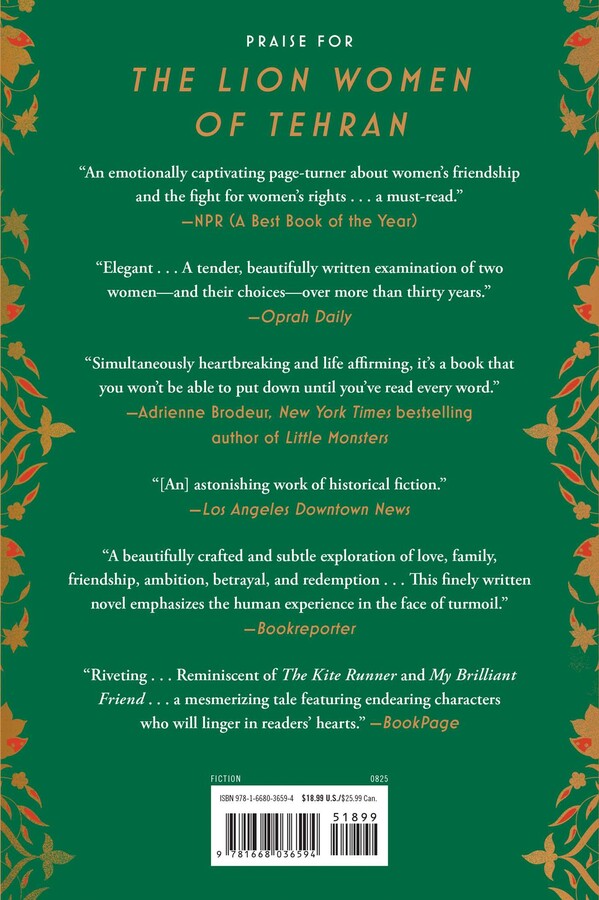
“An emotionally captivating page-turner about women’s friendship and the fight for women’s rights…a must-read.” —Denny S. Bryce, NPR (A Best Book of the Year)
"Elegant...A tender, beautifully written examination of two women—and their choices—over more than 30 years." —Oprah Daily
“Riveting...Reminiscent of The Kite Runner and My Brilliant Friend, The Lion Women of Tehran is a mesmerizing tale featuring endearing characters who will linger in readers’ hearts.” —BookPage
“Kamali tells a moving story of an unforgiving time, an unlikely friendship, and how a country’s transformation, in turn, transforms the lives of two unforgettable women. Simultaneously heartbreaking and life affirming, it’s a book that you won’t be able to put down until you’ve read every word.” —Adrienne Brodeur, New York Times bestselling author of Little Monsters
"With this masterful, heart-centered novel, Marjan Kamali has crafted a deeply honest look at the true meaning of friendship. Through Homa and Ellie we see the nuances of a perfectly imperfect love that withstands class differences, personal trauma, jealousy, war, and revolution. Their souls are forever intertwined and as a reader it is an honor to bear witness. This book made me incredibly proud to be an Iranian woman—a Lion Woman too." —Shideh Etaat, author of Rana Joon and the One and Only Now
"Marjan Kamali is at it again, this time bringing us a story of friendship and love set against the tumult and terror of the Iranian Revolution. The Lion Women of Tehran is a novel about two girls, who grow up wanting very different things but are united by their affection for each other and their shared desire for a more egalitarian Iran. Kamali is a gifted storyteller at the height of her powers, who manages to connect the country’s complicated history with its present and sing the praises of Iranian women who, even today, are fighting for the most basic of freedoms. If you liked The Stationery Shop, you’ll love The Lion Women of Tehran." —Rachel Beanland, author of Florence Adler Swims Forever and The House is On Fire
"In The Lion Women of Tehran, Marjan Kamali brings to life the beauty and tragedy of Iran in the 1960s. From the delicious scent of spices simmering, to the colors of the bazaar, to the snowflakes landing on a certain character’s hair, this story came brilliantly alive to me from the very first page. Courage, friendship, loyalty, hardship, love—this novel has everything." —Mary Beth Keane, New York Times bestselling author of Ask Again, Yes
"Kamali's storytelling is both evocative and hauntingly beautiful, creating a vivid portrayal of the characters' lives and the cultural tapestry of Tehran. The Lion Women of Tehran is not merely a novel; it is a sweeping exploration of the enduring influence of early connections, the resilience of the human spirit, and the transformative power of love and courage in the face of political upheaval. This novel is a testament to Kamali's storytelling prowess and her ability to create a deeply moving and thought-provoking narrative. I loved this book!" —Jean Kwok, New York Times bestselling author of Searching for Sylvie Lee
"A moving tale of friendship, betrayal, and forgiveness, unfolding into a deep and powerful exploration of feminist protest in Iran. The contrast between Ellie and Homa’s voices is a narrative all of its own, and Homa deserves a place as one of the true heroines of literature.” —Erica Bauermeister, New York Times bestselling author of No Two Persons
"An evocative read and a powerful portrait of friendship, feminism, and political activism." —People
"More than a tale of friendship or a coming-of-age story, it’s a beautifully crafted and subtle exploration of love, family, friendship, ambition, betrayal and redemption in a socio-political powder keg...This finely written novel emphasizes the human experience in the face of turmoil.” —Bookreporter
Awards and Honors
- ALA "The Reading List" Selection
Resources and Downloads
High Resolution Images
-
Book Cover Image (jpg): The Lion Women of Tehran
Trade Paperback 9781668036594
-
Author Photo (jpg): Marjan Kamali Photograph by David E. Lawrence(0.1 MB)
Any use of an author photo must include its respective photo credit