
Plus, receive recommendations and exclusive offers on all of your favorite books and authors from Simon & Schuster.
0:00 /
LIST PRICE $18.99
PRICE MAY VARY BY RETAILER
Get 20% off with code COZY26 plus free shipping on orders of $40 or more. Discount on physical products only. Terms apply.
Buy from Other Retailers
Table of Contents
About the Book
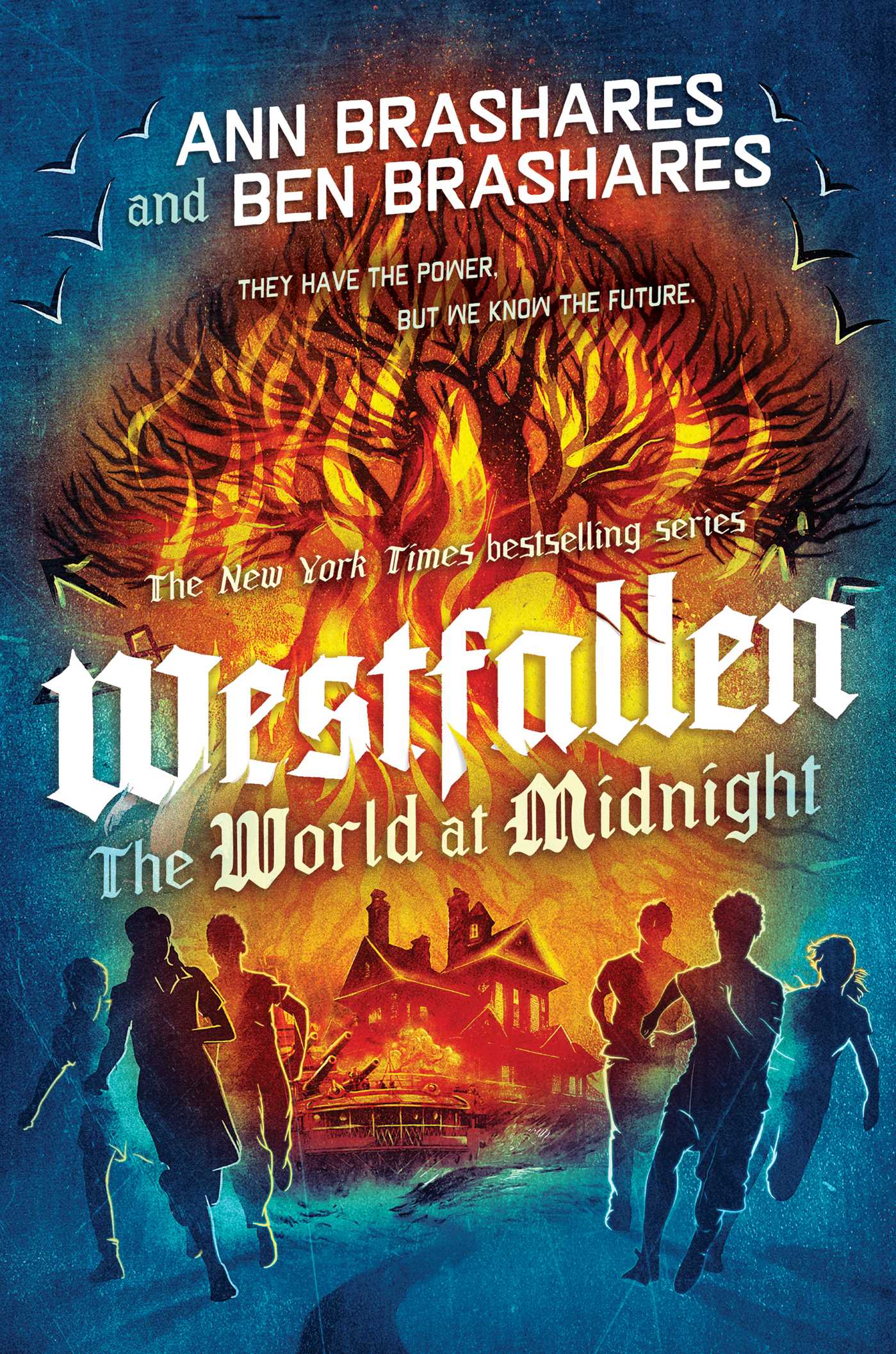
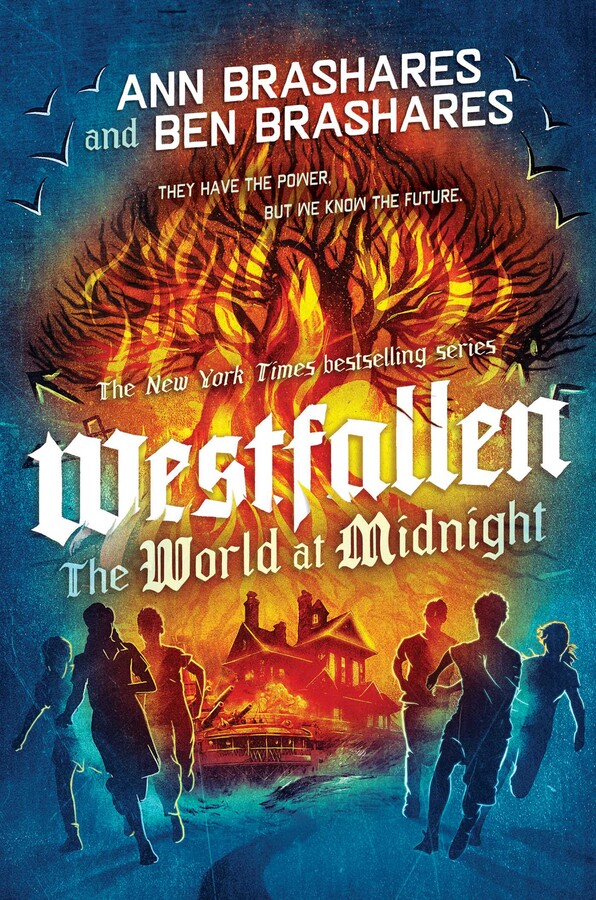
From #1 New York Times bestselling Sisterhood of the Traveling Pants author Ann Brashares and her brother Ben Brashares comes the third and final book in the action-packed middle grade alternate history thriller trilogy that asks what present-day America would be like if Germany had won World War II.
Henry, Frances, and Lukas are still stuck in Westfallen in 2023. They’re out of ideas on how to get home until they discover a series of historical comic books that outline how Nazi high command in Germany found out the details of D-Day. Now they’ve got to work with their friends Alice, Lawrence, and Artie in 1944 to follow the clues in the comic books to stop the message from getting across the Atlantic.
Lukas has been conscripted to play baseball—normally impossible for a Jewish kid in Westfallen, but his talent is undeniable—and he’s got to find a way to stay on the team and stay alive when everyone around him wants to see him fail or worse. That gets tougher when a scrappy Jewish orphan and runaway starts following him and hiding under his bed.
Meanwhile, in 1944, Artie finds out his German-born father is more involved in helping the Nazi cause than he realized—and when his father steals the radio that allows them to talk with kids across time, everything they’ve worked for is threatened. And once Henry discovers there’s way more to the mysterious well than any of them ever imagined, it’s going to take all six kids’ courage, ingenuity, and a bit of luck to swim against the tide of time and restore the future.
Excerpt
Chapter One CHAPTER ONE
Everything happens for a reason. And that reason is…
Henry / 1950
It’s hard to know what you’ll do when a gun is pointed at you.
Before this I’d had the idea I’d do a Jason Bourne–style, split-second swat-smack-grab of gun, point, and smirk.
Now Leo Haber stood in the door to my kitchen pointing a gun at my head, and that’s not what I did. At all. I just stood there. No fight. No flight. Just warm pee down my leg and the worry that the man pointing the gun at me noticed it. Like that was my biggest problem right then.
The calendar on the wall next to me said it was 1950. Not 1944. Not 2023. 1950.
A German radio station played in the corner—news, it sounded like.
The framed picture on the table showed a girl who looked a lot like Alice and the words
In Loving Memory:
Alice Elizabeth Barden
1932–1950
None of it made sense. But that picture of Alice—and those dates—had to be wrong. Alice couldn’t be dead.
Why was it 1950? Why was I here? Why was Leo Haber here pointing a gun at me? How could Alice be dead?
I had seen Haber an hour earlier at the Playland Ferris wheel just before the explosion. An hour plus six years earlier.
I stood facing him, barefoot, in a soaked T-shirt, water dripping from my hair down my face, standing in a puddle. My brain was still swimming.
I looked for the kitchen clock, above the refrigerator. 11:52 p.m.
Eight minutes until midnight. What would happen if I stayed here past midnight? I didn’t want to find out.
I heard the sickening click as Haber released the safety on his gun. What would happen if Haber shot me? I would die. Very far from home. In my home. My brain was drowning.
“Who are you?” he asked. He didn’t recognize me. “Why are you here?”
I wanted to ask him the same. “By mistake,” I said shakily. “I’m not supposed to be here.”
“Where did you come from?” His eyes darted around the room.
My legs shook. “I need to go,” I said. “I need to get home.”
He stared at me. “Are you alone?”
I nodded.
11:53 p.m.
The clock ticked and the radio played. “Unterdessen bleibt der Fall Alice Barden weiterhin problematisch.”
I’d tuned it out until I heard her name. Alice. Alice? The newscaster was talking about the “Alice Barden case.”
“Der plötzliche Tod der achtzehnjährigen Alice Barden in Gewahrsam der Ahnenerbe hat… Beschuldigt der okkulten Aktivitäten… ein unbekannter Gegenstand, der bei einer zufälligen Durchsuchung ihres Hauses entdeckt wurde.”
I tried to keep up, translating in my head. “The sudden death of eighteen-year-old Alice Barden while in custody of the Ah-nen-erbe… Accused of occult activity… an undisclosed object discovered in a random search of her home.” I could translate the words, but I couldn’t make sense of them.
“Why are you here?” Haber asked again.
“I… I don’t know.”
There were noises out front. We both jerked our heads in the direction of the front door. Car doors slammed. Haber stood alert.
Someone knocking. “Polizei. Öffne dich!”
Oh God. Had Haber called them?
Haber turned. Along with his gun. He strode to the corner of the dining room and stood behind the door. He didn’t look back at me.
This was my chance. I darted toward the back door, hoping—praying—I wouldn’t hear the blast of his gun. I threw open the door and ran as fast as I could to the shed. I paused long enough to lock the shed door behind me with trembling hands. I opened the hatch and climbed back into the well.
I clung there for a moment on the top rung, listening to German police barking orders in the house. I closed the hatch and lowered myself into the darkness.
Lukas / 2023
11:57 p.m. That’s what it said on Frances’s watch. Fourteen hours. That’s how long since we’d last seen Henry.
“Should we be worried? I think I’m worried,” Frances said.
“I’m not worried. He must have a good reason,” I said as I clenched my toes… and worried.
It was late. Frances and I sat across from each other on the floor of the shed. I still wore my Millerton Mustangs baseball uniform from the big game, still covered with grass stains and dirt stains and 13 stickers.
Frances also had 13 stickers stuck all over her shirt and one on her forearm that she kept nervously peeling.
Henry was the official worrier of the three of us and now he’d turned the tables. He’d disappeared without a trace and left us sitting in the shed in his backyard worrying about him.
“What reason could be good enough for missing your game?” she said. “It meant everything to him.”
The way she said it made me want to cry. I rested my head on my knee so Frances wouldn’t see my face.
I thought of the meatball sandwiches Henry stole for me, the exercises he made me do, the pep talks, top-five quizzes, cringey thumbs-ups, his donkey stubbornness when I tried to give up.
If not for him, I would be on a bus right now headed to a work camp in the north for possibly the rest of my life, crying my eyes out. Just like every other Jewish kid in Westfallen the day they turned thirteen.
Henry knew if that happened, I’d leave behind my memory of home forever and lose him and Frances and every part of me that mattered. He figured out my only chance to stay was making the Millerton baseball team. He bulldozed me into trying out for a team that didn’t want me, getting me a shot I never should have gotten, playing in the game tonight and winning the spot that saved me.
And somehow, ridiculously, he got half the town cheering for me along the way. Tonight was his win more than mine. So where was he?
“He probably had to stay with Roland Hayes at the old folks’ home,” Frances said, trying to reassure us both. “He has to work late sometimes.”
I nodded against my knee.
“He’ll know we’re here tonight. He’ll come as soon as he can.” She was quiet for a minute. “I wish he’d seen that homer,” she said.
I nodded against my knee again.
“I wish he’d seen me rickroll the stadium,” she said.
I lifted my head. I had to laugh. “Yeah.” I rubbed my eyes. “And kill the battery on my phone.”
Frances shrugged. “He’ll understand.”
She drummed her fingers on the floor, then banged it with her fist a few times. I could hear the echoing empty sound of the well that ran underneath the shed.
I felt a tingle between my shoulder blades.
“Anyway,” she said, “really dumb of you to not bring a charger.”
“You know, I was thinking about it,” I said. “That day back home I was like, okay, I’m going over to Henry’s to bury Zeus, but what if while I’m there we happen to dig up a time-traveling radio, talk to kids in 1944, change the outcome of World War II, and then wake up the next morning in an America ruled by Nazis where they haven’t invented smartphones? It’d probably be good to have a charger in case my phone magically stows away in the shed.”
Frances gave me an annoyed yet mildly pleased look. She appreciated it when people spoke sarcasm, her native language. “The video you took on the way over about Zeus’s mysterious murder was super dorky,” she said.
I’d forgotten about that video. It felt like a lifetime ago. It was a lifetime ago. And it was super dorky. I felt sadness wash over me. What if we never got to be dorky again?
We were quiet for a minute, both letting our sadness and our imaginations run amok.
Then Frances looked up. “But if you think about it, you are number thirteen. You’re a legend here, especially after tonight, a way bigger star here than you ever were… back home.”
I shot her a mean stare.
“Just lookin’ on the bright side,” she said. “You know me.”
“I think I’d rather be a classroom gerbil back home than a baseball star here.” I looked over at her. “What about you, though? You’re, like, hot stuff here, Fancy Francy.”
Frances frowned at me. “I’d rather be a flea on your gerbil.”
I ran my fingers along the seam in the floor, the hatch that covered the well that somehow connected us to 1944.
“Tonight is the night the Jupiter kids have to stop Haber, isn’t it?” I asked.
Frances nodded. “I wasn’t sure if you knew about that.” She looked sympathetic, which I didn’t enjoy very much.
Being a Jewish kid in Westfallen, you got kicked around all day and then, if you were lucky, got to sleep for a few hours and forget yourself. Forgetting was the best part of my life here. Until it meant forgetting home.
“I haven’t been back in a while,” I said, gesturing to the walls of the shed, where for some reason our old memories lived.
“I know.”
“Stop looking like that,” I said.
“Like what?”
“Like, oh, poor Lukas.”
“I didn’t mean to.”
I was ashamed enough as it was. That I went around in a fog and couldn’t help her and Henry and the Jupiter kids fix the plague of Nazis we’d caused. That I couldn’t even remember who I was most of the time.
Here I was in the shed hoping my memories would glue me back together, and I did remember home and how we got here. But now the past few days of Westfallen Lukas stretched behind me like the blurry dream of a half stranger. I wanted Frances to understand, but I didn’t want her to look at me like that.
Frances picked at the sticker on her arm. “So, yes. Tonight is the night. The three of them went to Playland to try to save the world.” Her voice was heavy. “Whatever happened probably already happened. I hope they’re okay.”
I nodded. We both stared in silence at the hatch covering the well. We stared like it was all happening under there, all the mysteries. Like it might spring open and we’d suddenly understand.
And then it did.
The hatch opened. Frances screamed and I jumped back.
The hatch kept opening wider. Frances kept screaming and I tried to get on my feet.
Something came out of it. Something slimy and cold and shaking that flopped onto the floor.
“Oh my God!” Frances yelled.
“What is that?” I hissed.
I stared at it in horror. Some kind of well-serpent? Was it not enough this place had Nazis?
The creature turned its head. It blinked its eyes, opened its mouth, and said, “You’re here.”
Then we realized it wasn’t a serpent or a Nazi. It was Henry.
Henry sat shivering between us on the floor of the shed, telling us where he’d come from and what had happened. I wanted to go into his house and get him a towel, but he didn’t want to risk it. In a slow voice, his eyes barely focused, he told us the whole thing.
He went back there. The well really did go to 1944, and he found them, Alice and Lawrence and Artie. Our friends. They weren’t just voices who helped us ruin the world.
I wouldn’t have believed it, but what choice did I have? Henry, who was terrified of the well, went down the well.
He said he had to make sure Artie didn’t get murdered in the Hall of Mirrors because that’s what would happen if he didn’t warn them, and it was all his fault. He helped them escape from Haber. He talked to Roland Hayes, a ninety-two-year-old man, as a twelve-year-old boy. He helped make sure the original bad Birch, first of many bad Birches, got arrested for murder.
Henry rushed through the story, mostly staring at the wall, and we let him. Looking at his face, I could tell he’d been through it.
Then he got quiet.
“Henry?” I said.
He shook his head. He focused his eyes. “Close the hatch,” he said. “Lock it.”
“Why?” Frances asked.
“Just do it, okay?” Henry said. I could see he was scared. And tired.
She did it. I helped.
“Does that mean you… stopped Leo Haber? From getting the… you know…” I could see Frances was afraid to ask.
Henry shook his head. “I thought we did. Now I’m not sure. I’m too tired to figure out what happened. But I don’t think we fixed it.”
Henry’s voice broke on the last word. I felt terrible for him.
I didn’t want to push him to tell us any more. I reached for his hand and pulled him to his feet.
He was exhausted, and Frances needed to get home. If I stayed much longer, I’d probably attract guards with guns and slobbering German shepherds and scare the bejesus out of Henry’s mom again. The words “Nazi Pride Festival” made me want to vomit every time, but the town was celebrating tonight, and that gave us a little peace.
We needed to go. But first, we needed to find out. “Is it midnight yet?” I asked.
Frances checked her watch. “Four minutes after.”
We looked at each other. I think we were all too tired to hope. Hope could wear you out. We were getting too used to this place. The Nazis were doing their job of grinding us down.
“There’s only one way to know,” Frances said as she pushed open the door to the shed.
Turned out there was no need for hope.
I saw the swastika flag flying from Henry’s neighbor’s house before we’d walked twenty feet down the sidewalk. You didn’t have to look hard to know. The cars, streetlamps. Everything stayed wrong. It wasn’t home.
We stopped and looked at each other again. Henry closed his eyes. Frances kicked a streetlamp.
Henry shook his head. “I don’t even know what happened this time.”
I wished I had something to say to make him feel better. Like maybe there was a way we could make it funny. But looking at Henry’s face, I knew we couldn’t.
We walked along in silence, following Henry’s steps toward the Birch Mansion. “At least that has to be different, doesn’t it?” he said. “We must have made something better.”
Frances shuffled along, kicking the air. “I don’t know what movie you’re watching,” she muttered. “We don’t make things better. We make things worse. The universe hates us.”
Even if the universe did hate us, I think we all turned the corner expecting that the fall of the mighty Birch family in 1944 would turn their mansion back to the burned-out wreck of a haunted house it was in our 2023 America.
It didn’t. It stood there as giant and grand as before. “See what I mean?” Frances said.
We got closer and I made out the vague shapes of gold letters on the mailbox. “That doesn’t say Birch anymore.” I pointed.
Henry squinted. “It doesn’t. What does it say…?”
“Francy Moore!” A light flicked on and a bellowing voice cut through the hush of the street.
Our heads snapped up. There was a man standing at the front door of the mansion yelling at us.
Frances froze. “That is my dad. Why is my dad there?”
We looked at the mailbox again. We were close enough to see it clearly now. The gold letters didn’t say Birch. They said Moore.
“Francy, get in this house right now!” the man shouted. “Do you hear me?”
Frances looked from Henry to me. “Oh my God.”
Henry winced. The Birch Mansion was now the Moore Mansion and Frances lived there. What could you say? The universe hated us and it had a cruel sense of humor.
Mr. Moore had his hands on his hips. “If your mother finds out you are not in bed—”
“I can’t believe this,” she muttered as she turned to open the front gate.
I patted her on the back. “Welcome to Westfallen three point oh,” I said.
I walked Henry most of the way home. He didn’t want to talk anymore about going to 1944. He wanted to talk about the baseball game. When I told him, he smiled. A little ghosty, but still a smile.
We stopped at the corner. Before we went our separate ways, I wanted to thank him, but I couldn’t think of a way to say it that would get anywhere close to what I meant.
I opened my mouth and shut it. I shuffled my feet. “Thanks,” I finally mumbled. That was it. My big move. That’s what I came up with.
Henry looked at me. “For what?”
“For… you know… helping with… and—”
He held his hand up, like this could take all night, but I could see he understood. “Happy birthday, by the way,” he said.
“Oh, right. Thanks.”
We each turned to go. I walked into the darkness, sorry to be on my own again.
“I knew you could do it,” he called after me.
I kept my head down and my feet walking so as not to be too embarrassing.
Product Details
- Publisher: Simon & Schuster Books for Young Readers (September 15, 2026)
- Length: 384 pages
- ISBN13: 9781665950879
- Grades: 3 - 7
- Ages: 8 - 12
Browse Related Books
Resources and Downloads
High Resolution Images
-
Book Cover Image (jpg): The World at Midnight
Hardcover 9781665950879